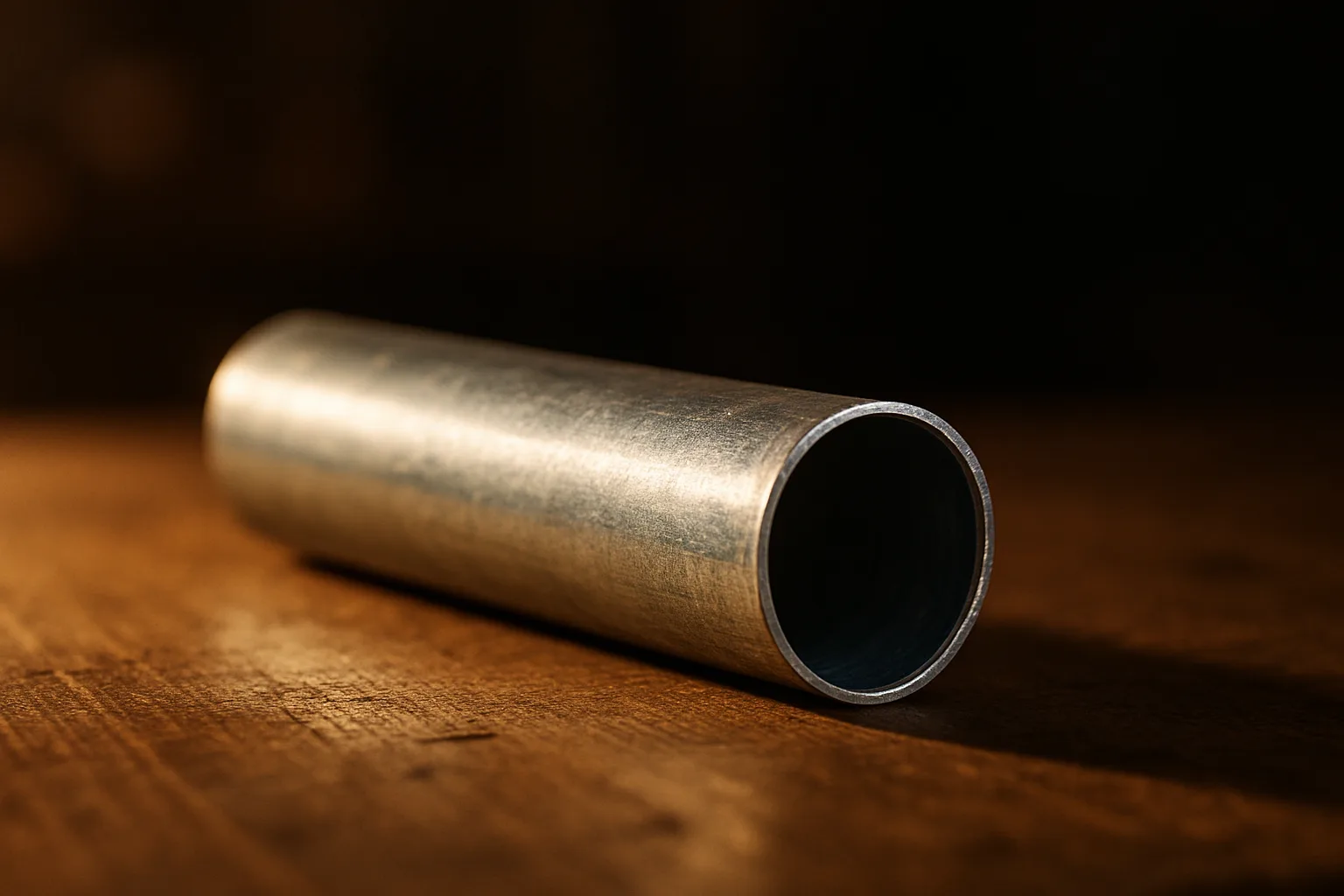
3/4 EMT conduit is a trade size, not an outside diameter. Learn actual dimensions, compatible fittings, and box entry requirements for Saudi projects.
What Is 3/4 EMT Conduit?
3/4 EMT conduit is a specific trade size of Electrical Metallic Tubing, not a direct measurement of its outside diameter. The "3/4" refers to the nominal trade size, which historically related to the inner diameter of rigid metal conduit but does not correspond to any single dimension of EMT. For 3/4 EMT, the actual outside diameter is approximately 0.922 inches (23.4 mm), while the inside diameter is approximately 0.824 inches (20.9 mm). These dimensions are standardized under ANSI C80.3 and UL 797, ensuring interoperability between manufacturers. When specifying 3/4 EMT conduit for a project in Saudi Arabia, always refer to the manufacturer's datasheet for exact dimensions, as minor variations can occur. The trade size is the critical identifier for selecting compatible fittings, connectors, and boxes.
In the Eastern Province, where industrial and commercial construction demands precise coordination, understanding this distinction prevents costly errors. Contractors often assume that 3/4 EMT conduit has a 3/4-inch outside diameter, leading to mismatched fittings or improper box entries. Alrouf Electrical Accessories Manufacturer, based in Dammam 2nd Industrial City, produces galvanized steel electrical boxes with knockouts sized to accept standard 3/4 EMT conduit. Our switch boxes (BB6, BB7) and junction boxes (BB8, BB9, BB10) feature bottom and side knockouts that accommodate both 1/2-inch and 3/4-inch conduit, ensuring seamless integration with your conduit runs.
When planning a conduit system, remember that 3/4 EMT conduit is chosen for its capacity to carry multiple conductors while maintaining a compact profile. It is commonly used in commercial buildings, industrial facilities, and infrastructure projects across Saudi Arabia. The galvanized coating, typically G90 as per ASTM-A653, provides corrosion resistance essential for the Kingdom's diverse climates, from coastal humidity to inland heat. Alrouf's boxes are manufactured from G90 galvanized steel, offering a 2-hour fire rating and compliance with relevant standards. By focusing on the trade size and actual dimensions, procurement teams can ensure that all components—conduit, fittings, and boxes—work together reliably.
What Are the Actual Dimensions of 3/4 EMT Conduit?
The actual dimensions of 3/4 EMT conduit are defined by standards such as ANSI C80.3 and UL 797. The outside diameter (OD) is 0.922 inches (23.4 mm), and the inside diameter (ID) is 0.824 inches (20.9 mm). The wall thickness is typically 0.049 inches (1.24 mm). These dimensions are critical for selecting connectors, couplings, and boxes. For example, a compression connector for 3/4 EMT conduit is designed to fit over the 0.922-inch OD, while a set-screw connector may have a slightly different profile. Always verify the manufacturer's datasheet for the specific product you are using, as tolerances can affect fit.
In Saudi Arabia, where projects often follow international standards, it is common to reference both metric and imperial units. The table below summarizes the key dimensions of 3/4 EMT conduit. Note that these are nominal values; actual dimensions may vary slightly within standard tolerances. When specifying for a project, provide the trade size and any relevant standards to your supplier. Alrouf's electrical boxes are designed with knockouts that accept 3/4 EMT conduit, with dimensions that align with these standards.
| Parameter | Imperial | Metric |
|-----------|----------|--------|
| Trade Size | 3/4 | 20 |
| Outside Diameter | 0.922 in | 23.4 mm |
| Inside Diameter | 0.824 in | 20.9 mm |
| Wall Thickness | 0.049 in | 1.24 mm |
This table is based on standard EMT dimensions from ANSI C80.3. For project-specific requirements, consult the manufacturer's datasheet. Alrouf's switch boxes (BB6, BB7) have bottom knockouts of 1/2" (3) and 3/4" (1), and side knockouts of 1/2" (4) and 3/4" (6). Junction boxes BB8, BB9, and BB10 have varying knockout configurations to accommodate 3/4 EMT conduit. These knockouts are sized to match the conduit's outside diameter, ensuring a secure fit when used with appropriate connectors.
Which Fittings Are Compatible with 3/4 EMT Conduit?
Compatible fittings for 3/4 EMT conduit include connectors, couplings, and adaptors designed specifically for this trade size. Connectors attach the conduit to boxes or enclosures, while couplings join two lengths of conduit. Common types include compression connectors, set-screw connectors, and steel couplings. Each type has its own installation method and use case. For example, compression connectors provide a secure, rain-tight seal and are often used in outdoor or wet locations. Set-screw connectors are faster to install and are suitable for dry indoor environments. Couplings are used to extend conduit runs and are available in compression or set-screw styles.
When selecting fittings, ensure they are listed for use with EMT and are compatible with the conduit's outside diameter. In Saudi Arabia, many projects require fittings that comply with UL 514B or equivalent standards. Alrouf manufactures a range of electrical accessories, including steel and plastic components, but for EMT conduit fittings, we recommend sourcing from reputable suppliers who provide test certificates. Our galvanized steel boxes are designed to work with standard 3/4 EMT connectors, with knockouts that accept the conduit directly. For box entries, use a connector that matches the knockout size and the conduit trade size.
It is important to match the fitting material with the conduit to avoid galvanic corrosion. Since EMT is galvanized steel, use steel or malleable iron fittings with a similar coating. Plastic fittings may be used in some applications but are not recommended for high-temperature or heavy-duty environments. Alrouf's boxes are made of G90 galvanized steel, which offers excellent corrosion resistance. When specifying fittings for a project in the Eastern Province, consider the environmental conditions: coastal areas may require additional corrosion protection, while indoor installations may suffice with standard galvanized fittings. Always refer to the manufacturer's installation instructions and local codes.
How Do You Properly Enter a Box with 3/4 EMT Conduit?
Properly entering a box with 3/4 EMT conduit involves selecting the correct knockout, using a compatible connector, and ensuring a secure, code-compliant installation. First, identify the knockout size on the box. Alrouf's switch boxes (BB6, BB7) have bottom knockouts of 1/2" (3) and 3/4" (1), and side knockouts of 1/2" (4) and 3/4" (6). Junction boxes BB8, BB9, and BB10 have different configurations: BB8 has bottom knockouts 1/2"-3/4" (6) and 3/4"-1" (2), and side knockouts 1/2"-3/4" (4) and 3/4"-1" (4). BB9 has bottom knockouts 1/2"-3/4" (2) and 3/4"-1" (1), and side knockouts 1/2"-3/4" (8) and 3/4"-1" (4). BB10-001 has a 20×20×5.5 cm size and 952 g weight. These knockouts are designed to accept standard 3/4 EMT conduit when used with the appropriate connector.
To enter the box, remove the knockout by striking it with a screwdriver and hammer, or use a knockout punch for precision. Insert the connector through the knockout from the outside and secure it with the locknut provided. Then, insert the conduit into the connector and tighten the set-screw or compression nut. Ensure the conduit is fully seated and the connection is tight. For outdoor or wet locations, use a compression connector with a sealing gasket. Always follow the manufacturer's instructions and local electrical codes. In Saudi Arabia, the Saudi Building Code (SBC) provides requirements for electrical installations, and compliance is mandatory. For a step-by-step reference, see this EMT conduit installation checklist for connecting conduit to electrical boxes.
When routing 3/4 EMT conduit to a box, maintain proper support and alignment. Use conduit straps every 10 feet (3 meters) and within 3 feet (1 meter) of boxes, as per NEC 358.30. Avoid sharp bends that could damage conductors. The minimum bend radius for 3/4 EMT is typically 4.5 inches (114 mm) for one-shot bends, but refer to the manufacturer's recommendations. Alrouf's boxes are designed with sufficient space for conductor entry and splicing. For junction boxes, ensure the box volume is adequate for the number of conductors, as per NEC 314.16. Our BB9-001 junction box (15×15×5.5 cm) and BB9-002 (15×15×10 cm) offer ample space for typical 3/4 EMT runs. Always consult a licensed engineer for specific project requirements.
What Should a Contractor Include in a Material Request for 3/4 EMT Conduit?
When preparing a material request for 3/4 EMT conduit, contractors should include the following details to ensure accurate procurement: trade size (3/4), conduit type (EMT), material (galvanized steel), standard (ANSI C80.3, UL 797), length per stick (typically 10 feet or 3 meters), and quantity. For fittings, specify the type (connectors, couplings), material (steel), and compatibility (3/4 EMT). For boxes, provide the model number, dimensions, and knockout configuration. Alrouf's switch boxes (BB6, BB7) and junction boxes (BB8, BB9, BB10) are identified by model codes, making it easy to specify. For example, BB6-003 is a switch box 7×14×3.5 cm, 0.6 mm, 109 g, 50 pcs per pack. BB7-001 is a switch box 7×14×4.7 cm, 0.9 mm, 196 g, 50 pcs per pack. These details help suppliers provide accurate quotes and reduce delays.
Additionally, include project-specific requirements such as fire rating (Alrouf boxes have a 2-hour fire rating), country of origin (Kingdom of Saudi Arabia), and any special marking (switch boxes are marked AL-ROUF KSA BS4662; junction boxes are marked AL-ROUF KSA). If the project requires compliance with Saudi standards, mention that. For 3/4 EMT conduit, specify if you need corrosion-resistant coatings or special fittings for hazardous locations. In the Eastern Province, projects often require materials that can withstand high temperatures and humidity. Alrouf's G90 galvanized steel boxes are suitable for such conditions. Always request test certificates and datasheets to verify compliance.
A well-structured material request should also include delivery location and required date. For large projects, consider phased deliveries to match construction schedules. Alrouf, based in Dammam 2nd Industrial City, serves customers across Saudi Arabia. Our manufacturing capabilities include progressive die stamping, automated assembly, robotic welding, tooling & die design, tubular manufacturing, coil slitting, and plastic injection molding. This vertical integration allows us to maintain quality and repeatability at volume. When requesting materials, provide clear specifications and quantities to streamline the process. For technical assistance, consult our engineering team.
How Does 3/4 EMT Conduit Fit into Saudi Construction Projects?
3/4 EMT conduit is widely used in Saudi construction projects due to its balance of capacity, ease of installation, and cost-effectiveness. It is commonly specified for lighting circuits, power distribution, and control wiring in commercial buildings, schools, hospitals, and industrial facilities. In the Eastern Province, major projects such as oil and gas facilities, petrochemical plants, and infrastructure developments rely on EMT for above-ground raceways. The Kingdom's Vision 2030 initiatives drive demand for high-quality, locally manufactured electrical accessories. Alrouf, established in 2003, supports this demand by manufacturing galvanized steel electrical boxes in Dammam. Our products are designed to meet the rigorous requirements of Saudi projects, with a focus on quality and repeatability.
When using 3/4 EMT conduit in Saudi Arabia, consider the environmental factors. The coastal areas of the Eastern Province experience high humidity and salt exposure, which can accelerate corrosion. While EMT is galvanized, additional protection may be needed in severe environments. Alrouf's boxes are made of G90 galvanized steel as per ASTM-A653, offering a minimum coating of 0.90 oz/ft². This provides enhanced corrosion resistance. For outdoor installations, ensure fittings are also corrosion-resistant and connections are sealed. In indoor environments, standard EMT and fittings are typically sufficient. Always follow the Saudi Building Code and local authority requirements.
Local content is a key consideration for many Saudi projects. The government encourages the use of Saudi-made products to support economic diversification. Alrouf's manufacturing facility in Dammam produces electrical boxes and accessories that qualify as Saudi-made. Our switch boxes are marked AL-ROUF KSA BS4662, and junction boxes are marked AL-ROUF KSA. These markings indicate compliance with relevant standards and origin. By sourcing from Alrouf, contractors can contribute to local content targets while ensuring timely delivery and technical support. For projects requiring 3/4 EMT conduit and compatible boxes, Alrouf offers a reliable solution. To explore our full range of manufacturing capabilities, visit our electrical accessories manufacturing services.
What Are Common Mistakes When Specifying 3/4 EMT Conduit?
Common mistakes when specifying 3/4 EMT conduit include confusing trade size with actual dimensions, using incompatible fittings, and neglecting box knockout sizes. As discussed, 3/4 EMT does not have a 3/4-inch outside diameter; assuming so can lead to ordering the wrong connectors. Always refer to the manufacturer's datasheet for actual dimensions. Another mistake is mixing fittings from different manufacturers without verifying compatibility. While standards ensure interchangeability, tolerances can vary. Use fittings listed for 3/4 EMT and check that they match the conduit's OD. For box entries, ensure the knockout size matches the connector. Alrouf's boxes have specific knockout configurations; for example, BB6 and BB7 have 3/4" knockouts, while BB8, BB9, and BB10 have multiple options. Verify the box model before ordering.
Failing to account for conduit fill and box volume is another common error. While this article does not provide cable capacity claims, it is essential to calculate conductor fill based on the applicable code (e.g., NEC Chapter 9) and the specific conductors used. Overfilling conduit can cause overheating and difficult installation. Similarly, box volume must be adequate for the number of conductors and splices. Alrouf's junction boxes are available in various sizes to accommodate different fill requirements. For example, BB9-002 (15×15×10 cm) offers more volume than BB9-001 (15×15×5.5 cm). Always consult a licensed engineer for fill calculations and code compliance.
Lastly, overlooking environmental factors can lead to premature failure. In Saudi Arabia, especially in coastal and industrial areas, corrosion is a significant concern. Using standard EMT without additional protection in highly corrosive environments may result in rust and deterioration. Alrouf's G90 galvanized steel boxes provide superior corrosion resistance, but fittings and conduit should also be selected appropriately. For outdoor or wet locations, use compression fittings with sealing gaskets. In high-temperature areas, consider the expansion and contraction of conduit and ensure proper support. By avoiding these mistakes, contractors can ensure a reliable and long-lasting installation. For more guidance on matching boxes to your conduit system, see our electrical box selection guide for Saudi projects.
◈ Key Takeaways
✦3/4 EMT conduit is a trade size, not an outside diameter; actual OD is approximately 0.922 inches (23.4 mm).
✦Always verify the manufacturer's datasheet for exact dimensions and select fittings listed for 3/4 EMT.
✦Alrouf's galvanized steel boxes (BB6, BB7, BB8, BB9, BB10) have knockouts sized for 3/4 EMT conduit; check model-specific knockout configurations.
✦When preparing a material request, include trade size, standards, model numbers, and quantities to avoid delays.
✦Consult a licensed engineer for conduit fill, box volume, and code compliance; do not rely on generic capacity claims.
Frequently Asked Questions
❓ What is 3/4 EMT conduit?
3/4 EMT conduit is a trade size of Electrical Metallic Tubing, a thin-walled steel raceway used to protect and route electrical wires. In Saudi Arabia, it is commonly used in commercial and industrial electrical installations, and Alrouf Electrical Accessories Manufacturer in Dammam produces switch and junction boxes that are compatible with 3/4-inch conduit entries.
❓ How thick is 3/4 EMT conduit?
The wall thickness of 3/4 EMT conduit is standardized by UL 797 and is approximately 1.07 mm (0.042 inches) for the steel wall. This thickness provides a balance between strength and weight, making it suitable for typical electrical installations in Saudi Arabia.
❓ How much does 3/4 EMT conduit weigh?
A 10-foot (3.05 m) length of 3/4 EMT conduit typically weighs around 1.3 kg (2.9 lbs), depending on the manufacturer. The weight can vary slightly based on the exact steel thickness and any protective coatings.
❓ How to bend 3/4 EMT conduit?
To bend 3/4 EMT conduit, use a manual or hydraulic conduit bender designed for that trade size. Mark the conduit at the desired bend location, align it with the bender, and apply steady pressure to achieve the required angle, such as a 90-degree stub-up. Always follow local electrical codes and safety practices.
❓ How to cut 3/4 EMT conduit?
Cut 3/4 EMT conduit using a hacksaw, a portable band saw, or a dedicated conduit cutter. After cutting, remove any burrs with a reaming tool or file to protect wire insulation and ensure a smooth entry into boxes and fittings.
Working with EMT conduit?
Browse Alrouf's EMT pipes, EMT connectors and junction boxes.
A procurement checklist for choosing electrical conduit suppliers in Saudi Arabia: verify manufacturing, materials, and fittings for reliable project delivery.
How to Choose Electrical Conduit Suppliers in Saudi Arabia
When selecting electrical conduit suppliers in Saudi Arabia, prioritize verified manufacturing capability over reseller status. A supplier that controls its own production—from coil slitting to tube forming and galvanizing—can ensure consistent quality, dimensional accuracy, and material traceability. Alrouf Electrical Accessories Manufacturer, based in Dammam 2nd Industrial City, has been producing electrical accessories since 2003 and offers EMT conduit and fittings as part of its portfolio. However, always confirm the current product range directly, as specifications may evolve.
Begin by requesting the supplier's manufacturing license and factory audit reports. In Saudi Arabia, local content is increasingly important under Vision 2030, so a manufacturer with in-Kingdom production supports your project's localization goals. Verify that the supplier can provide material certificates for the steel coils used, confirming compliance with standards such as ASTM-A653 for galvanized steel. For EMT conduit, ensure the supplier follows recognized standards for electrical metallic tubing, though specific certifications should be verified with the supplier.
Assess the supplier's technical support. Can they provide dimensional drawings, knockout configurations, and fitting compatibility charts? A manufacturer like Alrouf, with in-house tooling and die design, can often accommodate specific requirements, but always confirm before assuming customization. For standard EMT conduit and fittings, ask for samples to evaluate workmanship, wall thickness, and finish quality. This hands-on inspection helps you judge whether the supplier can meet your project's repeatability needs. For a deeper comparison of conduit options, review this guide on how to select the right conduit pipe for Saudi projects.
Finally, evaluate logistics and capacity. Saudi Arabia's Eastern Province hosts major industrial and construction projects, so a supplier located in Dammam can offer shorter lead times and reduced transportation costs. However, avoid comparing prices or delivery schedules without verified data. Instead, focus on the supplier's ability to scale production and maintain inventory for large orders. A checklist approach, as detailed later, ensures you cover all critical factors before committing.
What Should a Procurement Checklist for Electrical Conduit Include?
A robust procurement checklist for electrical conduit should cover specification, quality assurance, and commercial terms. Start with the conduit type: EMT (Electrical Metallic Tubing) is commonly used for exposed indoor applications, while rigid steel conduit (RGS) suits harsh environments. Alrouf manufactures EMT conduit and fittings; confirm availability for other types. Specify nominal size (e.g., 1/2", 3/4", 1") and wall thickness. For EMT, wall thickness is typically 1.07 mm to 1.24 mm for 1/2" to 3/4", but always refer to the latest standard.
Next, request dimensional drawings and knockout details. For conduit fittings, ensure compatibility with the conduit and boxes. Alrouf's switch boxes (BB6, BB7) and junction boxes (BB8, BB9, BB10) have specific knockout configurations: for example, BB6 has bottom knockouts 1/2" (3) and 3/4" (1); side knockouts 1/2" (4) and 3/4" (6). Verify that fittings match these sizes. Also, check material and finish: EMT conduit is typically galvanized steel, and Alrouf uses G90 galvanized steel as per ASTM-A653 for its boxes, ensuring corrosion resistance.
Quality assurance is critical. Ask for mill test certificates for the steel, and confirm that the conduit meets relevant standards. While Alrouf's boxes have a 2-hour fire rating, conduit fire ratings depend on the installation. Request samples to inspect for burrs, weld quality, and zinc coating uniformity. For high-volume projects, discuss the supplier's quality control process—statistical process control, in-line gauging, and final inspection. Alrouf employs progressive die stamping, automated assembly, and robotic welding, which contribute to repeatability.
Commercial terms should include quantity schedule, packaging, and delivery. Alrouf packs switch boxes 50 pcs per pack, and junction boxes vary (e.g., BB8: 50 pcs, BB9-001: 20 pcs, BB9-002: 12 pcs). Confirm packaging suitable for your site. Avoid fixed delivery promises; instead, agree on a production schedule with milestones. Include a clause for pre-shipment inspection if needed. Finally, document all specifications in a purchase order to avoid disputes.
EMT Conduit vs. Other Types: What Does Alrouf Supply?
Alrouf's supplied research supports EMT conduit and fittings only; the company does not manufacture rigid steel conduit (RGS) or PVC conduit. EMT is a thin-wall, galvanized steel tubing used for raceways in dry, indoor locations. It is lightweight, easy to bend, and cost-effective for commercial and industrial wiring. Alrouf produces EMT conduit in nominal sizes, but confirm the exact range with the sales team. For outdoor or corrosive environments, RGS or PVC may be required, which Alrouf does not supply.
When comparing EMT to other conduit types, consider mechanical protection, corrosion resistance, and installation cost. EMT offers moderate protection and is not suitable for areas subject to physical damage or moisture. RGS provides higher impact resistance and can be threaded for watertight connections. PVC is non-metallic, corrosion-resistant, and used in underground or chemical exposure. Alrouf's focus on EMT aligns with its expertise in sheet metal manufacturing and galvanized steel processing.
Alrouf's EMT conduit is complemented by a range of fittings, including couplings, connectors, and elbows. These fittings are designed for compatibility with Alrouf's conduit and boxes. For example, the BB6 switch box has knockouts for 1/2" and 3/4" conduit, and corresponding EMT connectors are available. However, always verify that the fittings meet the project's requirements for grounding and bonding. Alrouf's boxes are marked AL-ROUF KSA BS4662 for switch boxes and AL-ROUF KSA for junction boxes, indicating compliance with relevant standards.
If your project requires other conduit types, Alrouf may not be the right supplier. However, for EMT conduit and fittings, Alrouf's manufacturing capabilities—including coil slitting, tubular manufacturing, and robotic welding—ensure consistent quality. The company's location in Dammam 2nd Industrial City facilitates distribution across Saudi Arabia, particularly the Eastern Province. For projects in Riyadh, Jeddah, or NEOM, logistics can be arranged, but lead times should be discussed.
What Are the Common Pitfalls When Sourcing Conduit in Saudi Arabia?
A common pitfall is assuming that all suppliers are manufacturers. Many companies resell imported conduit, which can lead to inconsistent quality and limited technical support. Verify the supplier's factory address and request a virtual or in-person audit. Alrouf, for instance, operates from Dammam 2nd Industrial City and welcomes factory visits. Another pitfall is overlooking material certification. Without mill test certificates, you cannot confirm the steel's chemical and mechanical properties. Alrouf uses G90 galvanized steel as per ASTM-A653 for its boxes, and similar standards apply to EMT conduit.
A third pitfall is ignoring fitting compatibility. Conduit systems require coordinated components: conduit, fittings, and boxes. If the knockout sizes don't match the connectors, installation delays and rework occur. Alrouf's boxes have specific knockout patterns, such as BB8 with bottom knockouts 1/2"-3/4" (6) and 3/4"-1" (2), and side knockouts 1/2"-3/4" (4) and 3/4"-1" (4). Ensure that the conduit and fittings you order align with these. Also, consider the environment: EMT is not suitable for wet locations, so using it outdoors without protection can lead to corrosion.
A fourth pitfall is neglecting documentation for submittals. Saudi projects often require material submittals, including datasheets, certificates, and samples. A supplier that cannot provide these may delay approvals. Alrouf provides product markings (e.g., AL-ROUF KSA BS4662 on switch boxes) and can supply technical data. Finally, avoid focusing solely on price. Cheap conduit may have thinner walls or inferior zinc coating, leading to failures. Instead, evaluate total cost of ownership, including installation and maintenance.
How Can Alrouf Support Your Conduit Procurement?
Alrouf Electrical Accessories Manufacturer offers EMT conduit and fittings, along with a range of electrical boxes and accessories. The company's manufacturing capabilities include progressive die stamping, automated assembly, robotic welding, tooling and die design, tubular manufacturing, coil slitting, and plastic injection molding. This vertical integration allows for control over quality and lead times. For conduit procurement, Alrouf can provide dimensional drawings, material certificates, and samples. The engineering team can assist with fitting selection and knockout coordination.
Alrouf's product line includes switch boxes (BB6, BB7) and junction boxes (BB8, BB9, BB10) with specific dimensions and knockouts. For example, BB6-003 switch box: 7×14×3.5 cm, 0.6 mm, 109 g, 50 pcs per pack. These boxes are designed for use with EMT conduit and fittings. While Alrouf does not manufacture rigid conduit, its EMT conduit and fittings are suitable for many applications. The company's location in Dammam facilitates delivery to projects in the Eastern Province, including Dammam, Dhahran, Jubail, and Ras Al Khair.
For procurement teams, Alrouf provides a single source for conduit, fittings, and boxes, simplifying logistics and ensuring compatibility. The company's quality management system, though not certified to ISO (as per available information), follows rigorous in-process inspections. Alrouf's boxes have a 2-hour fire rating, and the steel meets ASTM-A653. These features support submittal approvals. To explore Alrouf's conduit range, request the latest catalogue or contact the Alrouf sales team.
When engaging Alrouf, prepare a detailed specification including conduit type, size, quantity, and required certifications. The team will confirm availability and provide a quotation. For custom requirements, such as specific knockout configurations, Alrouf's tooling and die design services may be applicable, but feasibility should be discussed. Always request a sample for approval before mass production.
Frequently Asked Questions About Electrical Conduit Suppliers in Saudi Arabia
Q: Are Alrouf's EMT conduits certified to SASO or other standards? A: Alrouf's boxes are marked AL-ROUF KSA BS4662 (switch boxes) and AL-ROUF KSA (junction boxes), indicating compliance with relevant standards. For EMT conduit, specific certifications should be confirmed with the sales team. Alrouf does not claim ISO, SASO, BSI, IEC, or UL certifications for these boxes unless explicitly stated.
Q: Can Alrouf supply conduit for outdoor projects? A: EMT conduit is not recommended for outdoor or wet locations. Alrouf supplies EMT conduit and fittings, which are suitable for dry, indoor environments. For outdoor applications, consider rigid steel conduit (RGS) or PVC, which Alrouf does not manufacture. However, Alrouf's junction boxes with IP ratings may be suitable for some outdoor use, but confirm with the technical team.
Q: What is the lead time for Alrouf's conduit products? A: Lead times depend on order quantity and current production schedule. Alrouf does not publish fixed lead times; contact the sales team for a quotation and schedule. For standard items, production may be quicker, but always plan with buffer time.
Q: Does Alrouf provide engineering consultation for conduit systems? A: Alrouf's engineering team can assist with product selection, fitting compatibility, and knockout coordination. However, Alrouf does not offer free consultations or design services. For complex projects, engage a licensed electrical engineer. Alrouf can provide technical data to support your design.
◈ Key Takeaways
✦Verify that your conduit supplier is a manufacturer, not just a reseller, by requesting a factory audit and material certificates.
✦Use a procurement checklist covering conduit type, size, fittings, material certification, samples, and packaging.
✦Confirm knockout configurations on boxes (e.g., BB6, BB8) to ensure compatibility with conduit and fittings.
✦Request mill test certificates for steel and verify compliance with standards like ASTM-A653 for galvanized steel.
✦Engage suppliers early for submittal documentation and sample approvals to avoid project delays.
Frequently Asked Questions
❓ What is the difference between a switch box and a junction box?
A switch box is designed to house switches and sockets, while a junction box is used to protect electrical connections and splices. In Saudi Arabia, both are essential for safe electrical installations, and Alrouf manufactures switch boxes (BB6, BB7) and junction boxes (BB8, BB9, BB10) from G90 galvanized steel as per ASTM-A653.
❓ Which electrical conduit suppliers in Saudi Arabia offer fire-rated boxes?
Alrouf Electrical Accessories Manufacturer in Dammam produces switch and junction boxes with a 2-hour fire rating, making them suitable for commercial and residential projects. Their boxes are made of G90 galvanized steel and are marked AL-ROUF KSA, ensuring compliance with local standards.
❓ How long do electrical conduit boxes last in Saudi Arabia's climate?
With proper installation, G90 galvanized steel boxes like those from Alrouf can withstand Saudi Arabia's harsh climate for many years. The galvanized coating provides excellent corrosion resistance, and the 2-hour fire rating adds an extra layer of safety.
❓ Can I use Alrouf switch boxes for both indoor and outdoor applications?
Alrouf switch boxes are primarily designed for indoor use, but their G90 galvanized steel construction offers some resistance to moisture. For outdoor applications, additional protection such as weatherproof enclosures is recommended. Always consult local electrical codes for specific requirements.
❓ What sizes of junction boxes are available from Alrouf?
Alrouf offers junction boxes in various sizes, including 10×10×5.5 cm (BB8), 15×15×5.5 cm (BB9-001), 15×15×10 cm (BB9-002), and 20×20×5.5 cm (BB10-001). These boxes are made of G90 galvanized steel and are available with or without earth connections.
Need electrical boxes or accessories for your project?
Send Alrouf the product, size and quantity you need to request a quote.
Master PVC electrical conduit selection and installation for Saudi projects—compliance, local manufacturing, and practical steps for contractors and specifiers.
What Is PVC Electrical Conduit and Why Is It Essential for Saudi Projects?
PVC electrical conduit is a non-metallic, rigid or flexible tubing system used to protect and route electrical wiring in residential, commercial, and industrial buildings. In Saudi Arabia, where extreme heat, humidity, and dust are common, PVC conduit offers superior corrosion resistance, lightweight handling, and cost-effective installation compared to metal alternatives. It is a fundamental component in modern electrical infrastructure, ensuring safety, durability, and compliance with national standards.
For contractors and specifiers in the Eastern Province, selecting the right PVC electrical conduit is not just about meeting blueprints—it is about long-term performance. The Saudi Electrical Code (SEC) mandates specific installation practices and material requirements to safeguard against fire, short circuits, and environmental degradation. Using locally manufactured PVC conduit, such as those produced by Alrouf in Dammam, ensures that materials are tested for regional conditions and comply with SEC guidelines, reducing project risks and delays. Our electrical installation services are designed to support contractors with compliant, high-quality solutions.
Moreover, the shift toward Vision 2030's local content initiatives encourages the use of Saudi-made products. By choosing locally sourced PVC conduit, project owners support the national economy while benefiting from shorter supply chains, faster delivery, and direct technical support. This is particularly critical for large-scale developments in Dammam, Riyadh, and Jeddah, where project timelines are tight and quality cannot be compromised.
In this guide, we will walk you through the selection criteria, installation best practices, and compliance requirements for PVC electrical conduit, tailored specifically to Saudi Arabia's unique environmental and regulatory landscape. Whether you are a procurement lead, electrical contractor, or construction buyer, this resource will equip you with the knowledge to make informed decisions and execute flawless installations.
How Do You Select the Right PVC Electrical Conduit for Your Saudi Project?
Selecting the right PVC electrical conduit begins with understanding your project's specific requirements. First, identify the conduit type: rigid PVC (Schedule 40 or 80) for exposed or underground installations, and flexible PVC for areas requiring bending or movement, such as machinery connections. Rigid PVC is ideal for Saudi residential and commercial projects due to its high impact resistance and ability to withstand harsh weather, while flexible PVC suits retrofits or tight spaces.
Next, consider the conduit diameter based on the number and gauge of wires it will carry. The Saudi Electrical Code provides fill capacity tables—typically, conduit fill should not exceed 40% for more than two wires to prevent overheating and ensure easy pulling. For example, a 20mm conduit can accommodate up to four 2.5mm² cables, but always consult the NEC-based tables adopted by SEC. Oversizing slightly can simplify installation and future maintenance, a practice we recommend for critical circuits.
Material quality is another crucial factor. Look for PVC conduit that meets Saudi Standards, Metrology and Quality Organization (SASO) specifications, ensuring UV resistance, flame retardancy, and mechanical strength. Locally manufactured PVC conduit from Alrouf undergoes rigorous testing for these properties, providing peace of mind that your installation will endure the intense sun and temperature swings common in the Eastern Province. Avoid imported products with unknown certifications, as they may fail inspection or degrade prematurely. For a deeper understanding of material performance, review our guide on metal enclosure box durability to compare options.
Finally, evaluate the total cost of ownership, not just the initial price. High-quality PVC conduit may have a slightly higher upfront cost but reduces maintenance, replacement, and liability risks. For large projects, partnering with a local manufacturer like Alrouf allows for bulk pricing, custom lengths, and just-in-time delivery, optimizing your budget and schedule. Always request material certificates and test reports to verify compliance before purchase.
What Are the Key Installation Steps for PVC Electrical Conduit in Saudi Arabia?
Proper installation of PVC electrical conduit is critical to ensure safety and functionality. Begin by planning the conduit route, avoiding sharp bends and obstacles. Use standard fittings such as couplings, elbows, and junction boxes to create a continuous, smooth path. For outdoor or underground runs, ensure the trench depth meets SEC requirements—typically 600mm for residential areas—and use concrete encasement for additional protection in high-traffic zones.
When cutting PVC conduit, use a fine-toothed saw or a specialized cutter to achieve clean, square ends. Deburr the edges with a reamer or file to prevent damage to wire insulation during pulling. For bends, use a heat gun or a conduit bender designed for PVC, applying even heat to avoid kinks or collapse. Never use force to bend cold PVC, as this can create stress fractures that lead to failure under thermal expansion.
Joining sections requires PVC solvent cement. Clean both surfaces with a primer, apply cement evenly, and insert the pipe with a twisting motion to ensure full coverage. Hold the joint for 30 seconds to allow initial bonding, then let it cure for at least 24 hours before pulling wires. In Saudi's high temperatures, use a cement rated for up to 50°C to prevent softening or joint failure. For underground installations, use a solvent that is specifically labeled for below-grade use.
After assembly, secure the conduit with appropriate clamps or straps at intervals of 1.2 meters for horizontal runs and 1.5 meters for vertical runs, as per SEC guidelines. Ensure supports are corrosion-resistant, especially in coastal areas like Dammam, where salt-laden air can degrade metal fasteners. Finally, pull wires using a fish tape or lubricant to reduce friction, and leave a pull string for future additions. Test all circuits before closing walls or trenches to verify continuity and insulation resistance. For outdoor installations, also review our step-by-step guide to installing outdoor junction boxes for additional best practices.
How Does Saudi Electrical Code Compliance Affect PVC Conduit Installation?
The Saudi Electrical Code (SEC) is the governing standard for all electrical installations in the Kingdom, aligning closely with the National Electrical Code (NEC) but adapted for local conditions. Compliance is not optional—it is a legal requirement for obtaining building permits and passing inspections. For PVC electrical conduit, SEC specifies material standards, installation methods, and testing procedures that must be followed meticulously.
One key requirement is the use of PVC conduit that is listed and labeled by a recognized testing laboratory, such as SASO or an equivalent international body. This ensures the product meets minimum flame spread, smoke generation, and impact resistance criteria. Alrouf's PVC conduit is manufactured in compliance with these standards, providing documentation that simplifies the inspection process for contractors and project owners.
SEC also dictates minimum burial depths for underground conduit—typically 450mm for residential driveways and 600mm for roadways—and requires warning tape placed above the conduit to prevent accidental digging damage. For exposed installations, conduit must be supported at specified intervals and protected from physical damage in areas prone to impact, such as garages or loading docks. Adhering to these rules prevents costly rework and ensures the safety of occupants and maintenance personnel.
Beyond initial installation, SEC compliance affects maintenance and future modifications. For example, pull boxes must be accessible and sized to allow wire pulling without damaging insulation. Junction boxes must be covered with approved fittings, and unused openings must be sealed to maintain the conduit system's integrity. By following SEC guidelines, you not only meet legal obligations but also enhance the reliability and lifespan of your electrical infrastructure, a critical factor in Saudi's demanding environment. Understanding the crucial role of earthing in electrical safety is also essential for full compliance.
What Are the Benefits of Locally Manufactured PVC Conduit in Saudi Arabia?
Choosing locally manufactured PVC electrical conduit offers significant advantages for Saudi projects, particularly in the Eastern Province. First, local manufacturing ensures products are designed and tested for the region's extreme conditions—intense UV radiation, high ambient temperatures, and occasional humidity. Alrouf, based in Dammam's Second Industrial City, produces conduit that withstands these elements, reducing the risk of premature cracking or deformation.
Second, local sourcing reduces lead times and logistics costs. Imported conduit often requires weeks of shipping and customs clearance, which can delay project schedules. With local manufacturing, you can order on-demand and receive delivery within days, allowing for more flexible project planning and reduced inventory carrying costs. This is especially valuable for contractors managing multiple sites across the Kingdom.
Third, local manufacturers provide technical support and customization that importers cannot match. Alrouf's engineering team can assist with conduit sizing, fitting selection, and installation troubleshooting, ensuring your project runs smoothly. Additionally, we offer custom lengths and color options to meet specific project requirements, something that is rarely available with imported products. Learn more about our capabilities on our company overview page.
Finally, supporting local manufacturing aligns with Saudi Vision 2030's goal of increasing local content in the construction sector. By specifying Saudi-made PVC conduit, you contribute to job creation and economic diversification, while also benefiting from potential incentives for local content in government and semi-government projects. This strategic choice enhances your company's reputation as a responsible and forward-thinking partner in the Kingdom's development.
How Can You Ensure Long-Term Performance of PVC Conduit in Harsh Saudi Climates?
Ensuring long-term performance of PVC electrical conduit in Saudi Arabia requires proactive measures during installation and maintenance. First, select conduit with high UV resistance, as prolonged sun exposure can degrade unprotected PVC, causing brittleness and cracking. Alrouf's PVC conduit includes UV stabilizers that maintain flexibility and strength for decades, even in the intense sunlight of the Eastern Province.
Second, account for thermal expansion and contraction. PVC expands and contracts significantly with temperature changes—up to 0.06 inches per 10 feet per 10°F change. In Saudi, where temperatures can swing from 5°C at night to 50°C during the day, this movement can stress joints and supports. Use expansion couplings at intervals of 20-30 feet for long straight runs, and ensure supports allow slight movement without loosening.
Third, protect conduit from physical damage in high-traffic or industrial areas. Use Schedule 80 PVC for exposed installations where impact is likely, or install metal guards around conduit at low heights. For underground runs, concrete encasement provides the ultimate protection against accidental excavation and ground movement. Always follow SEC burial depth requirements and install warning tape to alert future workers.
Finally, conduct regular inspections, especially after extreme weather events or construction activity nearby. Check for cracks, loose supports, or signs of moisture ingress. If damage is found, repair or replace the affected section promptly to prevent wire damage or electrical faults. By implementing a maintenance schedule, you extend the life of your conduit system and avoid costly downtime or safety incidents. For additional protection strategies, see our ultimate guide to protecting electrical boxes and enclosures.
What Are the Common Mistakes to Avoid When Installing PVC Conduit in Saudi Projects?
Even experienced contractors can make mistakes when installing PVC electrical conduit, leading to failures or code violations. One common error is using the wrong conduit type for the application—for example, using thin-wall PVC for underground installations where Schedule 80 is required. This can result in collapse under soil pressure or damage from rocks, compromising the entire wiring system. Always verify the conduit schedule and pressure rating before installation.
Another frequent mistake is improper joint preparation. Failing to clean and prime surfaces before applying solvent cement can result in weak joints that leak or separate over time. In Saudi's heat, using the wrong cement type or applying it too thinly can cause joint failure. Always follow the manufacturer's instructions, use the correct primer and cement for the temperature range, and allow adequate curing time before stressing the joint.
Overfilling conduit is another critical error. Exceeding the fill capacity can cause wires to overheat, increasing fire risk and making future pulls difficult. Use the SEC fill tables to determine the maximum number of conductors for each conduit size, and consider using larger conduit if future expansion is anticipated. This proactive approach saves time and money in the long run.
Finally, neglecting to secure conduit properly can lead to sagging, vibration, and eventual damage. Use the correct type and spacing of supports, and ensure they are anchored to solid structures. In coastal areas, use stainless steel or galvanized supports to prevent corrosion. By avoiding these common mistakes, you ensure a safe, compliant, and durable installation that meets the highest standards of quality. For more insights on selecting the right materials, consult our essential guide to selecting the right EMT conduit pipe.
◈ Key Takeaways
✦Always verify PVC conduit meets SASO and Saudi Electrical Code standards before purchase.
✦Select the correct conduit type (rigid vs. flexible) and schedule based on project environment and load.
✦Follow SEC fill capacity tables to prevent overheating and ensure easy wire pulling.
✦Use proper solvent cement and allow full curing time, especially in high temperatures.
✦Partner with local manufacturers like Alrouf for faster delivery, technical support, and Vision 2030 alignment.
Frequently Asked Questions
❓ How deep should PVC electrical conduit be buried in Saudi Arabia?
In Saudi Arabia, PVC electrical conduit for underground installations should be buried at least 600 mm (24 inches) deep to protect against mechanical damage and comply with local safety standards. For areas with heavy traffic, increase the depth to 900 mm (36 inches) to ensure durability. Always check with the Saudi Building Code (SBC) for specific requirements in your region.
❓ How is PVC electrical conduit measured?
PVC electrical conduit is measured by its nominal diameter, which refers to the outer diameter of the pipe. Common sizes in Saudi Arabia include 20 mm, 25 mm, and 32 mm, with larger sizes available for industrial applications. The measurement is standardized, so you can easily match conduit with compatible fittings and boxes.
❓ How to bend PVC electrical conduit?
To bend PVC electrical conduit, use a heat gun or a specialized conduit heater to soften the pipe evenly, then bend it to the desired angle. Avoid overheating to prevent kinking or burning. For precise bends, use a bending spring or a conduit bender, and allow the pipe to cool before handling. This technique is commonly used in Saudi installations to navigate corners and obstacles.
❓ How to install PVC electrical conduit?
Installing PVC electrical conduit involves measuring and cutting the pipe, then connecting it with couplings and fittings. Secure the conduit to walls or ceilings using clips or straps spaced every 1-1.5 meters. For underground runs, lay the conduit in a trench with proper depth and backfill carefully. Always follow the Saudi Electrical Code (SEC) for safe and compliant installation.
❓ How to connect PVC electrical conduit?
Connect PVC electrical conduit using PVC couplings and solvent cement. Apply primer to the outside of the pipe and inside of the coupling, then apply cement and push the pieces together with a slight twist. Hold for a few seconds to ensure a strong bond. This method creates a watertight and durable connection, essential for Saudi Arabia's harsh environment.
Ready to Transform Your Space?
Contact Alrouf today for high-quality, locally manufactured PVC electrical conduit and expert technical support for your next Saudi project.
The correct electrical box entry size for EMT conduit depends on the conduit trade size, the dimensions of the approved connector, the number and direction of conduit entries, and the available space inside the box. Always verify the box opening and connector dimensions using current product data rather than assuming the nominal EMT size equals the required knockout size.
Selecting a suitable box is not simply a matter of matching two labels. The EMT conduit, connector, knockout, box capacity, mounting method and grounding arrangement must work together as one installation system.
What Does Electrical Box Entry Size Mean?
Electrical box entry size refers to the opening through which the conduit connector enters and attaches to the box. Depending on the product, this opening may be:
A factory-made knockout.
A threaded entry.
A pre-punched opening.
A project-approved opening created during installation.
The entry must provide enough space for the selected connector while allowing it to attach securely to the box.
An entry that is too small will not accept the connector. An oversized opening may prevent secure attachment, interfere with bonding or reduce the environmental protection intended by the box design.
The buyer must therefore confirm three connected dimensions:
The nominal EMT trade size.
The connector dimensions.
The required box-entry or knockout size.
These values may be related, but they are not interchangeable.
Is EMT Trade Size the Same as Its Actual Diameter?
No. EMT trade size is a nominal product designation, not a direct measurement of its exact inside or outside diameter.
For example, a conduit described by a particular trade size must be matched with a connector and box entry designed for that trade size. Measuring the conduit and choosing a knockout based only on the measured diameter can result in an incorrect selection.
Actual dimensions and internal areas should be taken from:
Approved EMT product data.
Connector specifications.
Electrical box drawings.
Applicable code tables.
Project-approved technical submittals.
The same trade-size description should appear consistently across the conduit, connector and associated documentation.
Why Must the Connector Be Selected Before the Box Entry?
The connector creates the mechanical interface between the EMT conduit and the electrical box. Therefore, the connector—not the conduit alone—determines the precise box opening required.
Before selecting the box, confirm:
EMT trade size.
Connector type.
Connector body dimensions.
Thread or locking method.
Required knockout diameter.
Space required for the locknut or securing mechanism.
Suitability for the installation environment.
Compatibility with the box material.
A connector may require more installation space than expected, especially when several conduit entries are positioned close together.
The installer should have enough room to tighten the connector without interfering with adjacent fittings, internal conductors, devices or the box cover.
How Many EMT Entries Does the Electrical Box Need?
The required number of entries depends on the routing of the conduit system and the function of the box.
An electrical box may receive EMT from:
One side.
Opposite sides.
Adjacent sides.
The top and bottom.
The rear.
Several directions.
Before ordering, determine:
How many conduits enter the box?
What is the trade size of each conduit?
Do the conduits carry conductors through the box or terminate there?
Will the box contain splices, terminals or devices?
Are different conduit sizes used?
Is space required for future approved entries?
Can all connectors be installed and tightened?
Will any fitting interfere with the cover?
A sketch showing the entry positions can help the supplier identify a suitable box. For complex arrangements, include the required distance between entry centres and their position relative to the edges.
How Does Entry Location Affect Installation?
Correct entry positioning improves conduit alignment and helps prevent stress on the connector or box.
Important considerations include:
Direction of the conduit route.
Distance from walls, ceilings or structural elements.
Space around the box.
Position of internal terminals or devices.
Accessibility for tightening fittings.
Required conductor bending space.
Cover removal.
Drainage or moisture considerations.
Mounting points and supports.
Entries positioned too close to corners may be difficult to use. Closely spaced knockouts can also leave insufficient room for connector bodies or locknuts.
When several conduits enter one side, the box must be wide and deep enough to accommodate the fittings and conductors without overcrowding.
How Do You Determine the Required Box Size?
Box-entry compatibility is only one part of product selection. The box must also provide adequate internal space for all conductors, connections, fittings and devices.
Consider:
Number of conductors.
Conductor sizes.
Number of conduit entries.
Splices and terminals.
Internal clamps.
Mounted devices.
Grounding and bonding components.
Conductor bending space.
Pulling requirements.
Future access.
An electrical box may have the correct knockouts but still be too small internally.
The responsible designer should verify box-fill, conductor-bending and pulling requirements using the code and project specification applicable to the installation.
A larger box may sometimes simplify installation, but unnecessary oversizing can affect mounting space, appearance and procurement. The objective is to select a box that provides sufficient usable space without creating avoidable complications.
What Is the Difference Between a Junction Box and a Pull Box?
A junction box commonly provides space for conductor connections, branches or mounted electrical accessories, depending on its design.
A pull box primarily helps installers pull conductors through a raceway system, particularly where conduit direction, length or conductor size makes pulling difficult.
The distinction matters because a box intended for connections may have different space and entry requirements from one used as a pulling point.
Before selecting the product, define whether conductors will:
Pass straight through.
Change direction.
Be spliced.
Terminate.
Connect to a device.
Require additional pulling space.
Do not use the outside dimensions alone to determine whether the box is suitable for the intended function.
Can Factory Knockouts Be Used for EMT?
Factory knockouts may be used when their size, position and design are compatible with the selected EMT connector and the intended application.
Before installation, inspect the knockout for:
Correct size.
Clear identification.
Damage or deformation.
Sharp edges.
Adequate spacing from adjacent openings.
Compatibility with the connector.
Effect on the box’s intended environmental protection.
A knockout should be removed using an appropriate method that does not deform the surrounding box surface. Any sharp edges or damage should be addressed according to the product instructions and project procedure.
Unused openings should remain closed or be sealed with suitable components when required by the application.
Can a New Conduit Entry Be Added on Site?
A new opening should only be created when permitted by the product instructions, project specification and responsible technical authority.
Adding an opening may affect:
Structural strength.
Surface coating.
Corrosion protection.
Environmental protection.
Internal components.
Required spacing.
Product approval.
Grounding and bonding.
If site modification is permitted, the opening should be:
Correctly sized for the connector.
Positioned away from mounting features.
Free from sharp edges.
Finished according to the approved procedure.
Inspected before the conduit is connected.
For repeated installations, choosing a box with the correct factory entry arrangement may provide a more consistent result than modifying every box on site.
How Does the Box Material Affect EMT Connections?
EMT is metallic, but the connected electrical box may be metallic or non-metallic, depending on the approved installation.
Connecting EMT to a metal box
When EMT connects to a metal electrical box, check:
Connector approval and compatibility.
Secure mechanical attachment.
Condition of the box opening.
Required locknut or securing component.
Continuity across the connection.
Bonding requirements.
Compatibility of metals and finishes.
Environmental suitability.
Metal-to-metal contact alone does not automatically prove that a safe and continuous grounding path exists.
Connecting EMT to a non-metallic box
A non-metallic box requires a fitting designed for the selected conduit and box system. The grounding arrangement must be handled separately because the non-metallic box does not provide electrical continuity.
The responsible engineer should confirm the complete grounding and bonding method for either arrangement.
Does EMT Automatically Ground a Metal Electrical Box?
No. EMT and galvanized steel can conduct electricity, but conductivity alone does not confirm that an approved equipment-grounding path has been established.
A reliable system depends on:
Correct bonding.
Continuous connections.
Approved connectors.
Properly tightened fittings.
Condition of the conduit and box.
Installation quality.
Applicable code requirements.
The project’s approved grounding design.
A separate equipment-grounding conductor may also be required by the project specification or installation method.
Grounding and bonding decisions should be reviewed by the responsible electrical engineer and should not be based solely on the materials being metallic.
How Does the Installation Environment Affect Box Selection?
The installation environment affects the box material, surface protection, cover, openings, fittings and sealing requirements.
Indoor dry locations
Selection may focus on:
Box dimensions.
Entry configuration.
Mounting method.
Internal capacity.
Accessibility.
Compatibility with devices and fittings.
Humid or coastal locations
Additional considerations may include:
Corrosion exposure.
Material and coating specification.
Condition of cut edges.
Compatible fasteners.
Connector protection.
Condensation.
Maintenance access.
The presence of a galvanized coating does not automatically make a box suitable for coastal conditions.
Outdoor installations
Outdoor suitability depends on the complete enclosure assembly, including:
Cover design.
Joints.
Seals and gaskets.
Conduit entries.
Fittings.
Mounting orientation.
Drainage.
Protection against water and dust.
Product documentation.
An indoor box should not be considered suitable outdoors simply because it is made from galvanized steel.
Industrial environments
Industrial locations may require an additional review of:
Chemical exposure.
Dust.
Washdown.
Mechanical impact.
Temperature.
Hazard classification.
Project-specific standards.
The project’s technical requirements should determine the final selection.
What Should Be Checked Before Connecting EMT to the Box?
Before installation, check:
Conduit trade size.
Connector type and size.
Box entry dimensions.
Box material.
Entry position.
Number of entries.
Connector spacing.
Box internal capacity.
Condition of knockouts.
Sharp edges or burrs.
Surface damage.
Bonding requirements.
Environmental protection.
Product instructions.
The conduit should align with the entry without placing unnecessary force on the box or fitting.
The raceway should also be supported according to the approved installation requirements. The box connection should not be expected to support the conduit system by itself.
What Documents Should Procurement Teams Review?
Before approving an electrical box for an EMT installation, review the available product and project information.
Relevant documents may include:
Electrical box data sheet.
Product code.
Box dimensions.
Material and thickness.
Surface finish.
Knockout schedule.
Entry dimensions.
Connector data.
Installation instructions.
Applicable product-compliance documents.
Approved project drawings.
Electrical design requirements.
Grounding and bonding details.
A general certificate issued to the manufacturer does not automatically prove that a particular product is suitable for every EMT size or installation environment.
Each document should be checked against the exact product code and intended application.
What Information Should Be Included in a Quotation Request?
A complete request helps the supplier identify a suitable electrical box and provide an accurate quotation.
Include:
Product code, if known.
Required box dimensions.
Box material.
Surface finish.
EMT trade size.
Connector type, if selected.
Required knockout size.
Number of entries.
Entry positions and directions.
Internal-use requirements.
Mounting method.
Installation environment.
Required quantity.
Delivery city.
Required documentation.
Requested delivery schedule.
If a standard product code is not known, include a drawing, marked image or clear description.
Do not send confidential drawings through an unapproved channel. Follow the project’s information-sharing and confidentiality process.
Common Selection Mistakes
Avoid these common mistakes:
Treating EMT trade size as an exact diameter.
Selecting the knockout without checking the connector.
Ignoring the connector body and locknut dimensions.
Ordering the box before confirming entry positions.
Providing insufficient internal capacity.
Placing entries too close together.
Assuming every galvanized box is suitable outdoors.
Treating metal contact as proof of correct grounding.
Creating site openings without approval.
Ignoring coating damage around modified openings.
Forgetting the required quantity or delivery location.
Failing to connect the product documents to the requested code.
Electrical Box Entry Selection Checklist
Before ordering, confirm:
EMT trade size.
Connector type.
Required entry diameter.
Number of conduit entries.
Direction of each entry.
Distance between entries.
Box dimensions.
Internal capacity.
Box material.
Surface finish.
Mounting arrangement.
Bonding and grounding requirements.
Installation environment.
Water and dust protection requirements.
Product documentation.
Quantity and delivery city.
Any unclear requirement should be resolved before issuing the purchase order.
Frequently Asked Questions
Is EMT trade size the same as knockout size?
No. EMT trade size is a nominal designation. The required knockout or entry size must be confirmed using the dimensions of the selected connector and electrical box.
Can EMT connect directly to an electrical box?
EMT normally connects through an appropriate fitting. The fitting must be compatible with the conduit size, box entry, material, environment and installation requirements.
Can different EMT sizes enter the same box?
Yes, when the box provides compatible entries and sufficient internal space. The entry layout must allow all fittings to be installed without interfering with one another.
Does a metal box need to be bonded when connected to EMT?
The grounding and bonding arrangement must follow the approved electrical design and applicable requirements. Metallic contact alone should not be treated as proof of a reliable grounding path.
Can I create a new EMT entry in a galvanized box?
Only when modification is permitted. The opening must be correctly sized and positioned, and any sharp edges or coating damage must be treated according to the approved procedure.
Is a galvanized box automatically suitable for outdoor EMT installation?
No. Outdoor suitability depends on the complete box design, cover, seals, entries, fittings, drainage, mounting and documented environmental protection.
Need Electrical Boxes for an EMT Installation?
Share the required electrical-box code or dimensions, EMT trade size, connector and entry requirements, quantity, installation environment and delivery city with ALROUF Electrical Accessories.
The team can review the available electrical-box products and prepare a quotation based on the information provided.
ACCESSORIES is an integral part of ALROUF ELECTRICAL ACCESSORIES MANUFACTURER operates from 2nd Industrial City, Dammam, Saudi Arabia. Nowadays ALROUF is a well-known brand in the steel accessories market. Our modern facility gives us the strength to produce a variety of steel & plastic products in mass production. Our passionate team is our competitive advantage.