


EMT Conduit Installation Checklist: Connecting Conduit to Electrical Boxes
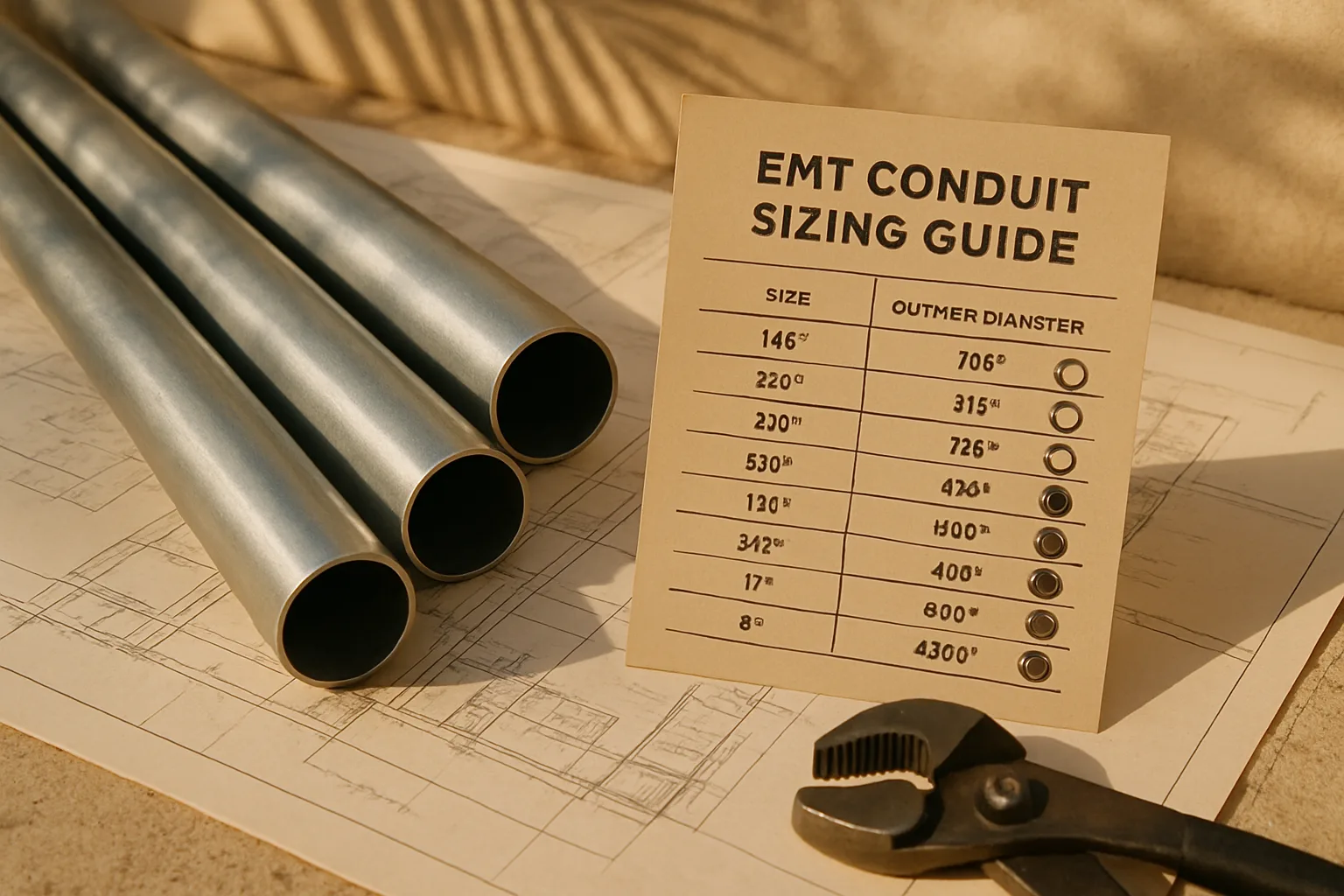
A reliable EMT conduit installation requires matching the conduit trade size, connector, electrical box entry, internal box capacity, route, support and bonding arrangement. Before installation, contractors should confirm that all components are compatible and comply with the approved project drawings, product instructions and applicable electrical requirements.
This guide focuses on connecting EMT conduit to electrical boxes. It does not replace project-specific electrical calculations or installation approval by the responsible engineer.
What Should Be Checked Before Installing EMT Conduit?
Before installation starts, confirm the following:
- EMT trade size.
- Connector type and dimensions.
- Electrical box product code.
- Knockout or entry size.
- Number and direction of entries.
- Box material and finish.
- Internal box capacity.
- Installation environment.
- Required water and dust protection.
- Grounding and bonding arrangement.
- Approved drawings and technical submittals.
A conduit and electrical box may appear compatible while requiring different connector or entry dimensions. Always compare the technical information for the conduit, fitting and box before installation.
How Do You Match EMT Trade Size to the Box Entry?
EMT trade size is a nominal designation, not an exact measurement of the conduit’s inside diameter or the required box opening.
Follow these steps:
- Identify the EMT trade size.
- Select a compatible connector.
- Check the connector’s box-entry dimensions.
- Confirm that the knockout or opening matches the connector.
- Verify that the fitting has enough space for installation.
- Check that it will not interfere with nearby entries or internal components.
The connector creates the mechanical interface between the conduit and the electrical box. Therefore, the connector dimensions—not the conduit alone—determine the required opening.
When several conduits enter the same box, check the space required by each connector and locknut. Closely positioned openings may make proper installation difficult.
How Do You Select the Correct Electrical Box?
The correct box must accommodate the conduit entries while providing enough internal space for the conductors, connections and devices.
Consider:
- Number and size of conductors.
- Number of conduit entries.
- Direction of conductor travel.
- Splices and terminals.
- Mounted devices.
- Grounding and bonding components.
- Internal fittings or clamps.
- Conductor bending space.
- Pulling requirements.
- Access for inspection and maintenance.
A box may have the correct knockout size but still be too small for its intended electrical function.
Box-fill, conductor-bending and pulling requirements should be reviewed against the electrical code and project specification adopted for the installation.
How Should the EMT Route Be Planned?
Good route planning reduces unnecessary bends, difficult conductor pulls and stress on box connections.
Before installing the conduit, review:
- Starting and termination points.
- Electrical box locations.
- Direction changes.
- Structural obstructions.
- Access for pulling conductors.
- Support locations.
- Separation from other services.
- Environmental exposure.
- Future maintenance access.
- Approved project routing.
The EMT should enter the electrical box in proper alignment. A connector should not be used to force a misaligned conduit into position.
For routes with multiple bends or long pulling distances, the responsible designer should determine whether additional pulling points or larger boxes are necessary.
What Should Be Checked When Bending EMT?
Incorrect bending can reduce the usable internal space or damage the conduit.
Avoid:
- Kinks.
- Flattened sections.
- Excessive deformation.
- Cracks or coating damage.
- Incorrect angles.
- Misalignment with the box.
- Bends that interfere with nearby services.
Use a bending tool suitable for the EMT trade size and follow the conduit manufacturer’s instructions.
Bend-radius requirements and the permitted total number of bends between pulling points must be confirmed using the applicable code and project documents. A single bend-radius value should not be applied to every EMT size.
How Should EMT Be Cut and Prepared?
Proper preparation helps protect conductor insulation and allows the connector to attach securely.
The process should include:
- Measuring and marking the conduit.
- Making a controlled, square cut.
- Removing internal and external burrs.
- Inspecting the end for deformation.
- Removing loose metal particles.
- Checking for coating damage.
- Keeping the conduit interior clean.
- Testing the fit with the selected connector.
Sharp edges can damage conductor insulation during pulling. Dust, metal fragments and other debris should be removed before the raceway is closed.
Any coating repair must follow an approved product or project procedure. Do not apply an unspecified repair material.
How Should EMT Connect to a Metal Electrical Box?
The connector must provide secure mechanical attachment and support the approved bonding arrangement.
Check:
- Connector compatibility.
- Correct conduit insertion.
- Condition of the box opening.
- Locknut or securing method.
- Tightening requirements.
- Alignment.
- Bonding continuity.
- Material compatibility.
- Environmental suitability.
- Accessibility after installation.
Metal-to-metal contact alone does not prove that the grounding path is safe or continuous. Loose fittings, damaged parts, coatings or incompatible connectors may affect continuity.
The installation should follow the project’s approved grounding and bonding design.
Does EMT Automatically Ground the Electrical Box?
No. EMT and galvanized steel conduct electricity, but conductivity alone does not establish an approved equipment-grounding path.
A reliable grounding and bonding arrangement depends on:
- Approved fittings.
- Correct connector installation.
- Continuous raceway connections.
- Secure mechanical attachment.
- Condition of the box and conduit.
- Required bonding components.
- Installation quality.
- Applicable electrical requirements.
A separate equipment-grounding conductor may be required by the project design or installation method. The responsible electrical engineer should confirm the final arrangement.
How Should EMT Be Supported?
EMT should be secured so its weight and movement do not place unnecessary stress on the electrical box or connector.
Support requirements depend on:
- EMT trade size.
- Route orientation.
- Distance from boxes and terminations.
- Structural surface.
- Exposure to vibration or impact.
- Environmental conditions.
- Applicable code edition.
- Manufacturer instructions.
The current requirements should be checked under the EMT provisions of the code adopted by the project. EMT is addressed under Article 358 in NFPA 70, but the Saudi project must follow the code edition and specifications formally applicable to it.
Avoid using unsupported rules that increase spacing automatically based on conduit size. Additional support may be required in areas exposed to vibration, movement or mechanical damage.
How Do Saudi Environmental Conditions Affect Installation?
Saudi projects may expose electrical systems to heat, humidity, dust, airborne salt, chemicals and mechanical impact. The requirements vary by location and installation environment.
Indoor installations
Review:
- Box dimensions.
- Internal capacity.
- Mounting method.
- Conduit alignment.
- Accessibility.
- Compatibility with surrounding materials.
Outdoor installations
Review:
- Water and dust protection.
- Box covers and gaskets.
- Conduit entries.
- Fitting suitability.
- Drainage.
- Mounting orientation.
- Coating condition.
- Maintenance access.
Galvanized steel alone does not prove that a box or EMT system is suitable for outdoor use.
Coastal installations
Consider:
- Corrosion exposure.
- Required material and coating.
- Condition of cut ends.
- Compatible fasteners and fittings.
- Condensation.
- Airborne salt.
- Inspection and maintenance requirements.
No single coating specification should be recommended for every coastal site without reviewing the project environment.
Industrial installations
Industrial locations may require further consideration of:
- Chemicals.
- Dust.
- Washdown.
- High temperatures.
- Mechanical impact.
- Vibration.
- Hazard classification.
- Project-specific technical standards.
EMT should only be used where the applicable design, product approval and project requirements permit it.
How Should Electrical Box Openings Be Managed?
Factory knockouts should only be used when their dimensions and positions match the selected connector.
Inspect each opening for:
- Correct size.
- Damage or deformation.
- Sharp edges.
- Coating damage.
- Space for the fitting.
- Interference with adjacent entries.
- Effect on the box’s intended environmental protection.
Unused openings should remain closed or be sealed with appropriate components when required.
New openings should only be created when permitted by the product instructions and project specification. Uncontrolled modification may affect:
- Box strength.
- Surface coating.
- Corrosion protection.
- Internal components.
- Fitting installation.
- Environmental protection.
- Product approval.
When modification is permitted, the opening must be correctly sized, positioned, finished and inspected.
What Should Be Inspected Before Pulling Conductors?
Before pulling conductors, inspect the complete raceway.
Confirm that:
- The approved conduit route was followed.
- Connectors are secure.
- Boxes are properly mounted.
- EMT is adequately supported.
- Bends have no visible deformation.
- Cut ends have been reamed.
- The raceway is free from debris.
- Pulling points are accessible.
- Unused openings are correctly closed.
- Required bonding components are present.
- Environmental seals are installed where required.
- Any damage has been resolved.
Do not pull conductors through an incomplete, damaged or obstructed raceway.
Conductor-pulling methods and tension limits should follow the cable manufacturer’s data and the approved electrical design. One universal pulling-tension formula should not be applied to every cable.
What Documents Should Be Reviewed?
The project installation file may include:
- Approved electrical drawings.
- Conduit schedule.
- Electrical box schedule.
- Product data sheets.
- Connector specifications.
- Knockout and entry dimensions.
- Material approvals.
- Grounding and bonding details.
- Installation inspection records.
- Approved technical deviations.
- Required test records.
- As-built drawings.
The documentation should identify the actual products installed. A general company certificate does not prove that every box, connector or conduit meets the same requirement.
For Saudi projects, verify the requirements using the applicable version of the Saudi Building Code and the project’s approved technical documents.
Common EMT Installation Mistakes
Avoid these common mistakes:
- Treating EMT trade size as an exact diameter.
- Selecting the box before checking the connector.
- Using an incompatible knockout.
- Positioning entries too close together.
- Using the connector to correct misalignment.
- Failing to remove burrs after cutting.
- Pulling conductors before cleaning the conduit.
- Assuming metal contact guarantees grounding.
- Expecting the box connection to support the conduit.
- Using support spacing without checking the applicable code.
- Assuming every galvanized product is suitable outdoors.
- Creating openings without approval.
- Leaving unused openings unsealed.
- Applying unsupported corrosion or service-life assumptions.
- Failing to document site modifications.
EMT-to-Box Installation Checklist
Before completing the installation, verify:
- EMT trade size.
- Connector type and dimensions.
- Box product code.
- Entry or knockout size.
- Number and direction of entries.
- Internal box capacity.
- Conduit alignment.
- Bend condition.
- Cut-end preparation.
- Connector tightness.
- Conduit supports.
- Bonding and grounding requirements.
- Unused-opening protection.
- Environmental suitability.
- Accessibility.
- Required documentation.
- Inspection status.
Any unresolved technical issue should be referred to the responsible electrical engineer before the raceway is closed or conductors are installed.
Frequently Asked Questions
Can EMT Connect Directly to an Electrical Box?
EMT normally connects to an electrical box through an approved fitting. The conduit, connector and box entry must be compatible in size, material, installation method and environmental suitability.
Is EMT Trade Size the Same as the Knockout Size?
No. EMT trade size is a nominal designation. The required knockout or opening should be confirmed using the dimensions of the selected connector and electrical box.
Can EMT Be Used Outdoors?
EMT may be used only where its product approval, fittings, installation method and project requirements permit it. Outdoor suitability should not be assumed simply because the conduit is metallic or galvanized.
Does EMT Provide Grounding Automatically?
No. EMT may form part of a grounding and bonding arrangement when correctly installed, but reliable continuity depends on approved fittings, secure connections and the project’s grounding design.
Can an Additional Opening Be Made in an Electrical Box?
Only when modification is permitted by the product instructions and project requirements. The opening must be correctly sized, positioned, finished and inspected.
Should Every EMT Installation Use the Same Support Spacing?
No. Support requirements must be checked against the conduit type, route, applicable code, project specification and installation conditions.
Need Electrical Boxes for an EMT Installation?
Share the required electrical-box code or dimensions, EMT trade size, connector and entry requirements, quantity, installation environment and delivery city with ALROUF Electrical Accessories.
The team can review the available electrical-box products and prepare a quotation based on the information provided.


