


How Do You Select the Right Conduit Pipe for Saudi
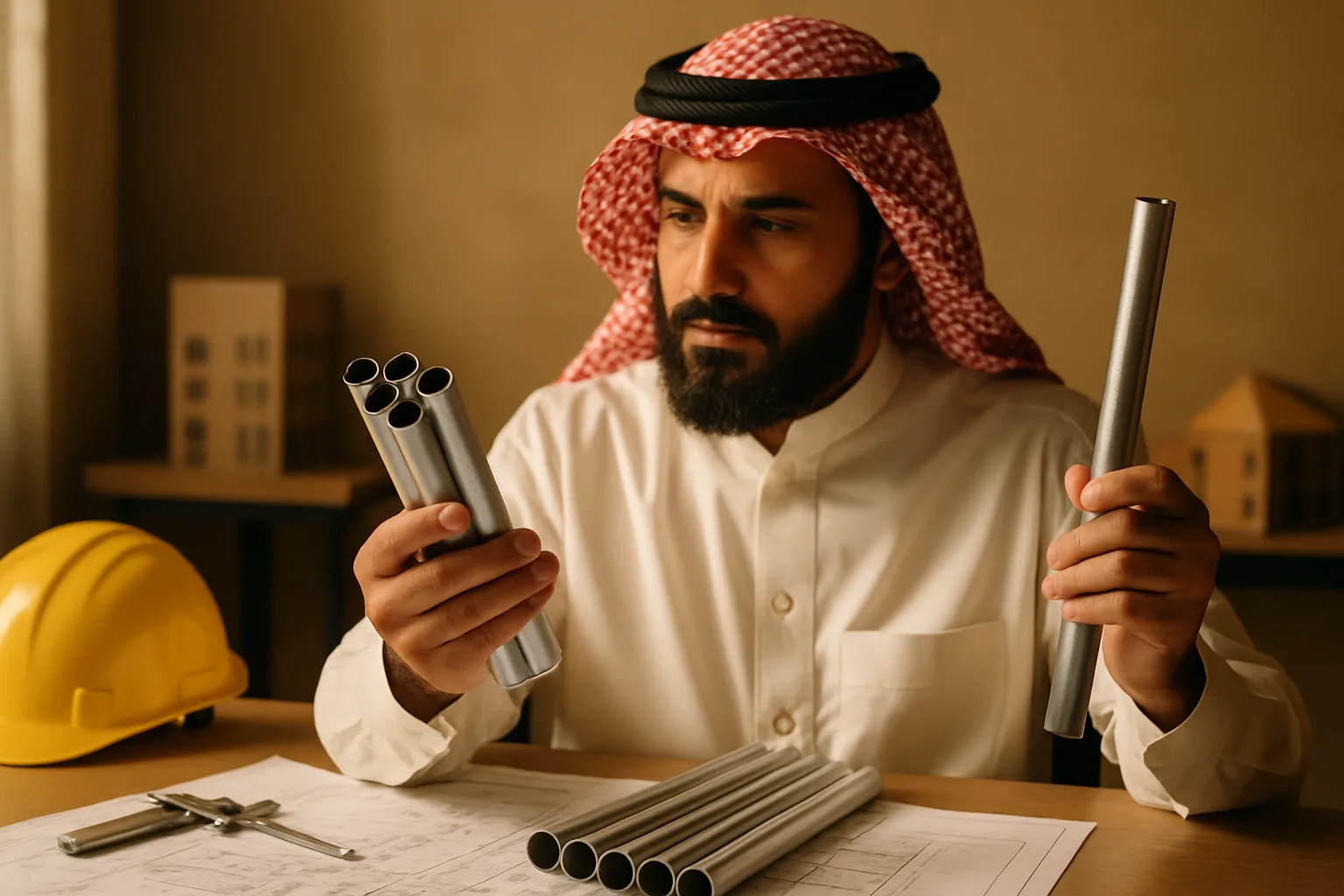
Selecting the right conduit pipe for Saudi electrical projects requires a systematic evaluation of mechanical protection needs, environmental exposure, installation method, and compliance with Saudi Building Code (SBC) requirements. The three primary options—EMT (Electrical Metallic Tubing), PVC (Polyvinyl Chloride), and galvanized steel conduit—each serve distinct roles. For most commercial and industrial applications in the Eastern Province, galvanized steel conduit offers the best balance of durability and corrosion resistance, while EMT provides a cost-effective solution for dry interior environments and PVC excels in underground and moisture-laden installations. The decision ultimately hinges on the specific project phase, location, and the level of physical protection required for the conductors.
The selection process begins with a thorough assessment of the installation environment. Coastal projects in Dammam, Khobar, and Jubail face high humidity and saline air, which accelerates corrosion in unprotected metals. Inland projects in Riyadh or Qassim contend with extreme temperature fluctuations and dust. Each environmental factor directly influences the choice of conduit material and its protective coating. For instance, hot-dipped galvanized steel conduit with a minimum zinc coating of 600 g/m² is recommended for coastal installations, whereas standard electro-galvanized EMT may suffice for climate-controlled interior spaces. For a deeper dive into the advantages of metallic tubing in specific applications, refer to our guide on why electrical metallic tubing is the best choice for wiring.
Beyond environmental considerations, the mechanical requirements of the project dictate conduit selection. Areas subject to physical impact, such as parking garages, industrial floors, and plant rooms, demand rigid galvanized steel conduit that can withstand accidental damage. In contrast, concealed installations within drywall partitions or above suspended ceilings can utilize lighter EMT or PVC, reducing material costs and labor effort. The National Electrical Code (NEC) and the Saudi Building Code provide specific tables and guidelines for conduit support spacing, bending radii, and fill capacities, which must be consulted during the design phase to ensure compliance and system reliability.
Finally, the total installed cost—including material, labor, and future maintenance—must be evaluated. While PVC conduit has the lowest material cost, it requires more supports and careful handling in high-temperature environments. Galvanized steel conduit, though more expensive upfront, offers superior longevity and reduces the likelihood of costly rework. For large-scale Saudi projects, partnering with a local manufacturer like Alrouf, which produces galvanized steel conduit and accessories in Dammam's Second Industrial City, can significantly reduce lead times and logistics costs while ensuring consistent quality across every batch. Explore our full range of services to see how we support projects from design to delivery.
EMT vs. PVC vs. Galvanized Steel: Which Conduit Pipe Performs Best in Saudi Conditions?
EMT conduit pipe, also known as thin-wall conduit, is the most economical metallic option for interior installations. It is manufactured from pre-galvanized steel strip, formed and welded into a lightweight tube, and offers excellent mechanical protection for conductors. In Saudi commercial projects, EMT is widely used in office towers, shopping centers, and residential compounds where the conduit is concealed within walls, floors, or above ceilings. Its smooth interior reduces cable friction during pulling, and its lighter weight compared to rigid steel translates to faster installation and lower labor costs. However, EMT is not suitable for outdoor exposure, wet locations, or areas where physical damage is likely, as its thin wall and limited zinc coating provide minimal corrosion protection. For a comprehensive comparison, check out our essential guide to selecting the right EMT conduit pipe.
PVC conduit pipe is the preferred choice for underground installations, concrete encasement, and highly corrosive environments. Its non-conductive nature eliminates the risk of stray currents, and its resistance to moisture, chemicals, and UV radiation makes it ideal for direct burial in Saudi soil conditions. PVC is also the most economical option for large-diameter runs, such as feeder circuits between buildings or from transformers to main distribution panels. The primary limitation of PVC is its reduced mechanical strength; it can be crushed under heavy loads and becomes brittle at very low temperatures, although this is rarely a concern in Saudi Arabia's climate. Additionally, PVC expands and contracts significantly with temperature changes, requiring expansion couplings on long straight runs to prevent buckling or pull-out.
Galvanized steel conduit pipe, often referred to as rigid metal conduit (RMC), provides the highest level of mechanical protection and is the standard for industrial facilities, power plants, and hazardous locations. Its thick wall and heavy zinc coating, applied through hot-dip galvanizing, offer exceptional resistance to corrosion and physical impact. In Saudi industrial cities like Jubail and Yanbu, where petrochemical plants and refineries operate under harsh conditions, galvanized steel conduit is the mandated choice for most electrical installations. The threaded connections of rigid conduit also provide a continuous low-resistance path for fault currents, enhancing overall system safety. The trade-off is higher material cost and more labor-intensive installation, requiring threading, bending, and the use of specialized fittings.
For most Saudi projects, a hybrid approach is optimal. Use galvanized steel conduit for exposed runs in plant areas, parking structures, and any location subject to impact. Use EMT for concealed interior runs in commercial buildings where cost savings are significant. Use PVC for underground feeders, outdoor lighting circuits, and areas with high chemical exposure. This tiered strategy optimizes both performance and budget, ensuring that each segment of the electrical system receives the appropriate level of protection without overspending.
What Are the Key Standards and Compliance Requirements for Conduit Pipe in Saudi Arabia?
Conduit pipe used in Saudi electrical projects must comply with both international standards and local regulations. The primary international standards are IEC 61386 for conduit systems and UL 6 for rigid metal conduit, with ASTM A53/A53M governing the steel material itself. In Saudi Arabia, the Saudi Standards, Metrology and Quality Organization (SASO) adopts many IEC standards, and the Saudi Building Code (SBC) references the National Electrical Code (NEC) for installation requirements. Contractors and MEP engineers must ensure that all conduit materials carry the appropriate SASO certification or IEC test reports to avoid customs delays and project rejections.
The Saudi Building Code requires that all electrical conduit systems be installed in accordance with SBC 401, which aligns with the NEC. This includes requirements for conduit support spacing, minimum bending radii, and the number of conductors allowed within a single conduit based on fill calculations. For example, a 25 mm (1 inch) conduit pipe is limited to a specific number of 2.5 mm² conductors based on the cross-sectional area of the conductors and the conduit's internal diameter. Exceeding these fill limits leads to overheating, increased voltage drop, and difficulty during cable pulling, which can damage conductor insulation.
Fire safety is another critical compliance area. Saudi projects, particularly high-rise buildings and public facilities, require conduit systems that maintain circuit integrity during a fire. Metallic conduits, both EMT and rigid galvanized steel, inherently provide this protection as they do not contribute fuel to a fire and maintain their structural integrity at elevated temperatures. PVC conduit, while self-extinguishing, can deform and release toxic fumes when exposed to high heat. For life safety systems such as fire alarm circuits, emergency lighting, and fire pump feeders, the use of metallic conduit is strongly recommended and often mandated by local authorities.
Local manufacturing compliance is increasingly important under Saudi Vision 2030. The Kingdom's push for local content in government and semi-government projects means that using locally manufactured conduit pipe and accessories can contribute to the project's Saudi Content Score, potentially improving the contractor's competitiveness in bidding. Alrouf, as a Dammam-based manufacturer, produces galvanized steel conduit and associated fittings that meet international standards while supporting the national localization agenda. By sourcing locally, contractors also benefit from shorter lead times, direct technical support, and the ability to customize products for specific project requirements. Learn more about our commitment to quality and standards on our About Alrouf page.
How Does Local Manufacturing in Dammam Improve Conduit Pipe Supply Chain Reliability?
The supply chain for conduit pipe in Saudi Arabia has historically relied heavily on imports from Asia and Europe, creating vulnerabilities in lead times, pricing, and quality consistency. Local manufacturing, particularly in the Eastern Province's industrial hubs, is transforming this landscape. Alrouf, established in 2003 in Dammam's Second Industrial City, produces galvanized steel conduit and a comprehensive range of electrical accessories, including junction boxes, covers, and fittings. This local presence means that contractors can source conduit pipe and all associated components from a single supplier, simplifying procurement and ensuring compatibility across the entire system.
Lead time reduction is one of the most significant advantages of local manufacturing. Imported conduit typically requires 8 to 12 weeks from order to delivery, including sea freight, customs clearance, and inland transportation. In contrast, locally manufactured conduit pipe can be delivered within days or weeks, depending on order size and specification. For projects with aggressive schedules or those facing unexpected material shortages, this agility is invaluable. It also reduces the need for large on-site inventories, freeing up capital and storage space.
Quality control is another critical factor. Local manufacturers are subject to the same SASO and international standards as importers, but they offer greater transparency and traceability. Buyers can visit the manufacturing facility, inspect production processes, and request material test certificates for each batch. Alrouf's manufacturing capabilities, including progressive die stamping, automated assembly, robotic welding, and coil slitting, ensure that conduit and accessories are produced with precision and repeatability. This is particularly important for large projects where thousands of identical components must fit together seamlessly. Our project portfolio demonstrates our track record in delivering high-quality components for diverse applications.
Finally, local manufacturing supports the Kingdom's Vision 2030 localization goals. By specifying locally produced conduit pipe, contractors and project owners contribute to the growth of Saudi industry, job creation, and the transfer of technology. This alignment with national policy can also be a differentiator in tender evaluations, particularly for government and semi-government projects that prioritize Saudi Content. Alrouf's commitment to quality, combined with its strategic location in the Eastern Province, positions it as a reliable partner for projects across the Kingdom and the wider GCC region.
What Installation Practices Ensure Long-Term Performance of Conduit Pipe Systems?
Proper installation is as important as material selection for the long-term performance of a conduit pipe system. The first critical practice is accurate bending. EMT and galvanized steel conduit must be bent using a proper conduit bender to achieve the correct radius without kinking or flattening the pipe. A kinked conduit restricts cable pulling and can damage conductor insulation. For rigid galvanized steel conduit, factory-made elbows are recommended for tight bends, while field bending should be limited to larger radii using a hydraulic bender. The minimum bending radius, as specified in the NEC and SBC, is typically six times the conduit diameter for EMT and ten times for rigid conduit, though larger radii are always preferable for easier cable pulling.
Support spacing is another critical factor. Conduit must be securely fastened at intervals that prevent sagging and movement. For EMT, the maximum support spacing is 3 meters (10 feet), while rigid galvanized steel conduit can be supported at 3.7-meter (12-foot) intervals. PVC conduit requires more frequent supports—typically every 1.2 meters (4 feet)—due to its lower rigidity and higher thermal expansion. All supports must be corrosion-resistant and properly anchored to the building structure. In outdoor installations, expansion fittings must be installed on long straight runs of PVC conduit to accommodate thermal movement, preventing buckling or separation at joints.
Proper jointing and termination are essential to maintain the integrity of the conduit system. For threaded rigid conduit, joints must be made up wrench-tight to ensure a continuous electrical path and mechanical strength. For EMT, set-screw or compression fittings must be tightened to the manufacturer's specifications. PVC joints require solvent cement that is approved for the specific conduit material and ambient temperature conditions. In Saudi Arabia's high summer temperatures, solvent cement must be applied and cured according to the manufacturer's instructions to achieve a watertight bond. All conduit terminations at boxes, panels, and equipment must use appropriate fittings and bushings to protect conductors from abrasion and maintain the system's grounding continuity. For reliable connections, consider our guide on ensuring secure and reliable connections with EMT connectors.
Finally, the conduit system must be properly grounded and bonded. Metallic conduit systems serve as an equipment grounding conductor, providing a low-impedance path for fault currents. All joints, fittings, and boxes must be electrically continuous, and the system must be connected to the building's grounding electrode system at the service entrance. For PVC conduit, a separate equipment grounding conductor must be pulled with the circuit conductors. Regular testing of ground continuity during and after installation ensures that the safety function of the conduit system is preserved. By following these installation practices, contractors can ensure that the conduit pipe system delivers reliable service for the life of the building.
How Does Conduit Pipe Selection Impact Project Cost and Lifecycle Value?
The initial material cost of conduit pipe represents only a fraction of the total lifecycle cost of an electrical installation. A comprehensive cost analysis must consider installation labor, maintenance, energy efficiency, and the cost of potential failures. EMT conduit pipe, with its lower material cost and lighter weight, typically offers the lowest installed cost for interior applications. Its smooth interior reduces friction, allowing longer cable pulls and reducing the need for pull boxes. However, in corrosive environments, EMT may require replacement within 10 to 15 years, whereas galvanized steel conduit can last 50 years or more with minimal maintenance.
Galvanized steel conduit pipe, despite its higher upfront cost, delivers superior lifecycle value in demanding environments. Its mechanical strength protects conductors from damage, reducing the risk of costly downtime and repairs. In industrial facilities, where production stoppages can cost thousands of riyals per hour, the reliability of a rigid steel conduit system is a critical economic factor. Additionally, the threaded joints of rigid conduit provide a secure, watertight connection that prevents moisture ingress and conductor corrosion, further extending system life.
PVC conduit pipe offers the lowest material cost and is highly resistant to corrosion, making it an economical choice for underground and outdoor installations. However, its lower mechanical strength means it is more susceptible to damage during construction and subsequent excavation. In Saudi Arabia, where underground utilities are often disturbed by new construction, the use of PVC conduit in high-traffic areas may lead to frequent repairs. Encasing PVC conduit in concrete provides additional protection but increases labor and material costs, narrowing the cost advantage over metallic options.
From a project management perspective, the total cost of ownership also includes the cost of logistics and inventory. Imported conduit pipe requires significant lead time, forcing contractors to order early and maintain large inventories. Locally manufactured conduit, such as that produced by Alrouf in Dammam, allows for just-in-time delivery, reducing inventory carrying costs and the risk of material obsolescence. Furthermore, local sourcing eliminates the risk of currency fluctuations and shipping delays, providing greater budget certainty. When all factors are considered, the choice of conduit pipe is a strategic decision that impacts the project's bottom line from procurement through decades of operation.
Partnering with a Local Conduit Pipe Manufacturer for Project Success
For MEP contractors and procurement teams in Saudi Arabia, partnering with a local conduit pipe manufacturer offers tangible benefits beyond simple material supply. A manufacturer like Alrouf, with in-house capabilities in progressive die stamping, automated assembly, robotic welding, tooling and die design, tubular manufacturing, coil slitting, and plastic injection molding, provides a single source for a wide range of electrical accessories. This integration simplifies the supply chain, ensures consistent quality, and enables faster response to project-specific requirements.
Technical collaboration is a key advantage of working with a local manufacturer. Alrouf's engineering team can assist with product selection, provide technical data sheets, and develop custom solutions for unique project challenges. For example, a project requiring a specific conduit box configuration or a custom mounting bracket can be accommodated through Alrouf's tooling and die design capabilities. This level of support is rarely available from overseas suppliers, who typically offer only standard products with limited customization options.
Quality assurance is another critical benefit. Local manufacturers are subject to the same rigorous standards as international suppliers, but they offer greater transparency. Buyers can request and receive material test certificates, inspection reports, and even visit the production line to witness quality control processes firsthand. Alrouf's commitment to precision and repeatability, supported by automated assembly and robotic welding, ensures that every conduit pipe and accessory meets the required specifications, batch after batch.
Finally, partnering with a local manufacturer aligns with the strategic goals of Saudi Vision 2030. By prioritizing locally manufactured products, contractors and project owners contribute to the development of a robust industrial sector, create jobs for Saudi nationals, and reduce the Kingdom's dependence on imports. This alignment can also provide a competitive advantage in tender evaluations, as many government and semi-government projects now include Saudi Content requirements. For projects in the Eastern Province, sourcing from Alrouf in Dammam also reduces transportation costs and carbon footprint, supporting sustainability goals. In an era of supply chain uncertainty, the reliability and partnership offered by a local manufacturer are invaluable assets for any project. Get in touch with our team to discuss your project needs via our contact page.
◈ Key Takeaways
- ✦Match conduit pipe material to the specific environmental and mechanical demands of each project zone—galvanized steel for coastal and industrial, EMT for dry interiors, and PVC for underground runs.
- ✦Always verify compliance with Saudi Building Code (SBC 401) and SASO standards, including conduit fill calculations and support spacing, to ensure safety and avoid project delays.
- ✦Leverage local manufacturing in Dammam to reduce lead times, lower logistics costs, and gain access to technical support and custom solutions that imported products cannot match.
- ✦Consider total lifecycle cost, not just upfront material price—galvanized steel conduit offers superior durability and lower maintenance in harsh Saudi conditions.
- ✦Partner with a manufacturer that offers integrated capabilities, such as Alrouf's progressive die stamping, robotic welding, and injection molding, to ensure consistent quality and supply chain reliability.
Frequently Asked Questions
❓ What is conduit pipe used for?
Conduit pipe is used to protect and route electrical wiring in buildings and industrial facilities. In Saudi Arabia, it is essential for complying with safety regulations and ensuring durability against harsh environmental conditions.
❓ How are conduit pipes specified?
Conduit pipes are specified by material (e.g., PVC, steel), size (diameter in mm or inches), wall thickness, and standards such as IEC or NEC. For Saudi projects, it's important to consider factors like UV resistance and temperature ratings to ensure long-term performance.
❓ Can you use PVC pipe for conduit?
Yes, PVC pipe can be used as conduit, but it must be specifically rated for electrical use. Standard plumbing PVC may not meet fire safety or UV resistance requirements. In Saudi Arabia, use PVC conduit that complies with local standards and is suitable for outdoor exposure.
❓ What PVC pipe is UV resistant?
For outdoor applications in Saudi Arabia, choose PVC conduit with UV inhibitors, often labeled as 'UV-resistant' or 'sunlight-resistant'. These pipes are formulated to withstand intense sunlight without degrading, ensuring long service life.
❓ How long is a conduit pipe?
Standard conduit pipes typically come in lengths of 3 meters or 6 meters. In Saudi Arabia, 3-meter lengths are common for ease of handling and installation. Always check the supplier's specifications, as lengths may vary.
Ready to Transform Your Space?
Contact Alrouf today to discuss your conduit pipe and electrical accessory requirements—our engineering team in Dammam is ready to support your next Saudi project with locally manufactured, standards-compliant solutions.


