


A complete guide to metal stamping parts for Saudi OEMs: progressive die stamping, material selection, tolerances, and how to prepare an enquiry.
What Are Metal Stamping Parts and Why Do They Matter for OEM Enquiries?
Metal stamping parts are components formed from flat sheet metal through a series of pressing operations that cut, bend, and shape the material into a precise, repeatable geometry. In the context of an OEM manufacturing enquiry, these parts are the building blocks of assemblies—from electrical boxes and brackets to terminals and enclosures. For Saudi-based procurement teams and electrical contractors, understanding what metal stamping parts are and how they are produced is the first step toward specifying them correctly and sourcing them reliably. At Alrouf Electrical Accessories, we have been manufacturing stamped components since 2003 from our facility in Dammam 2nd Industrial City, and we see firsthand how early technical clarity reduces project risk.
The core value of metal stamping parts lies in their repeatability. Once a die is designed and built, every stroke of the press produces a part that matches the previous one within defined tolerances. This is critical for OEMs that assemble thousands of units and cannot afford dimensional drift. Whether you are producing switch boxes, junction boxes, or custom brackets, the stamped part must fit the next component in the assembly line without rework. That repeatability is what separates a well-prepared stamping enquiry from one that leads to costly delays.
In Saudi Arabia, the demand for locally manufactured metal stamping parts is rising, driven by Vision 2030 local content targets and the need for shorter supply chains. Projects in the Eastern Province—from industrial cities to commercial developments—increasingly require components that meet Saudi standards and are produced within the Kingdom. Alrouf’s galvanized steel boxes, for example, are made from G90 galvanized steel as per ASTM-A653 and carry a 2-hour fire rating, demonstrating how stamped parts can meet both structural and safety requirements. When you prepare an OEM enquiry, you are not just asking for a price; you are initiating a partnership that can support long-term local production, as explored in our guide on how local electrical box manufacturing supports Saudi industry.
How Does Progressive Die Stamping Work in Practice?
Progressive die stamping is a high-volume metal forming process where a coil of sheet metal is fed through a die that performs multiple operations in sequence—piercing, bending, forming, and cutting—at each station. The strip moves forward one step at a time, and with each press stroke, a finished part emerges. This method is ideal for complex metal stamping parts that require several operations because it eliminates the need for manual handling between steps, ensuring consistent quality and faster cycle times. At Alrouf, we use progressive die stamping for many of our electrical accessories, including our switch boxes and junction boxes, where precision knockouts and earth terminals must be formed accurately.
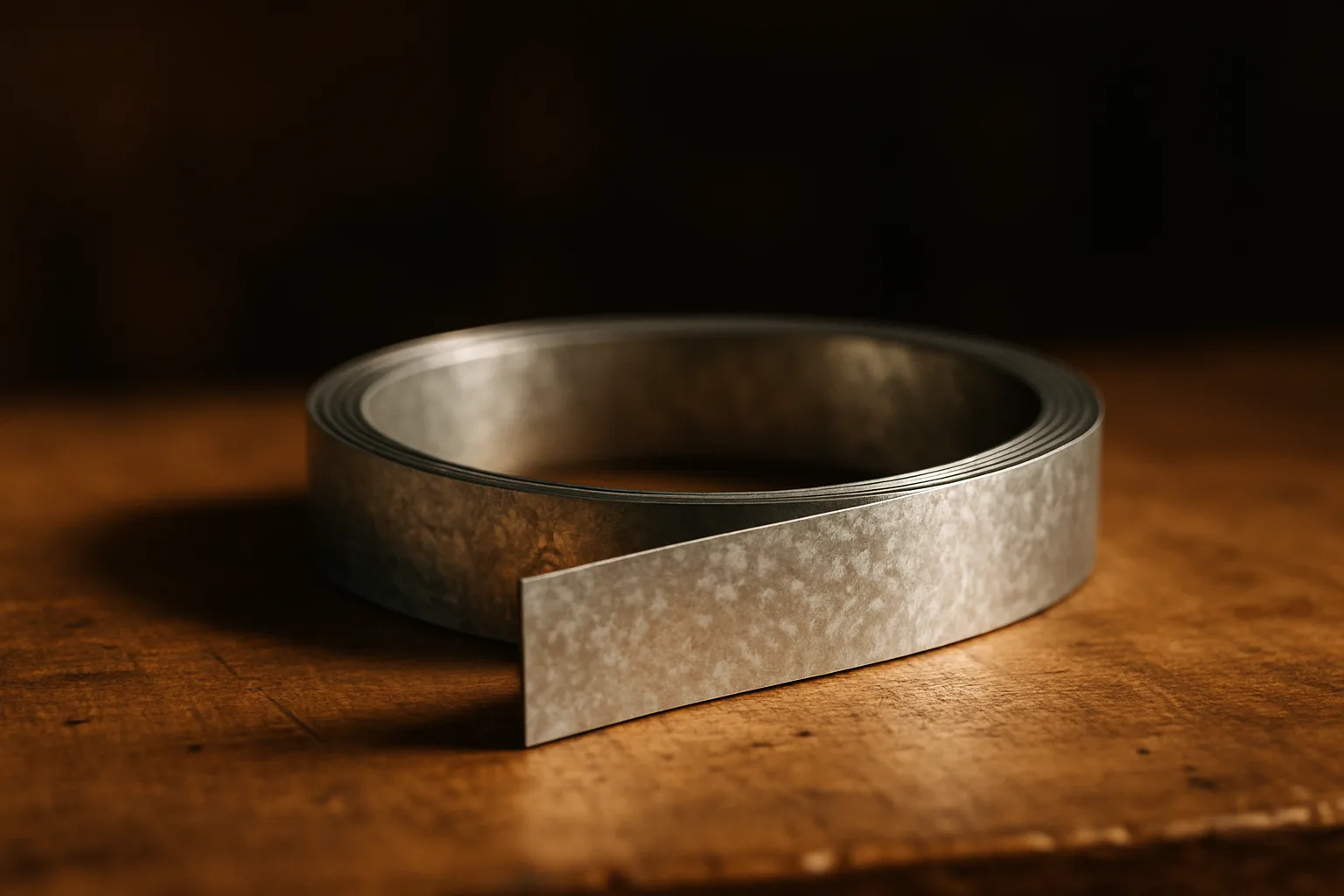
The process begins with coil slitting, where master coils of galvanized steel are cut to the required width. This is a critical step because the strip width directly affects material utilization and the stability of the feed. Once slit, the coil is loaded into the press, and the progressive die takes over. Each station in the die is designed to perform a specific task: the first may pierce pilot holes, the next may notch the outline, subsequent stations form bends, and the final station separates the part from the strip. The die must be robust enough to withstand millions of strokes, and its design determines the dimensional accuracy of the final metal stamping parts.
For OEMs, understanding progressive die stamping helps in preparing an enquiry because it clarifies what information is needed. You will need to provide a detailed drawing that specifies material, thickness, tolerances, and any secondary operations such as tapping or welding. The more precise your drawing, the more accurately we can quote and produce. If you are unsure about certain features, our engineering team can review your requirements and suggest design adjustments that improve manufacturability without compromising function. This collaborative approach is how we help Saudi OEMs bring their products to market efficiently.
What Information Should an OEM Manufacturing Enquiry Include?
A well-structured OEM manufacturing enquiry for metal stamping parts should include several key elements: a detailed 2D drawing or 3D model, material specification, surface finish requirements, annual volume, and any applicable standards. The drawing is the most important document because it defines the geometry, dimensions, and tolerances. It should clearly show all critical dimensions, datum points, and any features that require special attention, such as holes, bends, or embosses. Without a clear drawing, the quoting process becomes guesswork, and the risk of producing non-conforming parts increases.
Material selection is another critical aspect. For electrical accessories, galvanized steel is common because of its corrosion resistance. Alrouf uses G90 galvanized steel as per ASTM-A653 for all our boxes, which provides a zinc coating that protects against rust. If your application requires a different material—such as stainless steel, aluminum, or copper—you should specify it in the enquiry. The material thickness also matters: our switch boxes range from 0.6 mm to 1.2 mm, while junction boxes are typically 0.9 mm. These thicknesses are chosen based on mechanical strength, weight, and cost. Providing the material and thickness upfront allows us to assess feasibility and tooling requirements accurately.
Volume expectations and delivery schedule should also be stated. Progressive die stamping is most economical at high volumes because the tooling cost is amortized over many parts. If your annual requirement is in the hundreds of thousands, progressive die stamping is likely the right choice. For lower volumes, alternative methods such as CNC punching or laser cutting might be more cost-effective. Additionally, if you have specific quality documentation requirements—such as material certificates or dimensional reports—you should mention them in the enquiry. While we do not claim certifications for our boxes, we can provide material traceability and in-process inspection records as part of our standard quality procedures. Being transparent about your needs from the start ensures a smoother project.
How Do You Select the Right Material for Metal Stamping Parts?
Material selection for metal stamping parts depends on the application, environmental conditions, and mechanical requirements. In the electrical industry, galvanized steel is a popular choice because it combines strength with corrosion resistance. The galvanized coating, typically G90 (which indicates a zinc coating weight of 0.90 oz/ft²), provides a barrier that protects the base steel from moisture and chemicals. This is why Alrouf uses G90 galvanized steel as per ASTM-A653 for all our electrical boxes. For indoor applications, this level of protection is often sufficient, but for outdoor or highly corrosive environments, additional coatings or stainless steel may be necessary.
Another consideration is formability. Metals with higher ductility, such as low-carbon steel, can be bent and formed without cracking. This is important for progressive die stamping, where the material undergoes multiple bends. If the material is too hard or brittle, it may fracture during forming, leading to rejects. Aluminum is lighter and more corrosion-resistant than steel but has lower strength; it is often used in applications where weight is a concern. Copper and brass offer excellent electrical conductivity and are used for terminals and earth components. In our switch boxes, for example, some models include brass earth terminals to ensure reliable grounding.
Thickness also plays a role in material selection. Thicker materials provide greater rigidity and can withstand higher mechanical loads, but they require more force to stamp and may increase tooling wear. Our switch boxes are available in 0.6 mm, 0.9 mm, and 1.2 mm thicknesses, allowing customers to choose based on their structural needs. For junction boxes, 0.9 mm is standard. When preparing an enquiry, specify the material grade, thickness, and any surface treatment (such as hot-dip galvanizing or powder coating) so that we can recommend the most suitable option. If you are unsure, our engineers can help you evaluate the trade-offs between cost, performance, and manufacturability.
What Tolerances and Quality Checks Apply to Stamped Components?
Tolerances in metal stamping parts define the acceptable variation in dimensions. They are typically specified on the drawing and are crucial for ensuring that the part fits and functions correctly in the assembly. In progressive die stamping, tolerances can be tight—often within ±0.1 mm for critical dimensions—but achieving them depends on the die design, material thickness, and press condition. It is important to distinguish between critical and non-critical dimensions: over-tolerancing every feature increases cost without adding value. A good practice is to tolerance only those dimensions that affect fit, form, or function.
Quality checks for stamped components begin with first-article inspection (FAI), where the first parts produced from a new die are measured against the drawing to verify that the tooling is correct. During production, periodic inspections are performed to monitor dimensional stability. For electrical boxes, additional checks may include verifying knockout sizes and positions, earth terminal continuity, and coating thickness. While we do not claim per-box inspection or testing for our standard products, we do maintain a quality management system that includes in-process checks and final visual inspection. This ensures that the metal stamping parts we deliver meet the agreed specifications.
Documentation is an important part of quality assurance. For OEM enquiries, we can provide material certificates, dimensional reports, and inspection records as required. If your project demands compliance with specific standards—such as BS4662 for switch boxes—we can confirm that our products are marked accordingly. For example, our BB6 and BB7 switch boxes are marked AL-ROUF KSA BS4662, while our junction boxes (BB8, BB9, BB10) are marked AL-ROUF KSA without BS4662. These markings indicate that the products meet the relevant dimensional and performance requirements. When preparing your enquiry, let us know what documentation you need so we can include it in our quotation.
How Does Tooling and Die Design Impact Your Stamping Project?
Tooling and die design are the foundation of any progressive die stamping project. The die is a precision tool that must be engineered to produce the required metal stamping parts at the desired volume and quality. The design process starts with a thorough review of the part drawing to identify all features, tolerances, and material specifications. Our engineers then develop a die layout that sequences the operations—piercing, bending, forming, and cutting—in the most efficient order. This layout determines the number of stations, the strip width, and the press tonnage required.
A well-designed die not only ensures dimensional accuracy but also maximizes material utilization and minimizes downtime. For example, nesting parts closely on the strip reduces scrap, which is especially important when using expensive materials like copper or stainless steel. The die must also be robust enough to withstand the wear of high-volume production. We use high-quality tool steels and precision machining to build dies that maintain their edge and alignment over millions of strokes. Regular maintenance and sharpening are part of the die’s lifecycle, and we plan for this in our production schedules.
For OEMs, the tooling cost is a significant upfront investment. However, it is a one-time cost that is amortized over the life of the project. When you enquire about metal stamping parts, we will provide a breakdown of the tooling cost and the piece price. If your volumes are low, we may suggest alternative methods such as CNC punching or laser cutting to avoid the tooling expense. But for high-volume production, progressive die stamping is the most cost-effective solution. Our team can guide you through the decision, ensuring that you get the best value for your project.
Why Choose Alrouf for Metal Stamping Parts in Saudi Arabia?
Alrouf Electrical Accessories has been manufacturing metal stamping parts in Saudi Arabia since 2003. From our facility in Dammam 2nd Industrial City, we serve OEMs, electrical contractors, and industrial sourcing teams across the Eastern Province and beyond. Our capabilities include progressive die stamping, automated assembly, robotic welding, tooling and die design, tubular manufacturing, coil slitting, and plastic injection molding. This integrated approach allows us to produce complete electrical accessories—such as switch boxes and junction boxes—as well as custom stamped components for a wide range of applications. You can learn more about our full range of capabilities on our services page.
Our commitment to quality is evident in the materials we use and the processes we follow. All our boxes are made of G90 galvanized steel as per ASTM-A653, and they carry a 2-hour fire rating. Our switch boxes (BB6, BB7) are marked AL-ROUF KSA BS4662, and our junction boxes (BB8, BB9, BB10) are marked AL-ROUF KSA. These markings reflect our adherence to recognized standards and our dedication to producing reliable products. We also offer a range of sizes and thicknesses to meet different project requirements, from the compact BB6-003 (7×14×3.5 cm, 0.6 mm, 109 g) to the larger BB10-001 (20×20×5.5 cm, 952 g).
When you partner with Alrouf, you are working with a local manufacturer that understands the Saudi market. We are familiar with the demands of Vision 2030 local content initiatives and can support your efforts to source domestically. Our engineering team is available to review your drawings and provide feedback on design for manufacturability. We do not offer free consultations or CAD/CAM services, but we do engage in technical discussions to ensure that your metal stamping parts meet your expectations. To start the conversation, send us your drawings and an outline of your requirements. We will respond with a detailed quotation and, if needed, suggest improvements that can enhance quality or reduce cost. Contact Alrouf today to discuss your next OEM manufacturing enquiry.
◈ Key Takeaways
- ✦Prepare a detailed drawing with material, thickness, and tolerances before requesting a quote for metal stamping parts.
- ✦Specify the annual volume to determine if progressive die stamping is the most cost-effective method.
- ✦Choose G90 galvanized steel as per ASTM-A653 for electrical boxes to ensure corrosion resistance and a 2-hour fire rating.
- ✦Clarify quality documentation needs (e.g., material certificates, dimensional reports) upfront to avoid delays.
- ✦Engage with local Saudi manufacturers like Alrouf to support Vision 2030 local content and reduce supply chain risk.
Frequently Asked Questions
❓ What are stamped metal parts?
Stamped metal parts are components formed by pressing flat sheet metal between a die and a punch, which cuts, bends, or shapes the material into a desired form. They are widely used in electrical accessories, automotive, and construction industries across Saudi Arabia because they offer consistent quality and efficient mass production. For example, Alrouf in Dammam uses metal stamping to manufacture electrical boxes from G90 galvanized steel.
❓ What is metal stamping?
Metal stamping is a manufacturing process that uses dies and presses to transform flat metal sheets into specific shapes through operations like blanking, piercing, bending, and embossing. It is ideal for high-volume production of precise parts, such as the switch boxes and junction boxes made by Alrouf in Saudi Arabia. The process ensures uniformity and strength, which is critical for electrical applications.
❓ How are stamped metal parts used in electrical accessories?
Stamped metal parts are essential in electrical accessories like switch boxes and junction boxes, where they provide structural support, grounding, and protection for wiring. In Saudi Arabia, Alrouf manufactures these boxes from G90 galvanized steel with a 2-hour fire rating, ensuring safety and durability. Their products, such as the BB6 and BB7 switch boxes, are marked AL-ROUF KSA BS4662, meeting industry standards.
❓ What materials are commonly used for metal stamping in Saudi Arabia?
Common materials for metal stamping in Saudi Arabia include galvanized steel, stainless steel, aluminum, and copper, chosen based on required strength, corrosion resistance, and conductivity. Alrouf, for instance, uses G90 galvanized steel as per ASTM-A653 for its electrical boxes, which provides excellent durability in the region's climate. This material ensures long-lasting performance in construction and industrial applications.
❓ Why choose metal stamped parts over other manufacturing methods?
Metal stamped parts offer advantages such as high production speed, consistent quality, and lower cost per unit for large volumes, making them ideal for mass production. In Saudi Arabia, companies like Alrouf rely on stamping to produce precise electrical boxes that meet rigorous standards, including a 2-hour fire rating. This method also minimizes material waste and allows for complex geometries.
Have a steel or plastic part to manufacture?
Alrouf's facility in Dammam produces steel and plastic products in mass production. Tell us about your part.
Alrouf Electrical Accessories Manufacturer
Galvanized electrical boxes & precision metal-plastic components — Dammam


