A practical guide for Saudi B2B buyers on preparing an OEM manufacturing enquiry for progressive die stamping and sheet metal stamping.
What Is Progressive Die Stamping and How Does It Work?
Progressive die stamping is a high-volume metal forming process in which a single die with multiple stations performs a sequence of operations—such as piercing, bending, drawing, and cutting—on a coil of sheet metal as it advances through the press. Each stroke of the press produces one or more finished parts, with the strip moving progressively from station to station. This method is ideal for producing complex electrical accessories and metal components with consistent quality and tight tolerances. At Alrouf, we use progressive die stamping to manufacture galvanized steel electrical boxes and other sheet metal stamping parts that meet the demands of Saudi Arabia's construction and industrial sectors.
The process begins with a coil of sheet metal, often G90 galvanized steel as per ASTM-A653, which is fed into the press. The die is designed with a series of stations, each performing a specific operation. For example, the first station may pierce pilot holes, the second may blank the outline, and subsequent stations may form bends or emboss features. The strip remains connected until the final station, where the finished part is separated. This continuous flow ensures high productivity and repeatability, making progressive die stamping a cornerstone of modern metal stamping.
In Saudi Arabia, where large-scale infrastructure and Vision 2030 projects demand reliable electrical components, progressive die stamping offers a cost-effective solution for producing parts like switch boxes and junction boxes. The process minimizes material waste and labor costs while maintaining strict dimensional accuracy. For buyers in the Eastern Province, understanding the capabilities and requirements of progressive die stamping is essential for sourcing high-quality electrical accessories that comply with local standards.
How to Prepare an OEM Manufacturing Enquiry for Progressive Die Stamping
Preparing a comprehensive OEM manufacturing enquiry is the first step to a successful partnership with a progressive die stamping supplier. Start by gathering detailed technical drawings or 3D models of the part you need. These should include all critical dimensions, tolerances, material specifications, and surface finish requirements. If you have a sample, provide it for reference. At Alrouf, we review drawings to assess feasibility and suggest improvements for manufacturability. Remember, we do not offer custom sizes or made-to-order boxes beyond our standard range, but we can evaluate your design for progressive die stamping of other metal components.
Next, specify the material. For electrical boxes, we use G90 galvanized steel as per ASTM-A653, which offers excellent corrosion resistance and a 2-hour fire rating. If your part requires a different material, such as stainless steel or aluminum, indicate the grade and thickness. Also, state the expected production volume—annual or monthly—as this influences tooling design and cost. Progressive die stamping is most economical for high volumes, typically above 10,000 pieces per year, but we can advise on the best approach for your project.
Include any quality documentation requirements, such as dimensional reports or material certificates. While we do not claim specific certifications for our boxes, we can provide documentation based on agreed inspection plans. Finally, mention your delivery location and timeline. For buyers in Dammam, Riyadh, or Jeddah, local manufacturing reduces lead times and logistics costs. A well-prepared enquiry helps us respond quickly with a detailed proposal, including tooling and piece price.
What Material and Tolerance Considerations Matter in Sheet Metal Stamping?
Material selection is critical in sheet metal stamping, as it affects formability, strength, and corrosion resistance. For electrical accessories, G90 galvanized steel is a common choice due to its zinc coating, which provides sacrificial protection against rust. The thickness of the material determines the part's rigidity and load-bearing capacity. For example, our BB6-003 switch box is made from 0.6 mm thick steel, while the BB7-003 uses 1.2 mm for heavier-duty applications. When preparing an enquiry, specify the material grade and thickness to ensure the stamped part meets your performance requirements. For a deeper look at how gauge and weight affect box performance, see our guide to galvanized electrical box thickness and weight.
Tolerances are another key factor. Progressive die stamping can achieve tight tolerances, but the achievable limits depend on material thickness, part geometry, and die design. Typically, tolerances of ±0.1 mm are feasible for small features, while larger dimensions may have wider tolerances. It's important to discuss your tolerance requirements early, as overly tight tolerances can increase tooling costs and lead to production challenges. Our engineering team can review your drawings and recommend realistic tolerances based on our capabilities.
Additionally, consider the bend radii and hole diameters. Sharp bends can cause cracking in some materials, so a minimum bend radius is often specified. For galvanized steel, a bend radius of 1× material thickness is a good starting point. Hole diameters should be at least equal to the material thickness to avoid punch breakage. By addressing these details in your enquiry, you streamline the quoting process and reduce the risk of costly design revisions.
How Does Tooling and Die Design Impact Progressive Die Stamping?
Tooling and die design are the backbone of progressive die stamping. A well-designed die ensures efficient production, consistent quality, and long tool life. The die is typically made from hardened tool steel and consists of multiple stations, each with a specific function. The design process begins with a strip layout, which determines the sequence of operations and the position of pilots, which guide the strip accurately. At Alrouf, our tooling and die design team uses CAD software to simulate the stamping process, identifying potential issues like material thinning or excessive stress before the die is cut.
The number of stations in a progressive die depends on the part's complexity. A simple bracket might require 3–5 stations, while a complex electrical box could need 10 or more. Each station adds cost to the tool, but also increases productivity. For high-volume projects, the investment in a progressive die is justified by lower piece prices and faster cycle times. We work closely with customers to optimize the die design for their specific volume and quality requirements.
Maintenance is also crucial. Progressive dies require regular sharpening and alignment to maintain tolerance and prevent downtime. We recommend scheduling preventive maintenance based on production volume. For Saudi buyers, local tooling support is a significant advantage, as it reduces lead times for repairs and modifications. Our Dammam facility is equipped to handle tooling design, manufacturing, and maintenance, ensuring your production runs smoothly.
What Production Volume and Quality Documentation Should You Expect?
Production volume is a major consideration in progressive die stamping. The process is most cost-effective for high volumes, typically starting at 10,000 pieces per year. For lower volumes, alternative methods like CNC punching or press brake forming may be more economical. When preparing your enquiry, provide an estimated annual usage so we can recommend the most suitable manufacturing approach. Our progressive die stamping lines are capable of producing millions of parts annually, but we also support smaller runs with our flexible manufacturing setup.
Quality documentation is essential for traceability and compliance. While we do not hold specific certifications for our electrical boxes, we can provide material certificates, dimensional inspection reports, and first article inspection (FAI) reports as agreed. Our quality management system ensures that every production lot is checked against the approved drawing. For OEM customers, we can tailor inspection plans to meet your specific requirements, including sampling plans and statistical process control (SPC) data.
In Saudi Arabia, where projects often require adherence to local standards, having a supplier that understands documentation needs is vital. We are familiar with the requirements of major contractors and can provide the necessary paperwork to support your quality assurance processes. By discussing your documentation needs upfront, we avoid delays and ensure a smooth handover.
Why Choose Alrouf for Progressive Die Stamping in Saudi Arabia?
Alrouf has been manufacturing electrical accessories in Dammam since 2003. Our expertise in progressive die stamping, sheet metal stamping, and automated assembly makes us a trusted partner for Saudi Arabia's electrical and construction industries. We operate from our facility in Dammam 2nd Industrial City, where we control the entire production process—from coil slitting to tooling design, stamping, and finishing. This vertical integration ensures consistent quality and competitive pricing. You can learn more about our capabilities on our manufacturing services page.
Our product range includes galvanized steel electrical boxes such as switch boxes (BB6, BB7) and junction boxes (BB8, BB9, BB10), all made from G90 galvanized steel as per ASTM-A653. These boxes are marked AL-ROUF KSA and are designed for durability and fire resistance. While we do not offer custom sizes, we can apply our progressive die stamping capabilities to other metal components for OEM customers. Our team is ready to review your drawings and provide an engineering consultation to optimize your part for manufacturing.
By sourcing locally, you benefit from reduced lead times, lower shipping costs, and direct communication with our engineering team. We understand the demands of Vision 2030 projects and are committed to supporting local content. Whether you need standard electrical boxes or custom stamped components, Alrouf delivers precision and reliability.
Frequently Asked Questions About Progressive Die Stamping
**What is the minimum order quantity for progressive die stamping?**
The minimum order quantity depends on the part complexity and tooling investment. Typically, progressive die stamping becomes economical at volumes above 10,000 pieces per year. For lower volumes, we may recommend alternative processes. Contact us with your specific requirements for a tailored recommendation.
**Can you produce parts from materials other than galvanized steel?**
Yes, we can stamp various metals, including stainless steel, aluminum, and copper. However, our standard electrical boxes are made from G90 galvanized steel. For custom components, we evaluate the material based on your application and provide recommendations.
**Do you provide design for manufacturing (DFM) support?**
Yes, our engineering team reviews your drawings and suggests modifications to improve manufacturability, reduce costs, and enhance part quality. This service is part of our commitment to helping you achieve the best outcome.
**How long does it take to produce a progressive die?**
Tooling lead time varies based on complexity, typically ranging from 6 to 12 weeks. We provide a detailed schedule upon order confirmation. For urgent projects, we can discuss expedited options.
**What quality documentation do you provide?**
We can provide material certificates, dimensional reports, and first article inspection reports as per your requirements. We do not claim specific certifications for our boxes, but we adhere to rigorous internal quality standards.
◈ Key Takeaways
✦Prepare detailed technical drawings with tolerances and material specifications for an accurate progressive die stamping quote.
✦Progressive die stamping is most cost-effective for high volumes; provide annual usage estimates to determine the best process.
✦Material selection, such as G90 galvanized steel, impacts corrosion resistance and fire rating of electrical boxes.
✦Early involvement of the tooling engineer can optimize die design, reduce costs, and improve part quality.
✦Local manufacturing in Saudi Arabia reduces lead times and supports Vision 2030 local content goals.
Frequently Asked Questions
❓ What is progressive die stamping?
Progressive die stamping is a high-volume metal forming process where a coil of sheet metal is fed through a series of stations in a single die. Each station performs a specific operation, such as punching, bending, or cutting, until a finished part is produced. In Saudi Arabia, this method is used to manufacture electrical accessories like switch boxes and junction boxes from G90 galvanized steel as per ASTM-A653.
❓ What is progressive stamping?
Progressive stamping is another term for progressive die stamping, referring to the continuous feeding of metal strip through a die with multiple stages. It allows for efficient mass production of complex parts with tight tolerances. This technique is essential for producing items such as Alrouf's «الروف» switch boxes and junction boxes, which meet BS4662 standards for switch boxes.
❓ How does progressive die stamping differ from other stamping methods?
Unlike single-stage stamping, progressive die stamping combines multiple operations in one die, reducing handling and increasing production speed. It is ideal for large quantities and complex geometries, making it suitable for manufacturing electrical boxes like those by Alrouf «الروف» in Dammam, Saudi Arabia. This method ensures consistent quality and is widely used in the automotive and electrical industries.
❓ What materials are commonly used in progressive die stamping?
Common materials include steel, aluminum, copper, and brass, chosen based on strength, conductivity, and corrosion resistance. For electrical applications in Saudi Arabia, G90 galvanized steel as per ASTM-A653 is often used for its durability and fire resistance. Alrouf «الروف» uses this material for their switch and junction boxes, which have a 2-hour fire rating.
❓ What are the advantages of progressive die stamping for electrical box manufacturing?
Progressive die stamping offers high precision, repeatability, and efficiency, which are critical for producing electrical boxes that meet safety standards. It minimizes waste and labor costs while ensuring consistent quality. In Saudi Arabia, Alrouf «الروف» employs this process to manufacture switch boxes marked AL-ROUF KSA BS4662 and junction boxes marked AL-ROUF KSA, ensuring compliance with industry requirements.
Have a steel or plastic part to manufacture?
Alrouf's facility in Dammam produces steel and plastic products in mass production. Tell us about your part.
A complete guide to metal stamping parts for Saudi OEMs: progressive die stamping, material selection, tolerances, and how to prepare an enquiry.
What Are Metal Stamping Parts and Why Do They Matter for OEM Enquiries?
Metal stamping parts are components formed from flat sheet metal through a series of pressing operations that cut, bend, and shape the material into a precise, repeatable geometry. In the context of an OEM manufacturing enquiry, these parts are the building blocks of assemblies—from electrical boxes and brackets to terminals and enclosures. For Saudi-based procurement teams and electrical contractors, understanding what metal stamping parts are and how they are produced is the first step toward specifying them correctly and sourcing them reliably. At Alrouf Electrical Accessories, we have been manufacturing stamped components since 2003 from our facility in Dammam 2nd Industrial City, and we see firsthand how early technical clarity reduces project risk.
The core value of metal stamping parts lies in their repeatability. Once a die is designed and built, every stroke of the press produces a part that matches the previous one within defined tolerances. This is critical for OEMs that assemble thousands of units and cannot afford dimensional drift. Whether you are producing switch boxes, junction boxes, or custom brackets, the stamped part must fit the next component in the assembly line without rework. That repeatability is what separates a well-prepared stamping enquiry from one that leads to costly delays.
In Saudi Arabia, the demand for locally manufactured metal stamping parts is rising, driven by Vision 2030 local content targets and the need for shorter supply chains. Projects in the Eastern Province—from industrial cities to commercial developments—increasingly require components that meet Saudi standards and are produced within the Kingdom. Alrouf’s galvanized steel boxes, for example, are made from G90 galvanized steel as per ASTM-A653 and carry a 2-hour fire rating, demonstrating how stamped parts can meet both structural and safety requirements. When you prepare an OEM enquiry, you are not just asking for a price; you are initiating a partnership that can support long-term local production, as explored in our guide on how local electrical box manufacturing supports Saudi industry.
How Does Progressive Die Stamping Work in Practice?
Progressive die stamping is a high-volume metal forming process where a coil of sheet metal is fed through a die that performs multiple operations in sequence—piercing, bending, forming, and cutting—at each station. The strip moves forward one step at a time, and with each press stroke, a finished part emerges. This method is ideal for complex metal stamping parts that require several operations because it eliminates the need for manual handling between steps, ensuring consistent quality and faster cycle times. At Alrouf, we use progressive die stamping for many of our electrical accessories, including our switch boxes and junction boxes, where precision knockouts and earth terminals must be formed accurately.
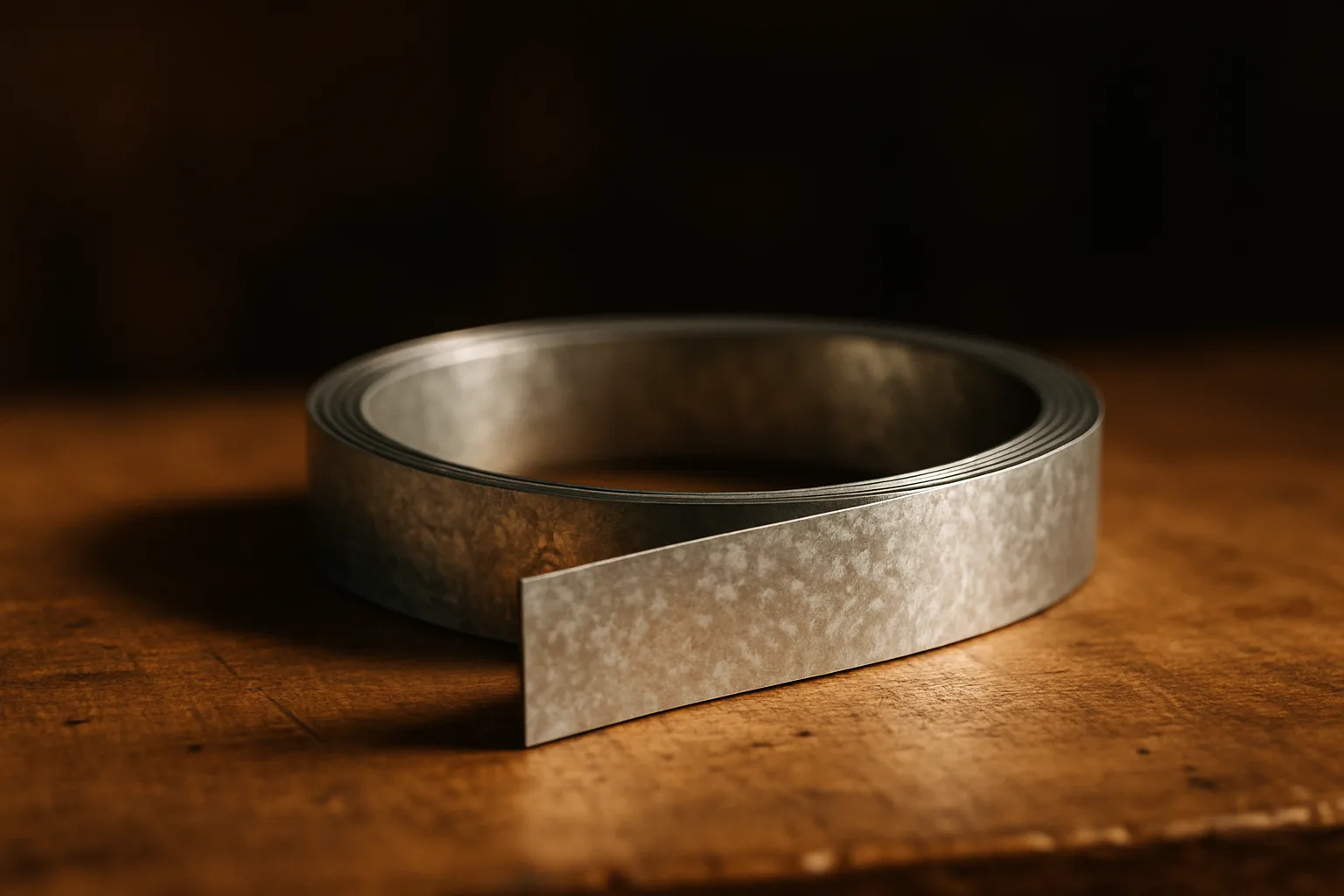
The process begins with coil slitting, where master coils of galvanized steel are cut to the required width. This is a critical step because the strip width directly affects material utilization and the stability of the feed. Once slit, the coil is loaded into the press, and the progressive die takes over. Each station in the die is designed to perform a specific task: the first may pierce pilot holes, the next may notch the outline, subsequent stations form bends, and the final station separates the part from the strip. The die must be robust enough to withstand millions of strokes, and its design determines the dimensional accuracy of the final metal stamping parts.
For OEMs, understanding progressive die stamping helps in preparing an enquiry because it clarifies what information is needed. You will need to provide a detailed drawing that specifies material, thickness, tolerances, and any secondary operations such as tapping or welding. The more precise your drawing, the more accurately we can quote and produce. If you are unsure about certain features, our engineering team can review your requirements and suggest design adjustments that improve manufacturability without compromising function. This collaborative approach is how we help Saudi OEMs bring their products to market efficiently.
What Information Should an OEM Manufacturing Enquiry Include?
A well-structured OEM manufacturing enquiry for metal stamping parts should include several key elements: a detailed 2D drawing or 3D model, material specification, surface finish requirements, annual volume, and any applicable standards. The drawing is the most important document because it defines the geometry, dimensions, and tolerances. It should clearly show all critical dimensions, datum points, and any features that require special attention, such as holes, bends, or embosses. Without a clear drawing, the quoting process becomes guesswork, and the risk of producing non-conforming parts increases.
Material selection is another critical aspect. For electrical accessories, galvanized steel is common because of its corrosion resistance. Alrouf uses G90 galvanized steel as per ASTM-A653 for all our boxes, which provides a zinc coating that protects against rust. If your application requires a different material—such as stainless steel, aluminum, or copper—you should specify it in the enquiry. The material thickness also matters: our switch boxes range from 0.6 mm to 1.2 mm, while junction boxes are typically 0.9 mm. These thicknesses are chosen based on mechanical strength, weight, and cost. Providing the material and thickness upfront allows us to assess feasibility and tooling requirements accurately.
Volume expectations and delivery schedule should also be stated. Progressive die stamping is most economical at high volumes because the tooling cost is amortized over many parts. If your annual requirement is in the hundreds of thousands, progressive die stamping is likely the right choice. For lower volumes, alternative methods such as CNC punching or laser cutting might be more cost-effective. Additionally, if you have specific quality documentation requirements—such as material certificates or dimensional reports—you should mention them in the enquiry. While we do not claim certifications for our boxes, we can provide material traceability and in-process inspection records as part of our standard quality procedures. Being transparent about your needs from the start ensures a smoother project.
How Do You Select the Right Material for Metal Stamping Parts?
Material selection for metal stamping parts depends on the application, environmental conditions, and mechanical requirements. In the electrical industry, galvanized steel is a popular choice because it combines strength with corrosion resistance. The galvanized coating, typically G90 (which indicates a zinc coating weight of 0.90 oz/ft²), provides a barrier that protects the base steel from moisture and chemicals. This is why Alrouf uses G90 galvanized steel as per ASTM-A653 for all our electrical boxes. For indoor applications, this level of protection is often sufficient, but for outdoor or highly corrosive environments, additional coatings or stainless steel may be necessary.
Another consideration is formability. Metals with higher ductility, such as low-carbon steel, can be bent and formed without cracking. This is important for progressive die stamping, where the material undergoes multiple bends. If the material is too hard or brittle, it may fracture during forming, leading to rejects. Aluminum is lighter and more corrosion-resistant than steel but has lower strength; it is often used in applications where weight is a concern. Copper and brass offer excellent electrical conductivity and are used for terminals and earth components. In our switch boxes, for example, some models include brass earth terminals to ensure reliable grounding.
Thickness also plays a role in material selection. Thicker materials provide greater rigidity and can withstand higher mechanical loads, but they require more force to stamp and may increase tooling wear. Our switch boxes are available in 0.6 mm, 0.9 mm, and 1.2 mm thicknesses, allowing customers to choose based on their structural needs. For junction boxes, 0.9 mm is standard. When preparing an enquiry, specify the material grade, thickness, and any surface treatment (such as hot-dip galvanizing or powder coating) so that we can recommend the most suitable option. If you are unsure, our engineers can help you evaluate the trade-offs between cost, performance, and manufacturability.
What Tolerances and Quality Checks Apply to Stamped Components?
Tolerances in metal stamping parts define the acceptable variation in dimensions. They are typically specified on the drawing and are crucial for ensuring that the part fits and functions correctly in the assembly. In progressive die stamping, tolerances can be tight—often within ±0.1 mm for critical dimensions—but achieving them depends on the die design, material thickness, and press condition. It is important to distinguish between critical and non-critical dimensions: over-tolerancing every feature increases cost without adding value. A good practice is to tolerance only those dimensions that affect fit, form, or function.
Quality checks for stamped components begin with first-article inspection (FAI), where the first parts produced from a new die are measured against the drawing to verify that the tooling is correct. During production, periodic inspections are performed to monitor dimensional stability. For electrical boxes, additional checks may include verifying knockout sizes and positions, earth terminal continuity, and coating thickness. While we do not claim per-box inspection or testing for our standard products, we do maintain a quality management system that includes in-process checks and final visual inspection. This ensures that the metal stamping parts we deliver meet the agreed specifications.
Documentation is an important part of quality assurance. For OEM enquiries, we can provide material certificates, dimensional reports, and inspection records as required. If your project demands compliance with specific standards—such as BS4662 for switch boxes—we can confirm that our products are marked accordingly. For example, our BB6 and BB7 switch boxes are marked AL-ROUF KSA BS4662, while our junction boxes (BB8, BB9, BB10) are marked AL-ROUF KSA without BS4662. These markings indicate that the products meet the relevant dimensional and performance requirements. When preparing your enquiry, let us know what documentation you need so we can include it in our quotation.
How Does Tooling and Die Design Impact Your Stamping Project?
Tooling and die design are the foundation of any progressive die stamping project. The die is a precision tool that must be engineered to produce the required metal stamping parts at the desired volume and quality. The design process starts with a thorough review of the part drawing to identify all features, tolerances, and material specifications. Our engineers then develop a die layout that sequences the operations—piercing, bending, forming, and cutting—in the most efficient order. This layout determines the number of stations, the strip width, and the press tonnage required.
A well-designed die not only ensures dimensional accuracy but also maximizes material utilization and minimizes downtime. For example, nesting parts closely on the strip reduces scrap, which is especially important when using expensive materials like copper or stainless steel. The die must also be robust enough to withstand the wear of high-volume production. We use high-quality tool steels and precision machining to build dies that maintain their edge and alignment over millions of strokes. Regular maintenance and sharpening are part of the die’s lifecycle, and we plan for this in our production schedules.
For OEMs, the tooling cost is a significant upfront investment. However, it is a one-time cost that is amortized over the life of the project. When you enquire about metal stamping parts, we will provide a breakdown of the tooling cost and the piece price. If your volumes are low, we may suggest alternative methods such as CNC punching or laser cutting to avoid the tooling expense. But for high-volume production, progressive die stamping is the most cost-effective solution. Our team can guide you through the decision, ensuring that you get the best value for your project.
Why Choose Alrouf for Metal Stamping Parts in Saudi Arabia?
Alrouf Electrical Accessories has been manufacturing metal stamping parts in Saudi Arabia since 2003. From our facility in Dammam 2nd Industrial City, we serve OEMs, electrical contractors, and industrial sourcing teams across the Eastern Province and beyond. Our capabilities include progressive die stamping, automated assembly, robotic welding, tooling and die design, tubular manufacturing, coil slitting, and plastic injection molding. This integrated approach allows us to produce complete electrical accessories—such as switch boxes and junction boxes—as well as custom stamped components for a wide range of applications. You can learn more about our full range of capabilities on our services page.
Our commitment to quality is evident in the materials we use and the processes we follow. All our boxes are made of G90 galvanized steel as per ASTM-A653, and they carry a 2-hour fire rating. Our switch boxes (BB6, BB7) are marked AL-ROUF KSA BS4662, and our junction boxes (BB8, BB9, BB10) are marked AL-ROUF KSA. These markings reflect our adherence to recognized standards and our dedication to producing reliable products. We also offer a range of sizes and thicknesses to meet different project requirements, from the compact BB6-003 (7×14×3.5 cm, 0.6 mm, 109 g) to the larger BB10-001 (20×20×5.5 cm, 952 g).
When you partner with Alrouf, you are working with a local manufacturer that understands the Saudi market. We are familiar with the demands of Vision 2030 local content initiatives and can support your efforts to source domestically. Our engineering team is available to review your drawings and provide feedback on design for manufacturability. We do not offer free consultations or CAD/CAM services, but we do engage in technical discussions to ensure that your metal stamping parts meet your expectations. To start the conversation, send us your drawings and an outline of your requirements. We will respond with a detailed quotation and, if needed, suggest improvements that can enhance quality or reduce cost. Contact Alrouf today to discuss your next OEM manufacturing enquiry.
◈ Key Takeaways
✦Prepare a detailed drawing with material, thickness, and tolerances before requesting a quote for metal stamping parts.
✦Specify the annual volume to determine if progressive die stamping is the most cost-effective method.
✦Choose G90 galvanized steel as per ASTM-A653 for electrical boxes to ensure corrosion resistance and a 2-hour fire rating.
✦Clarify quality documentation needs (e.g., material certificates, dimensional reports) upfront to avoid delays.
✦Engage with local Saudi manufacturers like Alrouf to support Vision 2030 local content and reduce supply chain risk.
Frequently Asked Questions
❓ What are stamped metal parts?
Stamped metal parts are components formed by pressing flat sheet metal between a die and a punch, which cuts, bends, or shapes the material into a desired form. They are widely used in electrical accessories, automotive, and construction industries across Saudi Arabia because they offer consistent quality and efficient mass production. For example, Alrouf in Dammam uses metal stamping to manufacture electrical boxes from G90 galvanized steel.
❓ What is metal stamping?
Metal stamping is a manufacturing process that uses dies and presses to transform flat metal sheets into specific shapes through operations like blanking, piercing, bending, and embossing. It is ideal for high-volume production of precise parts, such as the switch boxes and junction boxes made by Alrouf in Saudi Arabia. The process ensures uniformity and strength, which is critical for electrical applications.
❓ How are stamped metal parts used in electrical accessories?
Stamped metal parts are essential in electrical accessories like switch boxes and junction boxes, where they provide structural support, grounding, and protection for wiring. In Saudi Arabia, Alrouf manufactures these boxes from G90 galvanized steel with a 2-hour fire rating, ensuring safety and durability. Their products, such as the BB6 and BB7 switch boxes, are marked AL-ROUF KSA BS4662, meeting industry standards.
❓ What materials are commonly used for metal stamping in Saudi Arabia?
Common materials for metal stamping in Saudi Arabia include galvanized steel, stainless steel, aluminum, and copper, chosen based on required strength, corrosion resistance, and conductivity. Alrouf, for instance, uses G90 galvanized steel as per ASTM-A653 for its electrical boxes, which provides excellent durability in the region's climate. This material ensures long-lasting performance in construction and industrial applications.
❓ Why choose metal stamped parts over other manufacturing methods?
Metal stamped parts offer advantages such as high production speed, consistent quality, and lower cost per unit for large volumes, making them ideal for mass production. In Saudi Arabia, companies like Alrouf rely on stamping to produce precise electrical boxes that meet rigorous standards, including a 2-hour fire rating. This method also minimizes material waste and allows for complex geometries.
Have a steel or plastic part to manufacture?
Alrouf's facility in Dammam produces steel and plastic products in mass production. Tell us about your part.
ACCESSORIES is an integral part of ALROUF ELECTRICAL ACCESSORIES MANUFACTURER operates from 2nd Industrial City, Dammam, Saudi Arabia. Nowadays ALROUF is a well-known brand in the steel accessories market. Our modern facility gives us the strength to produce a variety of steel & plastic products in mass production. Our passionate team is our competitive advantage.