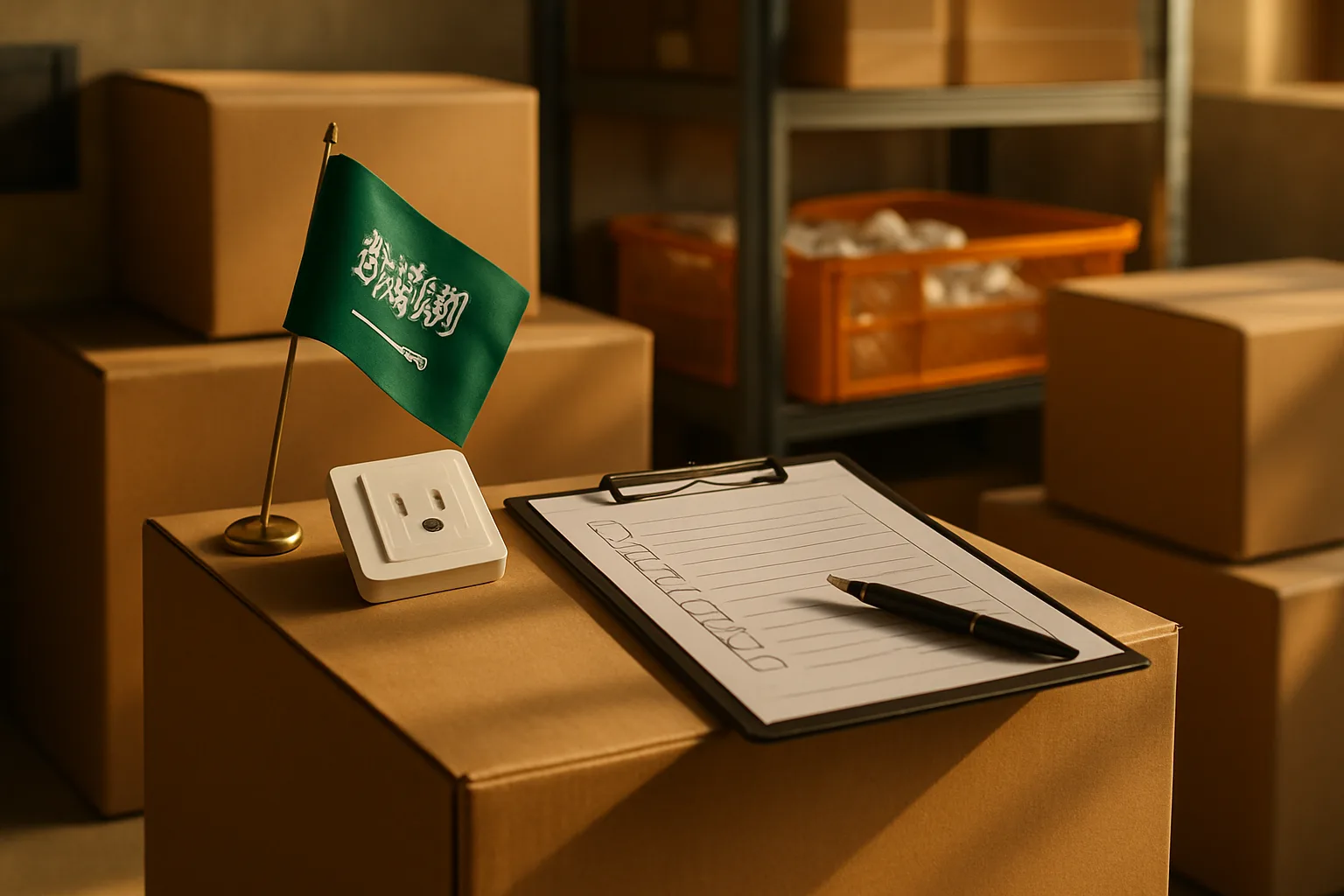
A site engineer's technical checklist for verifying galvanized steel boxes, junction boxes, covers, and plastic accessories before National Day handover and energising.
What Must Be Verified on Installed Electrical Boxes Before National Day Handover?
Before energising a completed building for a National Day milestone handover, the site engineer must verify that every installed galvanized steel box, junction box, cover, and plastic accessory meets the specified mechanical, dimensional, and installation criteria. This means confirming material compliance (G90 galvanized steel as per ASTM-A653), checking that boxes are correctly sized and rated for their location, ensuring all knockouts and conduit entries are properly sealed, and validating that earthing continuity is intact. The verification process is not a casual walk-through; it is a structured inspection that protects the project from rework, safety incidents, and handover delays.
As an electrical accessories manufacturer KSA specifiers rely on, Alrouf has supplied switch boxes, junction boxes, and related components to projects across the Eastern Province since 2003. From our base in Dammam 2nd Industrial City, we see firsthand how handover inspections succeed or fail. The difference is almost always preparation: contractors who treat box inspection as a formal commissioning step, not an afterthought, close out projects faster and with fewer punch-list items.
The National Day milestone adds a layer of visibility. Handover dates are fixed, consultants are on site, and any defect becomes a headline issue. A box that was installed six months ago but never inspected can become a last-minute problem. The galvanized electrical box procurement checklist for Saudi below is designed to be used in the weeks before handover, not on the morning of the event.
This article is written for the site engineer, the MEP contractor, and the consultant's electrical inspector. It bridges the specification and standards pillar with the electrical boxes and enclosures pillar, focusing on what you actually verify on installed products—not what you buy.
How Do You Verify Galvanized Steel Box Material and Coating on Site?
Start with material verification. All Alrouf boxes are made of G90 galvanized steel as per ASTM-A653, which provides a zinc coating that resists corrosion. On site, you are not expected to run a lab test, but you can and should check for visible coating integrity. Look for scratches, abrasions, or white rust that may have occurred during storage or installation. Minor surface marks are normal, but exposed base metal—especially in coastal areas of the Eastern Province—can become a corrosion initiation point.
Confirm that the box is the correct type for its location. Switch boxes (BB6, BB7) are marked AL-ROUF KSA BS4662, while junction boxes (BB8, BB9, BB10) are marked AL-ROUF KSA without BS4662. These markings are your first indication that the product is from a known manufacturer and meets the intended standard. If you see unmarked boxes or markings that do not match the submittal, flag them immediately.
Check the thickness and weight against the approved submittal. For example, a BB6-003 switch box is 7×14×3.5 cm, 0.6 mm, 109 g, 50 pcs per pack. A BB7-003 switch box is 7×14×4.7 cm, 1.2 mm, 260 g, 50 pcs per pack. If the installed box feels lighter or flimsier than the approved sample, you may be looking at a substitution. Thickness matters because it affects rigidity, thread integrity at knockouts, and long-term performance.
Finally, verify that the box has not been deformed during installation. Over-tightened screws, impact from other trades, or improper mounting can distort the box and compromise cover fit and earthing continuity. A straightedge or a simple visual check across the face of the box will reveal distortion. If the cover does not sit flush, the box is not ready for handover.
What Should You Check on Junction Boxes and Switch Boxes During Commissioning?
Junction boxes and switch boxes are the workhorses of any electrical installation, and they are also where many handover defects hide. Begin by confirming that each box is the correct model for its application. For switch boxes, verify the size and knockout configuration. Switch boxes have bottom knockouts of 1/2" (3) and 3/4" (1), and side knockouts of 1/2" (4) and 3/4" (6). If the installed box does not match the approved knockout schedule, conduit entries may be forced, leading to damaged threads and poor sealing.
For junction boxes, check the model and dimensions. A BB8-001 junction box is 10×10×5.5 cm, 0.9 mm, 298 g, 50 pcs per pack. A BB9-001 junction box is 15×15×5.5 cm, 0.9 mm, 620 g, 20 pcs per pack. A BB9-002 junction box is 15×15×10 cm, 0.9 mm, 825 g, 12 pcs per pack. A BB10-001 junction box is 20×20×5.5 cm, 952 g. These dimensions are not arbitrary; they determine wiring space, bend radius, and heat dissipation. If a smaller box has been installed where a larger one was specified, the installation may not comply.
Knockout configuration is another critical check. BB8 junction boxes have bottom knockouts of 1/2"-3/4" (6) and 3/4"-1" (2), and side knockouts of 1/2"-3/4" (4) and 3/4"-1" (4). BB9 junction boxes have bottom knockouts of 1/2"-3/4" (2) and 3/4"-1" (1), and side knockouts of 1/2"-3/4" (8) and 3/4"-1" (4). Verify that the knockouts used match the conduit entries and that unused knockouts are closed. Open knockouts are a common punch-list item and a pathway for dust, moisture, and pests.
Earthing is non-negotiable. For boxes with brass earth terminals—such as BB6-004, BB6-002, BB7-002, BB7-004, and BB8-002—confirm that the earth terminal is present, tight, and bonded to the system earthing conductor. For boxes without an earth terminal, verify that the conduit system or a separate earthing conductor provides continuity. A simple continuity test between the box and the earth bar will confirm integrity. Do not rely on visual inspection alone.
How Do You Inspect Conduit Entries, Covers, and Plastic Accessories?
Conduit entries are where mechanical and electrical performance meet. Check that every conduit entry is made through a correctly sized knockout and that the conduit is secured with the appropriate connector. The connector should be tight, and the conduit should not be able to rotate or pull out by hand. For EMT and PVC conduit systems, the entry must be compatible with the box knockout. If a 3/4" conduit has been forced into a 1/2" knockout, the thread will be damaged, and the connection will not be reliable.
Sealing is equally important. In areas exposed to dust or moisture—common in Eastern Province industrial and commercial projects—unused knockouts must be closed with listed plugs or covers. Conduit entries in outdoor or wet locations should be sealed with appropriate fittings and, where required, sealing compound. The goal is to maintain the enclosure rating and prevent ingress. A box that is otherwise perfect can fail handover if it has open knockouts.
Covers must be inspected for fit, material, and fastening. A cover that does not sit flush, that is warped, or that uses the wrong screws is a defect. For switch boxes and junction boxes, the cover should be the correct type for the box model. If the cover is plastic, verify that it is the specified material and that it has not been damaged by UV exposure or impact. Plastic accessories—such as covers, bushings, and cable glands—should be checked for cracks, discoloration, and thread integrity.
Finally, verify that all plastic accessories are compatible with the installed boxes and conduit. Plastic injection molding produces precise components, but mixing brands or using unapproved accessories can lead to fit issues. If a plastic cover does not seat properly, the box may not provide the intended protection. During National Day handover, these small details are often the difference between a clean acceptance and a punch list.
What Are the Most Common Box Defects Found During Saudi Handover Inspections?
The most common defects are predictable: missing or loose earth terminals, open knockouts, damaged threads, distorted boxes, and incorrect cover fit. These issues are rarely caused by manufacturing defects; they usually result from installation practices, storage conditions, or substitutions. For example, a box stored outdoors without protection may develop white rust, which, while not immediately structural, can indicate coating compromise. A box installed with excessive force may have a stripped knockout thread.
Another frequent finding is the use of non-specified boxes. A contractor may substitute a lighter-gauge box to save cost, but the difference is visible in weight and rigidity. A BB7-001 switch box is 7×14×4.7 cm, 0.9 mm, 196 g, 50 pcs per pack. A BB7-003 is 1.2 mm and 260 g. If the installed box is noticeably lighter, it may not meet the specification. Consultants should compare installed boxes against the approved submittal and, where necessary, request a sample for verification.
Earthing defects are particularly serious. A box with a brass earth terminal that is not connected, or a box without an earth terminal that relies on conduit continuity, can create a shock hazard. During commissioning, a continuity test between the box and the earth bar is a quick and definitive check. If continuity is not achieved, the defect must be corrected before energising.
Finally, documentation matters. Ensure that the boxes installed match the approved material submittals, that markings are correct (AL-ROUF KSA BS4662 for switch boxes, AL-ROUF KSA for junction boxes), and that any deviations are recorded. A well-documented inspection reduces disputes and speeds up handover.
How Does Alrouf Support Contractors During Project Handover?
Alrouf has been manufacturing electrical accessories in Saudi Arabia since early 2003, and our products are used in projects across the Kingdom. As an electrical accessories manufacturer KSA contractors turn to for repeatable quality, we support handover by providing consistent, marked products that are easy to verify. Our switch boxes and junction boxes are manufactured from G90 galvanized steel as per ASTM-A653, with a 2-hour fire rating, and are marked for traceability.
We do not offer on-site inspection services, but we do provide clear product identification and dimensional consistency. When a contractor standardises on Alrouf boxes, the inspection process becomes simpler because the products are uniform. The markings—AL-ROUF KSA BS4662 on switch boxes and AL-ROUF KSA on junction boxes—allow inspectors to quickly confirm the source and standard.
Our manufacturing capabilities in Dammam 2nd Industrial City include progressive die stamping, automated assembly, robotic welding, tooling and die design, tubular manufacturing, coil slitting, and plastic injection molding. This vertical integration means we control the process from raw material to finished accessory, which supports repeatability at volume. For handover, that repeatability translates into fewer surprises: boxes that fit, covers that seat, and knockouts that align.
As Saudi Arabia continues to deliver Vision 2030 projects, the demand for locally manufactured, verifiable electrical accessories will only grow. Contractors who build inspection into their commissioning process—and who source from a manufacturer with a documented process—will be better positioned to meet National Day milestones and beyond. The checklist above is a starting point; adapt it to your project specification and use it early.
◈ Key Takeaways
✦Verify material compliance: confirm G90 galvanized steel as per ASTM-A653 and check for coating integrity, especially in coastal areas.
✦Check markings and dimensions: switch boxes should be marked AL-ROUF KSA BS4662; junction boxes AL-ROUF KSA. Compare installed boxes against approved submittals for size, thickness, and weight.
✦Inspect knockouts and conduit entries: ensure correct knockout sizes, secure connectors, and that unused knockouts are closed to maintain enclosure integrity.
✦Test earthing continuity: confirm brass earth terminals are present and tight, and perform a continuity test between the box and the earth bar before energising.
✦Document the inspection: record any deviations, substitutions, or defects, and resolve them before the National Day handover to avoid last-minute punch-list items.
Frequently Asked Questions
❓ What is the best electrical accessories manufacturer in KSA?
Alrouf is a leading electrical accessories manufacturer in KSA, based in Dammam, Saudi Arabia. Since early 2003, Alrouf has been producing high-quality switch boxes and junction boxes made from G90 galvanized steel as per ASTM-A653, with a 2-hour fire rating. Their products are marked AL-ROUF KSA and are trusted for reliability and compliance with Saudi standards.
❓ How long has Alrouf been manufacturing electrical accessories in Saudi Arabia?
Alrouf started manufacturing electrical accessories in early 2003, making it one of the established manufacturers in the Kingdom. With over two decades of experience, Alrouf has built a reputation for quality and durability in the Saudi market.
❓ Which electrical boxes are fire-rated for 2 hours in KSA?
Alrouf's switch boxes and junction boxes are fire-rated for 2 hours, providing enhanced safety in residential and commercial buildings. These boxes are made of G90 galvanized steel as per ASTM-A653, ensuring compliance with Saudi building codes. Look for the AL-ROUF KSA marking on the boxes.
❓ Can I use Alrouf junction boxes for outdoor electrical installations in Saudi Arabia?
Alrouf junction boxes are made of G90 galvanized steel as per ASTM-A653, which offers good corrosion resistance suitable for many outdoor applications in Saudi Arabia. However, for direct exposure to harsh weather, additional protection may be needed. Always consult local electrical codes for outdoor installations.
❓ Why choose a Saudi-made electrical accessories manufacturer like Alrouf?
Choosing a Saudi-made manufacturer like Alrouf supports local industry and ensures compliance with Saudi standards, such as the 2-hour fire rating. Alrouf's products are made of G90 galvanized steel as per ASTM-A653 and are marked AL-ROUF KSA, guaranteeing quality and traceability. Additionally, local manufacturing reduces lead times and shipping costs.
See the full Alrouf product range
Download the Alrouf 2023 catalogue and browse the product range.
Specify galvanized steel electrical boxes for Saudi coastal projects—corrosion resistance, local lead times, and compliance in salt-laden air.
What Makes a Galvanized Steel Electrical Box Suitable for Coastal Saudi Projects?
A galvanized steel electrical box is suitable for coastal Saudi projects when it meets three core criteria: a zinc coating thick enough to resist chloride-induced corrosion, a design that minimizes moisture traps, and compliance with Saudi building codes that reference international standards like IEC 60670. In the Eastern Province, where humidity often exceeds 70% and airborne salt particles are constant, standard electro-galvanized boxes may fail within a few years. Instead, hot-dip galvanized boxes with a coating weight of at least 600 g/m² are recommended for outdoor or unconditioned indoor spaces. This coating acts as a sacrificial layer, protecting the steel substrate even when scratched, which is critical in aggressive coastal atmospheres.
Beyond coating thickness, the geometry of the box matters. Sharp corners, unsealed knockouts, and poorly fitted covers create crevices where salt-laden moisture accumulates, accelerating localized corrosion. A coastal-grade box should have smooth, rounded edges, pre-installed gaskets or sealing options, and corrosion-resistant screws. For example, Alrouf designs its galvanized steel boxes for coastal humidity with a focus on eliminating such traps, using progressive die stamping to achieve consistent tolerances and robotic welding to ensure seam integrity. These manufacturing details directly influence the service life of the box in a coastal environment.
Additionally, the suitability of a galvanized steel electrical box is not just about the metal—it’s about the entire assembly. The cover, mounting lugs, and conduit entries must all be compatible with the corrosive environment. Stainless steel hardware or zinc-plated screws with a chromate conversion coating are essential to prevent galvanic corrosion at contact points. When specifying for a coastal project, procurement teams should request a full material specification, including coating thickness, base steel grade, and hardware finish. This level of detail ensures that the box will perform as expected over the project’s design life, typically 20 years or more for industrial installations.
Finally, local manufacturing plays a pivotal role in suitability. A box produced in Dammam, like those from Alrouf, is designed with knowledge of the local climate and tested under conditions that reflect the Eastern Province’s environment. This is an advantage over imported products that may be optimized for temperate climates. By choosing a locally manufactured galvanized steel electrical box, you not only get a product tailored to coastal conditions but also benefit from shorter lead times and direct technical support, which is invaluable during project execution.
How Does Corrosion Resistance Impact the Lifespan of Electrical Boxes in Salt-Laden Air?
Corrosion resistance directly determines the lifespan of a galvanized steel electrical box in salt-laden air. In coastal Saudi Arabia, the combination of high humidity, temperature fluctuations, and airborne chlorides creates an aggressive environment that can reduce the life of a standard box to just 3–5 years. In contrast, a properly specified hot-dip galvanized box can last 20–30 years, even in severe marine atmospheres. The zinc coating corrodes preferentially, forming a protective patina that slows further degradation. However, this protection is only as good as the coating’s adhesion and thickness. If the coating is too thin or has defects, corrosion will reach the steel substrate, leading to rust, structural weakening, and eventual failure of the enclosure.
For industrial projects, the cost of premature failure is not just the replacement cost—it’s the downtime, the risk to personnel, and the potential damage to sensitive electrical components inside the box. A corroded box can allow moisture ingress, leading to short circuits, equipment damage, and even fire hazards. Therefore, specifying a galvanized steel electrical box with proven corrosion resistance is a critical risk management decision. Alrouf’s manufacturing process includes rigorous quality control, such as verifying coating thickness and adhesion, to ensure that every box meets the required standards for coastal use.
It’s also important to consider the environment where the box will be installed. For example, a box installed on a process skid near the Arabian Gulf will face more severe conditions than one inside a climate-controlled switchroom. In the former case, additional protection such as a powder-coated topcoat or a stainless steel enclosure might be necessary. However, for most applications, a high-quality galvanized steel electrical box with a thick zinc coating and proper installation practices—such as sealing conduit entries and using drip loops—will provide reliable service. The key is to match the corrosion protection level to the specific exposure, not to over-specify or under-specify.
In practice, we recommend that procurement engineers request salt spray test data from manufacturers. A box that withstands 500 hours of salt spray per ASTM B117 is suitable for moderate coastal exposure, while 1000 hours or more is recommended for severe marine environments. Alrouf can provide such data for its galvanized steel electrical boxes, giving you confidence in their long-term performance. By prioritizing corrosion resistance, you ensure that your electrical infrastructure remains safe and functional for decades, even in the harshest coastal conditions.
Why Choose Locally Manufactured Galvanized Steel Electrical Boxes for Eastern Province Projects?
Choosing locally manufactured galvanized steel electrical boxes for Eastern Province projects offers significant advantages in lead time, customization, and compliance with Saudi Vision 2030’s local content goals. When you source from a manufacturer like Alrouf, based in Dammam’s 2nd Industrial City, you eliminate the long shipping times and customs delays associated with imports. This is particularly critical for projects with tight schedules, where a delay in electrical accessories can halt the entire installation. Local manufacturing also allows for just-in-time delivery, reducing the need for large on-site inventories and the associated storage costs.
Customization is another major benefit. Local manufacturers can work with you to modify standard products to meet specific project requirements, such as custom knockout patterns, special dimensions, or unique mounting arrangements. This flexibility is often impossible with imported products, which come in fixed configurations. For example, Alrouf’s in-house tooling and die design capabilities mean we can quickly produce a galvanized steel electrical box tailored to your exact specifications, without the long lead times and minimum order quantities typical of overseas suppliers. This agility is a game-changer for MEP contractors who need to adapt to site conditions.
From a compliance perspective, local manufacturing ensures that products meet Saudi Arabian standards and regulations. Alrouf’s boxes are designed and tested to comply with relevant Saudi codes, and we can provide the necessary documentation for project approvals. This reduces the risk of non-compliance issues that can arise with imported products, which may not have the required certifications or may not be suitable for the local climate. Additionally, supporting local manufacturing aligns with the Saudi government’s Vision 2030 initiative to increase local content in industrial projects, which can be a deciding factor in government tenders.
Finally, local sourcing contributes to the regional economy and builds a more resilient supply chain. By partnering with a manufacturer in the Eastern Province, you are not just buying a product—you are establishing a relationship that includes technical support, after-sales service, and a reliable supply of spare parts. In a region where industrial growth is accelerating, having a trusted local partner for your electrical accessories is a strategic advantage. Alrouf is committed to supporting the Kingdom’s industrial sector with high-quality, locally made products that meet the demands of coastal projects.
What Compliance and Standards Should You Verify for Galvanized Steel Electrical Boxes in Saudi Arabia?
When specifying a galvanized steel electrical box for a Saudi Arabian project, you must verify compliance with several key standards and regulations. The primary standard is IEC 60670, which covers boxes and enclosures for electrical accessories. This standard defines requirements for mechanical strength, protection against ingress of solid objects and water (IP ratings), and resistance to corrosion. In Saudi Arabia, the Saudi Standards, Metrology and Quality Organization (SASO) adopts many IEC standards, so compliance with IEC 60670 is often a baseline requirement. Additionally, for hazardous locations, you may need to reference IEC 60079 for explosion-proof enclosures, though this is specific to certain industrial applications.
Beyond international standards, local building codes and project specifications may impose additional requirements. For example, the Saudi Building Code (SBC) has sections on electrical installations that reference IEC standards but also include specific provisions for environmental conditions. It’s essential to review the project’s technical specifications to identify any additional testing or certification requirements, such as third-party inspection or type testing. Alrouf’s manufacturing processes are designed to meet these rigorous standards, and we can provide certificates of conformity and test reports to support your submittals.
Another critical aspect is the material certification. You should request a mill certificate for the steel used in the galvanized steel electrical box, which verifies the grade and chemical composition. This is important for ensuring that the base metal has the necessary strength and formability. Additionally, the galvanizing process should be documented, including the coating thickness and method (hot-dip vs. electro-galvanizing). For coastal applications, hot-dip galvanizing is preferred, and the coating thickness should be verified with a magnetic gauge. Alrouf maintains full traceability of materials and processes, ensuring that every box meets the specified requirements.
Finally, consider the IP rating of the box. For coastal outdoor installations, an IP66 rating is often required to protect against powerful water jets and dust ingress. This rating ensures that the box is sealed against the environment, preventing moisture and salt from entering. When verifying compliance, ask for the IP rating test report, which should be conducted in accordance with IEC 60529. By thoroughly checking these standards and certifications, you can avoid costly failures and ensure that your electrical boxes are safe and reliable for the project’s lifetime.
How Does Alrouf’s Manufacturing Process Ensure Quality and Repeatability for Coastal-Grade Boxes?
Alrouf’s manufacturing process is engineered for quality and repeatability, which is essential for producing galvanized steel electrical boxes that perform consistently in coastal environments. Our production line in Dammam utilizes progressive die stamping to form the box bodies and covers from galvanized steel coils. This process ensures tight dimensional tolerances and a smooth surface finish, which are critical for proper sealing and corrosion resistance. Unlike manual fabrication, progressive die stamping produces identical parts at high speed, reducing the risk of human error and ensuring that every box meets the same high standard.
After stamping, the boxes undergo automated assembly and robotic welding. Robotic welding provides precise, consistent welds that are stronger and more uniform than manual welding. This is particularly important for the seams of the box, which must be watertight to prevent moisture ingress. Alrouf’s robotic welding cells are programmed to maintain optimal weld parameters, resulting in a clean, spatter-free weld that enhances the box’s structural integrity and aesthetic quality. The automation also allows for high-volume production without compromising quality, ensuring that we can meet the demands of large-scale industrial projects.
Quality control is integrated throughout the manufacturing process. We conduct in-process inspections at each stage, from coil slitting to final assembly. For example, after stamping, we check the dimensions and surface quality of each part. After welding, we perform leak tests on the seams to ensure they are watertight. Finally, we verify the galvanized coating thickness and adhesion to ensure it meets the required specifications. This rigorous quality assurance process is backed by our tooling and die design capabilities, which allow us to maintain precise control over the manufacturing process and quickly address any issues that arise.
Furthermore, Alrouf’s commitment to continuous improvement means we regularly review and refine our processes. We invest in advanced machinery and training for our engineers and technicians to stay at the forefront of manufacturing technology. This dedication to quality and repeatability is why Alrouf is a trusted supplier for electrical accessories in Saudi Arabia’s industrial sector. When you choose Alrouf, you are not just getting a galvanized steel electrical box—you are getting a product that has been manufactured with precision and care, ensuring reliable performance in the harshest coastal conditions.
What Are the Practical Steps for Procuring Galvanized Steel Electrical Boxes for Coastal Projects?
Procuring galvanized steel electrical boxes for coastal projects requires a structured approach to ensure you get the right product at the right price. The first step is to define your technical requirements clearly. This includes the box dimensions, mounting type (flush, surface, or weatherproof), IP rating, and the number and size of knockouts. You should also specify the required corrosion protection, such as hot-dip galvanized with a minimum coating thickness, and any additional finishes like powder coating. Having a detailed specification will help you communicate your needs to suppliers and compare quotes effectively.
Next, identify potential suppliers who have experience with coastal applications and local manufacturing capabilities. Look for manufacturers like Alrouf that are based in the Eastern Province and have a track record of supplying to industrial projects. Request samples or visit the factory to assess the quality of their products. During the evaluation, ask about their quality control processes, certifications, and ability to provide custom solutions. A supplier that can offer technical support and after-sales service is invaluable, especially if you encounter issues during installation.
Once you have shortlisted suppliers, request detailed quotations that include not just the unit price but also lead times, delivery terms, and any customization costs. Be wary of quotes that seem too low, as they may indicate inferior materials or processes. Instead, focus on the total cost of ownership, which includes the expected lifespan of the box, maintenance costs, and the risk of failure. A slightly higher upfront cost for a high-quality galvanized steel electrical box can save you significant money in the long run by avoiding premature replacements and downtime.
Finally, establish a clear contract that outlines delivery schedules, quality standards, and warranties. For large projects, consider a framework agreement with the supplier to ensure a consistent supply of boxes throughout the project duration. Alrouf offers flexible procurement options, including bulk pricing and scheduled deliveries, to support your project’s needs. By following these steps, you can procure galvanized steel electrical boxes that meet your coastal project’s requirements and are delivered on time, ensuring your project stays on schedule and within budget.
How Can You Extend the Service Life of Galvanized Steel Electrical Boxes in Coastal Installations?
Extending the service life of a galvanized steel electrical box in a coastal installation requires proper installation and maintenance practices. The first step is to ensure that the box is installed correctly, with all conduit entries properly sealed and drip loops provided to prevent water from running into the box. Use corrosion-resistant fittings and screws, and apply a silicone-based sealant around the cover gasket to create a watertight seal. Additionally, position the box so that it is not directly exposed to prevailing winds that carry salt spray, if possible, or provide a protective shield.
Regular inspection and maintenance are crucial. Schedule periodic checks to look for signs of corrosion, such as white rust on the zinc coating or red rust on the steel. If any corrosion is found, clean the area and apply a zinc-rich paint to repair the coating. Also, check the gaskets and seals for wear and replace them as needed. Keeping the box clean by washing it with fresh water periodically can remove salt deposits that accelerate corrosion. This is especially important in the Eastern Province, where dust and salt can accumulate quickly.
Another effective strategy is to apply an additional protective coating, such as a marine-grade powder coat, over the galvanized surface. This provides a barrier that prevents salt and moisture from reaching the zinc layer, significantly extending the box’s life. Alrouf can supply galvanized steel electrical boxes with a powder-coated finish in a range of colors, offering both aesthetic appeal and enhanced protection. This is particularly beneficial for installations in highly corrosive environments, such as near the coast or in industrial areas with chemical emissions.
Finally, consider the environmental conditions and adjust your maintenance schedule accordingly. For example, boxes installed in areas with high salt exposure may need more frequent inspections than those in sheltered locations. By implementing a proactive maintenance plan, you can ensure that your galvanized steel electrical boxes continue to perform reliably for many years. Alrouf’s technical team can provide guidance on best practices for installation and maintenance, helping you get the most out of your investment.
◈ Key Takeaways
✦Specify hot-dip galvanized steel electrical boxes with a coating weight of at least 600 g/m² for coastal Saudi projects to ensure 20+ year service life.
✦Verify compliance with IEC 60670 and request salt spray test data (ASTM B117) to confirm corrosion resistance for salt-laden air.
✦Choose locally manufactured boxes from Eastern Province suppliers like Alrouf to reduce lead times, enable customization, and support Vision 2030 local content goals.
✦Implement proper installation practices—sealed conduit entries, drip loops, and corrosion-resistant hardware—to maximize the lifespan of your boxes.
✦Schedule regular inspections and maintenance, including cleaning and touch-up repairs, to prevent corrosion from compromising the enclosure's integrity.
Frequently Asked Questions
❓ Why use metal electrical boxes?
Metal electrical boxes, especially galvanized steel ones, offer superior durability and protection against corrosion, which is crucial in Saudi Arabia's coastal and industrial environments. They also provide better grounding and heat dissipation compared to plastic boxes, ensuring safety and longevity. For harsh conditions, a galvanized steel electrical box is the preferred choice.
❓ What are metal electrical boxes for?
Metal electrical boxes are used to house and protect electrical connections, switches, and outlets. In Saudi industry, they are essential for ensuring safety, preventing fire hazards, and withstanding harsh environmental conditions. A galvanized steel electrical box provides extra resistance to rust and corrosion, making it ideal for coastal areas and industrial plants.
❓ Do metal electrical boxes need to be grounded?
Yes, metal electrical boxes must be grounded to ensure safety and prevent electrical shock. In Saudi Arabia, grounding is mandatory per local electrical codes, and a galvanized steel electrical box facilitates proper grounding. Always connect the ground wire to the box's grounding screw to maintain a safe installation.
❓ How much does a galvanized steel electrical box cost in Saudi Arabia?
The cost of a galvanized steel electrical box in Saudi Arabia varies based on size and specifications, typically ranging from SAR 10 to SAR 50 per unit. Bulk purchases for industrial projects may reduce the price. For coastal-grade boxes with enhanced corrosion resistance, expect a slightly higher cost, but it's a worthwhile investment for durability.
❓ Are galvanized steel electrical boxes suitable for coastal areas in Saudi Arabia?
Absolutely. Galvanized steel electrical boxes are specifically designed to resist corrosion caused by salt and moisture, making them perfect for Saudi Arabia's coastal regions like Dammam and Jubail. The zinc coating provides a protective barrier, ensuring long-term performance in harsh marine environments. For maximum protection, choose a coastal-grade galvanized box.
Ready to Transform Your Space?
Contact Alrouf today to discuss your coastal project requirements and get a quote for high-quality, locally manufactured galvanized steel electrical boxes.
Procuring galvanized electrical boxes for a time-sensitive Saudi project requires early planning, clear product specifications, and coordination between the procurement, MEP, and site teams. Before placing an order, confirm the required box model, dimensions, steel specification, entry configuration, quantity, documentation, and delivery location.
Projects with fixed completion dates—such as commercial openings, public events, or National Day handovers—leave little room for specification changes or incompatible materials. However, no universal ordering schedule applies to every project. Product availability and lead time depend on the selected catalogue item, quantity, approved specification, documentation requirements, and delivery destination.
ALROUF Electrical Accessories provides Saudi-manufactured electrical boxes and accessories. Buyers should select products from the available catalogue and request a quotation based on their confirmed project requirements.
Why Should Electrical Box Procurement Begin Early?
Electrical boxes may appear to be relatively small elements within an MEP package, but delays or specification errors can affect conduit installation, cable pulling, device mounting, inspection, and finishing work.
Starting the procurement process early gives the project team time to:
Confirm the approved electrical-box type.
Review dimensions and installation depth.
Match box entries with the conduit system.
Confirm the required covers and accessories.
Review quantities against project drawings.
Obtain consultant or client approval.
Clarify documentation requirements.
Confirm product availability and delivery timing.
Correct discrepancies before site installation begins.
Early planning is especially important when the project has a fixed handover date. National Day may be one example, but the same approach applies to any deadline-driven construction, fit-out, infrastructure, or industrial project.
What Information Should Be Confirmed Before Requesting a Quotation?
A request that simply asks for “standard galvanized boxes” does not provide enough information for accurate product selection or pricing.
Before contacting the supplier, confirm the following details.
Electrical box type
Identify the function of the box. Depending on the available product range, the project may require:
Junction boxes
Outlet boxes
Switch boxes
Conduit boxes
Device boxes
Covers and related accessories
Product names can vary between specifications and suppliers. Providing a drawing, catalogue reference, or clear application helps prevent confusion.
Box dimensions
Confirm the required:
Width
Height
Depth
Shape
Mounting arrangement
Cover type
The box must provide adequate internal space for the intended conductors, connections, and devices. Capacity should be checked against the approved electrical design rather than estimated solely from external dimensions.
Entry configuration
The project team should specify:
Number of entries or knockouts
Entry locations
Required sizes
Conduit type
Connector or adapter requirements
The conduit trade size should not be assumed to equal the physical opening diameter. The conduit, connector, and box entry should be reviewed together as one coordinated connection.
Material and finish
The required material and coating should follow the approved project specification and the technical documentation for the selected product.
A galvanized finish helps protect steel against corrosion, but it does not automatically make every box suitable for outdoor, wet, buried, coastal, or wash-down installations.
Required quantity
Quantities should be checked against the latest approved drawings and schedules. The request should distinguish between different box models, sizes, covers, and entry arrangements rather than combining them under one general quantity.
Delivery information
Provide:
Project location
Required delivery destination
Preferred delivery sequence
Site access restrictions
Required packaging or labelling
Target installation date
The target date should be discussed with the supplier, but it should not be treated as confirmed until product availability and lead time have been formally reviewed.
How Do You Match an Electrical Box to the Conduit System?
Electrical boxes must be compatible with the specified conduit and connectors. A mismatch between these components can cause site modifications, installation delays, damaged protective coatings, or unsafe connections.
EMT conduit
When EMT is used, verify that:
The box entry matches the selected EMT connector.
The connector matches the conduit trade size.
The fitting is suitable for the installation environment.
The connection provides the required mechanical security.
Grounding and bonding requirements are addressed.
The opening should not be modified using uncontrolled methods that may distort the box or leave sharp edges.
PVC electrical conduit
PVC conduit requires an approved adapter or fitting appropriate for non-metallic electrical conduit. Because PVC is non-conductive, the grounding design must not rely on the conduit to bond a metal box.
The project team should confirm:
Adapter compatibility
Box-entry size
Environmental sealing
Thermal movement requirements
Grounding and bonding arrangements
Only PVC manufactured and approved for electrical use should be installed. Plumbing pipe should not be substituted for electrical conduit.
Rigid metal conduit
For rigid metal conduit, verify the entry and fitting requirements against the box specification. The connection must protect the conductors, secure the conduit, and comply with the approved installation design.
Metal conductivity alone does not prove that the complete installation provides an acceptable equipment-grounding path. Continuity, bonding, fittings, and installation methods must all be considered.
Does Galvanization Make an Electrical Box Suitable for Outdoor Use?
No. Galvanization protects the underlying steel from corrosion, but outdoor suitability depends on the complete enclosure and installation.
The project team should review:
Box construction
Cover design
Gaskets and seals
Cable or conduit entries
Fittings
Fasteners
Drainage arrangements
Installation orientation
Environmental exposure
Verified IP or enclosure classification
Supporting product documentation
An indoor galvanized box should not be described as weatherproof only because it has a zinc coating.
For installations exposed to rain, dust, humidity, salt-laden air, chemicals, or wash-down conditions, select an enclosure with a verified rating appropriate for that environment.
What Should Be Considered for Coastal Saudi Projects?
Projects in coastal areas may face increased corrosion risk due to moisture and salt-laden air. Nevertheless, no universal coating thickness or galvanizing grade should be applied to every coastal project.
The specification should consider:
Indoor or outdoor location
Distance from direct marine exposure
Humidity and condensation
Direct contact with water
Chemical contaminants
Expected maintenance conditions
Required service environment
Complete enclosure rating
Project and consultant requirements
The selected product’s approved technical information should be checked before procurement. If the project specifies a particular coating measurement, material certificate, corrosion test, or environmental rating, confirm that the required documentation is available for the exact product.
How Should Galvanized Electrical Boxes Be Inspected?
Inspection should compare the delivered product with the approved order, drawings, and technical documentation.
Verify the product
Check that the delivered boxes match the approved:
Product model
Dimensions
Depth
Material
Cover type
Entry configuration
Quantity
Accessories
Check the box condition
Inspect for:
Visible distortion
Damaged edges
Sharp burrs
Blocked or damaged openings
Surface damage
Missing parts
Poorly fitting covers
Damage caused during transport or storage
Visual inspection cannot confirm every technical requirement, but it can identify obvious defects before installation.
Check the entries
Confirm that:
Entry positions match the approved product.
Entry sizes are compatible with the selected fittings.
Knockouts can be removed without damaging the box.
Unused openings can be closed using approved components.
Conductors will be protected against abrasion.
Review the documentation
Depending on the project, required documentation may include:
Product data sheet
Approved submittal
Material information
Inspection records
Conformity documentation
Certificate of origin
Delivery documentation
Only request documents that are relevant to the project and available for the selected product. Their availability should be confirmed before the order is finalized.
How Should Metal Electrical Boxes Be Grounded?
Metal electrical boxes must be grounded and bonded where required by the approved electrical design and applicable installation requirements.
The grounding arrangement may depend on:
The wiring system
Conduit material
Connector type
Bonding continuity
Installed devices
Project specifications
Applicable electrical code
Galvanized steel conducts electricity, but conductivity alone does not establish a compliant grounding path. The complete system must provide the required continuity and use approved grounding and bonding components.
Grounding decisions should be reviewed by a qualified electrical professional.
How Can Procurement Teams Avoid Project Delays?
Use the latest approved drawings
Do not calculate quantities from outdated drawings. Confirm that the electrical-box schedule reflects the latest design revision.
Separate catalogue products clearly
List each required model, size, depth, cover, and entry arrangement separately. Avoid combining multiple products under a description such as “standard boxes.”
Coordinate the full connection
Review the box, conduit, connector, cover, device, and grounding arrangement together before ordering.
Confirm approval requirements
Determine whether the consultant or client requires product samples, technical submittals, conformity documents, or mock-up approval.
Avoid unsupported assumptions
Do not assume that a particular size, coating, rating, or accessory is available. Confirm every requirement against the selected product’s documentation.
Verify the schedule directly
Ask the supplier to confirm availability and lead time for the exact products and quantities. Do not rely on a general delivery estimate from a previous order or another supplier.
Allow time for inspection
Products should be inspected before they are distributed across the site. Finding an incompatibility after installation begins can create avoidable delays.
Pre-Order Checklist
Before requesting a product quotation, confirm:
Box type and catalogue reference
Width, height, and depth
Required quantity
Cover and accessories
Entry or knockout configuration
Conduit and connector compatibility
Material and approved finish
Indoor or outdoor location
Environmental rating, if required
Grounding and bonding requirements
Required technical documents
Project delivery location
Target installation date
Consultant or client approval status
Pre-Installation Checklist
Before installing the boxes, check:
Product model against the approved submittal
Box dimensions
Entry locations and sizes
Connector compatibility
Cover fit
Mounting arrangement
Surface condition
Sharp edges or burrs
Grounding and bonding provisions
Closure of unused openings
Accessibility for inspection and maintenance
Any discrepancy should be resolved before installation.
Common Procurement Mistakes
Ordering by description alone
Terms such as “metal box” or “galvanized junction box” may refer to several products. Always include dimensions, entry requirements, quantity, and a catalogue reference or drawing.
Treating every galvanized box as weatherproof
The finish alone does not determine whether the complete box is appropriate for outdoor exposure.
Using fixed lead-time assumptions
Availability and delivery depend on the exact product, quantity, schedule, and destination. Lead time must be confirmed for each order.
Changing the conduit system after ordering boxes
Changing between EMT, PVC, or rigid metal conduit can affect entries, fittings, grounding, and installation details.
Modifying boxes on site without approval
Uncontrolled drilling or enlargement of openings may create sharp edges, damage the coating, or conflict with the approved design.
Buying only according to unit price
Product compatibility, documentation, installation requirements, delivery arrangements, and suitability for the intended environment should be considered alongside the quotation.
Frequently Asked Questions
What are galvanized steel electrical boxes used for?
Galvanized steel electrical boxes are used to contain and protect wiring connections, devices, switches, sockets, and other approved electrical components. Their exact application depends on the box model and project design.
Are galvanized electrical boxes suitable for outdoor installations?
Not automatically. Outdoor suitability depends on the complete enclosure design, cover, seals, fittings, installation method, and verified environmental rating—not only the galvanized finish.
Do metal electrical boxes need grounding?
Metal boxes must be grounded and bonded where required by the approved electrical design and applicable code. The method depends on the complete wiring system.
How early should electrical boxes be ordered?
There is no universal ordering period. Buyers should work backwards from the installation date and allow time for product selection, approval, quotation, availability confirmation, delivery, and inspection.
Can ALROUF manufacture a custom electrical box?
ALROUF Electrical Accessories primarily directs customers to its available electrical-box products and approved catalogue specifications. Any request involving a major modification or customer-designed part requires a separate suitability review and should not be treated as an automatically available catalogue product.
How much do galvanized electrical boxes cost?
Pricing depends on the selected model, size, specification, quantity, accessories, and delivery requirements. Request a project-specific product quotation instead of relying on general online estimates.
Request a Product Quotation from ALROUF
Planning an upcoming Saudi project with a fixed installation or handover date?
Browse ALROUF’s galvanized electrical boxes and accessories, then request a product quotation based on the required model, size, specification, quantity, documentation, and delivery location.
Confirm product availability and lead time directly with the sales team before finalizing your project schedule.
Saudi-made electrical boxes can support construction projects by simplifying supplier communication, reducing some import-related dependencies and contributing to applicable local-content objectives. However, their country of manufacture should not be the only selection criterion. Buyers must also verify the product’s dimensions, material, finish, entry configuration, documentation, quantity availability and delivery terms.
For contractors, consultants and procurement teams, the objective is not simply to choose a local product. It is to select an electrical box that meets the project’s technical requirements and can be supplied under clearly documented commercial conditions.
What Is a Saudi-Made Electrical Box?
A Saudi-made electrical box is manufactured in Saudi Arabia and designed for a defined electrical application. Depending on its approved design, an electrical box may provide space for connections, devices, conduit entries or conductor pulling.
Saudi-made does not describe one specific product type, material or performance level. Two locally manufactured boxes may differ in:
Dimensions.
Base material.
Material thickness.
Surface finish.
Knockout configuration.
Internal capacity.
Mounting method.
Cover design.
Intended environment.
Product documentation.
Buyers should therefore evaluate the exact product code rather than relying only on a general “Made in Saudi Arabia” description.
What Are the Potential Benefits of Local Sourcing?
Local sourcing may provide several practical advantages, but these benefits must be confirmed for each supplier and quotation.
Potential benefits include:
More direct communication with the supplier.
Easier clarification of product specifications.
Better visibility into available products.
Reduced reliance on certain international shipping stages.
More flexible coordination of quantities in some cases.
Easier access to product samples or documentation.
Support for applicable local-content objectives.
Simpler commercial follow-up within Saudi Arabia.
These are possible advantages rather than guaranteed outcomes. Local manufacturing does not automatically mean that a product will be less expensive, immediately available or suitable for every project.
Availability, production capacity and delivery time should be confirmed in the supplier’s quotation.
Can Saudi-Made Products Reduce Supply-Chain Risk?
Working with a Saudi manufacturer may reduce exposure to some risks associated with importing products, such as international freight disruption, overseas production schedules and customs procedures.
However, local supply chains have their own variables, including:
Raw-material availability.
Current production commitments.
Product configuration.
Order quantity.
Packaging requirements.
Delivery location.
Approval procedures.
Required testing or documentation.
A responsible procurement decision should compare complete supply conditions instead of assuming that a local product will always arrive faster.
Ask every supplier to confirm:
Product availability.
Quotation validity.
Estimated preparation time.
Delivery schedule.
Partial-delivery options.
Packaging method.
Responsibility for transport.
Required approval steps.
This information allows the project team to compare local and imported products on an equivalent basis.
How Can Local Manufacturing Support Communication?
Clear communication is one of the most valuable potential benefits of working with a local manufacturer.
Procurement teams may be able to discuss:
Product codes.
Required dimensions.
Material and finish.
Knockout sizes.
Entry configuration.
Packaging.
Quantities.
Delivery locations.
Required documents.
Product alternatives.
Direct communication can reduce ordering errors, particularly when the buyer is unsure which catalogue product matches the project requirement.
However, verbal discussions should not replace written product data and quotation details. Any agreed specification should appear in the approved documentation and purchase order.
Does Buying Locally Guarantee Compliance?
No. A product does not become compliant with every Saudi requirement simply because it was manufactured in the Kingdom.
Compliance depends on:
Product type.
Intended application.
Applicable regulations.
Project specification.
Referenced standard.
Testing scope.
Certification status.
Installation method.
Buyers should verify whether the product documentation covers the exact product code and intended use.
A company-level certificate does not necessarily prove that every product meets the same technical requirements. Product-specific documentation may still be required.
Before approval, check:
Product or sample identification.
Referenced standard.
Issuing or testing organisation.
Issue date.
Scope of the document.
Recorded results.
Validity where applicable.
Any uncertainty should be referred to the project consultant or responsible technical authority.
How Should You Evaluate Product Specifications?
A reliable product specification should provide enough information to identify, compare and order the electrical box correctly.
Depending on the product, review:
Product name.
Product code.
Dimensions.
Material.
Material thickness.
Surface finish.
Internal capacity.
Knockout sizes and locations.
Mounting points.
Cover arrangement.
Packaging information.
Intended application.
Related technical documents.
Avoid selecting a box based only on a photograph. Products that look similar may have different dimensions, materials, finishes or applications.
If important information is not available on the website, request it before approving the product or issuing a purchase order.
Why Do Material and Finish Matter?
Material and surface finish influence the box’s mechanical and environmental performance. The correct selection depends on the intended location and project specification.
For a metal electrical box, buyers may need to review:
Base-steel specification.
Steel thickness.
Type of coating.
Coating designation.
Condition of fabricated edges.
Protection around holes and knockouts.
Compatibility of fasteners.
Damage caused by transport or storage.
Galvanised steel can offer mechanical strength and corrosion protection, but galvanising alone does not make a product suitable for outdoor, coastal, wet or industrial environments.
Outdoor suitability also depends on:
Cover design.
Joints.
Seals and gaskets.
Cable or conduit entries.
Fittings.
Mounting orientation.
Drainage.
Documented water and dust protection.
The project environment must be defined before the product is selected.
How Do Saudi Environmental Conditions Affect Selection?
Saudi construction projects can face significantly different conditions depending on their location and installation environment.
Indoor conditioned environments
Selection may focus on:
Box dimensions.
Internal capacity.
Mounting.
Entry configuration.
Accessibility.
Compatibility with other components.
Coastal or humid environments
Additional considerations may include:
Corrosion exposure.
Coating requirements.
Condensation.
Condition of edges and openings.
Compatible fasteners.
Maintenance access.
Outdoor environments
The buyer should review:
Rain and moisture exposure.
Dust.
Direct sunlight.
Temperature.
Sealing.
Drainage.
Mounting.
Environmental rating.
Industrial environments
Projects may require evaluation of:
Chemicals.
Mechanical impact.
Dust.
Washdown.
Vibration.
Temperature.
Hazard classification.
Project-specific technical requirements.
No single electrical box is suitable for all these conditions. The final choice must reflect the actual installation.
How Does Local Manufacturing Relate to Local Content?
Saudi-manufactured products may support a project’s local-content objectives when they meet the relevant definitions and documentation requirements.
However, purchasing a locally manufactured product does not automatically guarantee compliance with every local-content target or procurement rule.
Project teams should confirm:
Which local-content rules apply.
What documentation is required.
How the product is classified.
Whether certificates or declarations are needed.
Who is responsible for verifying compliance.
Content should describe local manufacturing accurately without presenting Vision 2030 as a product certification or technical approval.
The commercial message should focus on verifiable product and supply information rather than general statements about national policy.
Does Innovation Require Smart Technology?
Not every improvement in electrical accessories requires sensors, Internet of Things connectivity or automation within the product.
For electrical boxes and accessories, useful innovation may include:
Clearer product specifications.
More consistent dimensions.
Better installation compatibility.
Improved documentation.
Easier product identification.
More appropriate materials and finishes.
Better packaging.
More efficient quotation processes.
Reduced ordering errors.
These improvements can create practical value for contractors and procurement teams without turning every electrical component into a connected device.
Any claim about a specific manufacturing technology should be supported by current factory evidence and approved before publication.
What Should You Check Before Selecting a Saudi Manufacturer?
Before choosing an electrical-box manufacturer, evaluate its ability to provide the correct product and support the purchasing process.
Check whether the supplier can provide:
A current product catalogue.
Clear product codes.
Dimensions and specifications.
Material and finish information.
Product-specific documentation.
Quantity confirmation.
Packaging details.
Delivery information.
A complete quotation.
A responsible point of contact.
Do not evaluate a supplier using broad claims such as “best quality” or “industry-leading.” Ask for information that can be connected to the actual product being purchased.
Product documentation is not sufficient for final selection.
Before inspecting the sample, define the acceptance criteria. These may include:
Dimensions.
Entry configuration.
Mounting.
Surface condition.
Cover fit.
Internal space.
Product marking.
Packaging.
A sample should be linked to the proposed product code and quotation. Approving one sample does not automatically prove that every future batch will meet the same requirements; procurement and inspection conditions should be documented separately.
What Should a Product Quotation Include?
An accurate quotation should describe what the supplier proposes to deliver.
It may include:
Product name and code.
Dimensions.
Material.
Thickness.
Finish.
Knockout or entry configuration.
Quantity.
Unit of supply.
Packaging.
Delivery city.
Expected delivery conditions.
Quotation validity.
Required documents.
Commercial assumptions.
Relevant exclusions.
Avoid approving a quotation that uses only a general description such as “galvanised electrical box.” The product should be identifiable before the purchase order is issued.
How Should You Compare Local and Imported Electrical Boxes?
Compare products against the same criteria:
Technical suitability.
Product documentation.
Material and finish.
Dimensions.
Environmental suitability.
Sample quality.
Quantity availability.
Packaging.
Delivery terms.
Communication.
Total procurement requirements.
Do not assume the imported product is automatically better or that the local product is automatically faster and less expensive.
The best option is the product that meets the project requirements and provides an acceptable technical and commercial offer supported by clear documentation.
Common Procurement Mistakes
Avoid the following mistakes:
Selecting a product only because it is locally manufactured.
Choosing the lowest quotation without comparing specifications.
Using a general description instead of a product code.
Assuming local production guarantees immediate availability.
Treating a company certificate as product approval.
Assuming every galvanised box is suitable outdoors.
Failing to confirm entry sizes and mounting requirements.
Ignoring packaging and delivery conditions.
Relying on verbal promises.
Ordering before reviewing the necessary documentation.
Mixing standard electrical products with custom manufacturing requests.
Standard products should follow the ALROUF Electrical Accessories quotation journey. A request for a specially manufactured repeat component may require a separate review through the appropriate industrial manufacturing channel.
Frequently Asked Questions
Are Saudi-made electrical boxes automatically compliant?
No. Compliance depends on the product, intended application, applicable standard, project specification and supporting documentation. Country of manufacture alone does not prove compliance.
Are locally manufactured electrical boxes delivered faster?
Local manufacturing may reduce some international logistics stages, but delivery time still depends on availability, quantity, product configuration, factory commitments and delivery location. Confirm the schedule in the quotation.
Are galvanised steel boxes suitable for outdoor use?
Not automatically. Outdoor suitability depends on the complete box design, cover, seals, entries, fittings, mounting and documented environmental protection, not only the galvanised surface.
How can I confirm that a certificate applies to a product?
Check whether the certificate identifies the product or product family, relevant standard, scope, issue date and issuing organisation. Ask for clarification if the relationship is not clear.
What information is needed to request a quotation?
Provide the product code or required specifications, dimensions, material, finish, quantity, installation environment, required documentation and delivery city.
Can a local manufacturer supply custom electrical boxes?
This depends on the manufacturer’s verified capabilities and the commercial model. Standard catalogue products and custom repeat-manufacturing requests should be treated as separate enquiry types.
Need Saudi-Made Electrical Boxes for Your Project?
ALROUF Electrical Accessories provides Saudi-manufactured electrical boxes and accessories for customers selecting products from its approved range.
Share the required product code or specifications, quantity, installation environment and delivery city so the team can review the available products and prepare a quotation.
Learn how to specify, evaluate, and select the right electrical boxes for Saudi building projects—covering materials, compliance, and quality indicators.
How to Select the Right Electrical Box for Saudi Building Projects
Selecting the right electrical box for a Saudi building project starts with understanding the application environment, load requirements, and compliance standards. As an electrical boxes manufacturer Saudi Arabia, Alrouf recommends a systematic approach: first, define the installation location (indoor, outdoor, coastal, or industrial), then determine the required material (galvanized steel or plastic), and finally verify that the box meets Saudi Building Code (SBC) and Saudi Electricity Company (SEC) regulations. This ensures safety, durability, and project approval.
For most commercial and residential applications in Saudi Arabia, galvanized steel electrical boxes are the preferred choice due to their mechanical strength and resistance to corrosion, especially in the humid coastal regions of the Eastern Province. Plastic boxes, on the other hand, are suitable for dry indoor environments and low-load applications, offering cost-effectiveness and ease of installation. The decision should also consider the type of wiring system—conduit, cable, or armored—as this affects box sizing and configuration.
Beyond material, the box's dimensions and knockout configurations must match the conduit and cable sizes specified in the project. Oversizing or undersizing can lead to installation difficulties, code violations, or compromised safety. Alrouf's engineering team assists clients in selecting the correct box type and size, leveraging our in-house tooling and die design capabilities to produce custom configurations when standard options do not suffice.
Finally, consider the manufacturing quality indicators: uniform wall thickness, smooth edges, consistent galvanization, and precise knockout placement. These factors directly impact installation efficiency and long-term performance. By partnering with a reputable electrical boxes manufacturer Saudi Arabia like Alrouf, you ensure that every box meets rigorous quality standards, backed by our ISO-certified processes and decades of experience in the region.
What Are the Key Differences Between Galvanized Steel and Plastic Electrical Boxes?
The primary difference between galvanized steel and plastic electrical boxes lies in their material properties, which dictate their suitability for different environments. Galvanized steel boxes offer superior mechanical protection, fire resistance, and grounding capabilities, making them ideal for industrial, commercial, and outdoor installations. Plastic boxes, typically made from PVC or polycarbonate, are non-conductive, lightweight, and resistant to corrosion, but they lack the structural strength of steel and are not suitable for high-impact or high-temperature environments.
In Saudi Arabia's harsh climate—extreme heat, humidity, and occasional sandstorms—galvanized steel boxes provide the durability needed to withstand these conditions. The zinc coating acts as a sacrificial layer, protecting the underlying steel from corrosion, which is critical in coastal areas like Dammam or Jubail where salt-laden air accelerates rusting. Plastic boxes, while resistant to moisture, can become brittle over time when exposed to prolonged UV radiation, making them less reliable for outdoor use unless specifically rated for UV resistance.
From a procurement perspective, the choice also affects cost and installation. Plastic boxes are generally less expensive and easier to cut and modify on-site, but they require additional grounding measures if used with metal conduits. Steel boxes, while more expensive, offer inherent grounding continuity and are often required by code for certain applications, such as in fire-rated walls or where mechanical protection is critical. Understanding these differences helps procurement leads make informed decisions that balance safety, performance, and budget.
At Alrouf, we manufacture both galvanized steel and plastic electrical boxes, allowing us to provide unbiased guidance based on your project's specific needs. Our steel boxes are produced using progressive die stamping and robotic welding, ensuring precision and consistency, while our plastic injection molding process delivers high-quality, repeatable components. This dual capability positions us as a one-stop supplier for diverse project requirements.
How Do Environmental Factors in Saudi Arabia Affect Electrical Box Selection?
Saudi Arabia's environment presents unique challenges for electrical installations, including extreme temperatures, high humidity in coastal regions, and abrasive dust in desert areas. These factors directly influence the material and design of electrical boxes. For instance, in the Eastern Province, where humidity levels can exceed 80% in summer, galvanized steel boxes with a thick zinc coating (typically 65-85 microns) are essential to prevent corrosion. Alrouf's galvanized steel boxes are manufactured to meet these rigorous standards, ensuring longevity even in the most demanding conditions.
Temperature fluctuations also cause expansion and contraction in materials, which can stress box joints and knockouts. Steel boxes handle thermal cycling better than plastic, which may warp or crack under extreme heat. In industrial settings, such as petrochemical plants or desalination facilities, additional factors like chemical exposure or explosive atmospheres require specialized boxes with higher ingress protection (IP) ratings or explosion-proof certifications. While Alrouf does not manufacture explosion-proof boxes, we collaborate with clients to specify appropriate solutions from trusted partners.
Dust and sand ingress is another critical consideration. Boxes installed outdoors or in unfinished buildings must have tight-fitting covers and gaskets to prevent dust accumulation, which can lead to overheating or short circuits. Our boxes are designed with precision tolerances to ensure proper sealing, and we offer optional gasketed covers for enhanced protection. For coastal installations, we recommend stainless steel fasteners and corrosion-resistant finishes to complement the galvanized box body.
By understanding these environmental factors, procurement leads can specify boxes that not only meet code but also perform reliably over the building's lifespan. Alrouf's engineering team provides detailed guidance on material selection, coating thickness, and sealing options, helping you avoid costly failures and rework. As an electrical boxes manufacturer Saudi Arabia, we are committed to delivering products that withstand the Kingdom's unique conditions.
What Compliance Standards Must Electrical Boxes Meet in Saudi Arabia?
Electrical boxes used in Saudi Arabia must comply with the Saudi Building Code (SBC) and relevant Saudi Standards, Metrology and Quality Organization (SASO) regulations. The SBC 401, which covers electrical installations, references international standards such as IEC 60670 for boxes and enclosures, ensuring safety and performance. Additionally, the Saudi Electricity Company (SEC) has its own requirements for distribution boards and junction boxes, particularly for grid-connected projects. Compliance is not optional—it is a prerequisite for project approval and insurance.
For procurement leads, verifying compliance involves checking that the manufacturer provides test certificates and declarations of conformity. Alrouf's products are designed and tested to meet these standards, and we provide documentation to support your project's approval process. Our manufacturing processes, including progressive die stamping and robotic welding, are controlled to ensure consistent quality, which is essential for passing third-party inspections.
Another key standard is the IP (Ingress Protection) rating, which classifies the degree of protection against dust and water. For outdoor installations in Saudi Arabia, an IP65 rating is often required, while indoor applications may accept IP20 or IP54. Alrouf offers boxes with various IP ratings, and we can advise on the appropriate rating for your specific application. Additionally, fire resistance is a consideration for boxes installed in fire-rated walls; steel boxes naturally provide better fire resistance than plastic, and our galvanized steel boxes meet the required fire performance.
Finally, it is crucial to work with a manufacturer that understands local regulations and can adapt to updates. Alrouf actively monitors changes in SBC and SASO standards, ensuring our products remain compliant. By choosing an electrical boxes manufacturer Saudi Arabia with a proven track record, you mitigate the risk of non-compliance and project delays.
How Can You Evaluate the Manufacturing Quality of Electrical Boxes?
Evaluating the manufacturing quality of electrical boxes is essential to ensure reliability and safety. Key indicators include material thickness, uniformity of galvanization, precision of knockouts, and overall finish. A high-quality galvanized steel box should have a smooth, uniform zinc coating without bare spots or flaking. Alrouf uses advanced coil slitting and progressive die stamping to produce boxes with consistent dimensions and edge quality, minimizing installation issues.
Another critical factor is the accuracy of knockout holes. Poorly punched knockouts can lead to difficult conduit entry, damaged wires, or compromised grounding. Our robotic welding and automated assembly processes ensure that knockouts are precisely positioned and easy to remove, saving time on-site. Additionally, check for burrs or sharp edges that could damage cables or injure installers; our boxes are deburred and finished to a high standard.
Manufacturing certifications, such as ISO 9001, provide assurance of consistent quality management. Alrouf is committed to maintaining rigorous quality control throughout our production lines, from raw material inspection to final testing. We also offer sample testing and can provide technical datasheets for your review. For large projects, we recommend conducting a factory audit or requesting pre-production samples to verify quality before mass procurement.
Finally, consider the manufacturer's experience and reputation in the Saudi market. A local manufacturer like Alrouf, established in 2003, understands the specific demands of the region and has a track record of supplying reliable products to major projects. Our in-house tooling and die design capabilities allow us to quickly address any custom requirements, ensuring that quality is never compromised. By prioritizing these quality indicators, you can select a supplier that delivers long-term value.
What Are the Best Practices for Procuring Electrical Boxes in Bulk?
Bulk procurement of electrical boxes requires strategic planning to ensure cost-effectiveness, timely delivery, and consistent quality. First, establish a clear specification sheet that includes material, dimensions, IP rating, and compliance standards. This avoids ambiguity and ensures all suppliers quote on the same basis. Alrouf provides a detailed specification template that aligns with SBC and SEC requirements, simplifying the RFQ process.
Second, evaluate suppliers based on their manufacturing capabilities, not just price. A supplier with in-house tooling and die design, like Alrouf, can offer better customization and faster lead times. Our progressive die stamping and automated assembly lines enable high-volume production without sacrificing quality, which is critical for large-scale projects. Additionally, consider the supplier's location—choosing a local manufacturer reduces shipping costs and lead times, and supports Saudi Vision 2030's local content goals.
Third, negotiate terms that include quality assurance measures, such as pre-shipment inspections and warranty provisions. Alrouf offers flexible payment terms and can accommodate scheduled deliveries to match your project timeline. We also provide technical support during installation, ensuring that any issues are resolved quickly. For long-term projects, consider establishing a framework agreement to secure pricing and supply stability.
Finally, maintain a buffer stock of critical items to mitigate supply chain disruptions. Alrouf's location in Dammam's Second Industrial City positions us to respond rapidly to urgent orders, and our coil slitting and tubular manufacturing capabilities allow us to produce a wide range of components in-house. By following these best practices, you can streamline your procurement process and ensure project success.
Why Partner with Alrouf as Your Electrical Boxes Manufacturer in Saudi Arabia?
Alrouf has been a trusted electrical boxes manufacturer Saudi Arabia since 2003, serving the Kingdom's construction and industrial sectors from our facility in Dammam's Second Industrial City. Our comprehensive manufacturing capabilities—including progressive die stamping, automated assembly, robotic welding, tooling and die design, tubular manufacturing, coil slitting, and plastic injection molding—allow us to produce a wide range of electrical boxes and accessories with precision and repeatability. This vertical integration ensures quality control at every stage and enables us to offer competitive pricing without compromising on performance.
Our commitment to local manufacturing aligns with Saudi Vision 2030, which prioritizes local content and the development of domestic industries. By choosing Alrouf, you not only receive high-quality products but also contribute to the Kingdom's economic diversification. We are proud to support projects across the Eastern Province and beyond, delivering products that meet the highest standards of safety and durability.
We understand that every project is unique, which is why we offer customization services backed by our in-house tooling and die design team. Whether you need a specific box size, custom knockout pattern, or special coating, we can engineer a solution that meets your exact requirements. Our engineering team works closely with clients to ensure that the final product integrates seamlessly into your electrical system.
Partnering with Alrouf means more than just purchasing components; it means gaining a reliable partner committed to your project's success. We provide technical documentation, compliance certificates, and after-sales support to ensure smooth installation and operation. Contact us today to discuss your requirements and discover how our expertise can add value to your next project.
◈ Key Takeaways
✦Always match the electrical box material to the installation environment—galvanized steel for coastal and industrial areas, plastic for dry indoor use.
✦Verify compliance with SBC 401, SASO, and SEC requirements before specifying boxes to avoid project delays.
✦Inspect manufacturing quality indicators like zinc coating uniformity, knockout precision, and edge finish to ensure long-term reliability.
✦Work with a local manufacturer like Alrouf to reduce lead times, support Vision 2030, and get customized solutions.
✦Plan bulk procurement with clear specifications and quality assurance measures to secure cost-effective and consistent supply.
Frequently Asked Questions
❓ How much does it cost to buy electrical boxes from a manufacturer in Saudi Arabia?
The cost of electrical boxes from a manufacturer in Saudi Arabia varies based on material, size, and specifications. On average, standard metal or PVC boxes range from SAR 5 to SAR 50 per unit, with bulk orders often receiving discounts. For a precise quote, contact a reputable electrical boxes manufacturer Saudi Arabia like Alrouf.
❓ How long does it take for an electrical boxes manufacturer in Saudi Arabia to deliver?
Delivery times from an electrical boxes manufacturer Saudi Arabia typically range from 1 to 4 weeks, depending on order size and customization. Standard in-stock items may ship within days, while custom orders require additional production time. Alrouf offers efficient logistics across the Kingdom.
❓ What types of electrical boxes are available from Saudi manufacturers?
Saudi manufacturers like Alrouf produce a variety of electrical boxes, including junction boxes, distribution boards, and pull boxes, in materials like PVC, steel, and aluminum. These boxes meet local and international standards, ensuring safety and durability for residential, commercial, and industrial projects.
❓ Which is the best electrical boxes manufacturer in Saudi Arabia?
The best electrical boxes manufacturer Saudi Arabia depends on your project needs, but Alrouf is a trusted name in Dammam, known for high-quality products and compliance with Saudi standards. Look for manufacturers with certifications, experience, and positive client reviews to ensure reliability.
❓ Can I get custom-sized electrical boxes from a Saudi manufacturer?
Yes, most electrical boxes manufacturers Saudi Arabia, including Alrouf, offer custom sizing and specifications to meet unique project requirements. Custom orders may involve additional lead time and costs, but they ensure a perfect fit for your installation. Contact the manufacturer to discuss your needs.
Ready to Transform Your Space?
Contact Alrouf today to discuss your electrical box requirements and get a tailored quote from Saudi Arabia's trusted manufacturer.
ACCESSORIES is an integral part of ALROUF ELECTRICAL ACCESSORIES MANUFACTURER operates from 2nd Industrial City, Dammam, Saudi Arabia. Nowadays ALROUF is a well-known brand in the steel accessories market. Our modern facility gives us the strength to produce a variety of steel & plastic products in mass production. Our passionate team is our competitive advantage.